.png)


Batabyal is a Distinguished Professor of economics and the Head of the Sustainability Department at the Rochester Institute of Technology, NY. His research interests span environmental, trade, and development economics.
April 12, 2026 at 5:25 AM IST
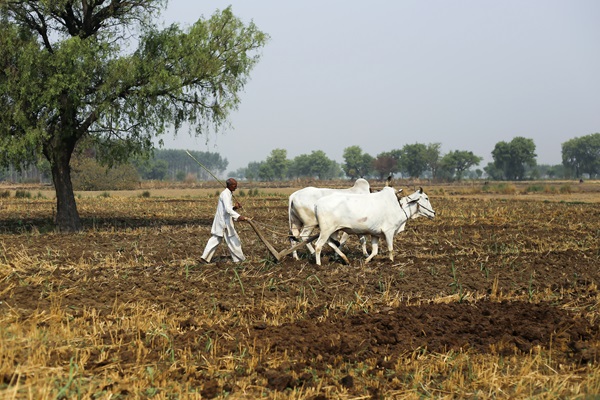
Extreme heat during the agricultural growing season in rural India can have several deleterious effects. It can reduce crop yields. When temperatures rise significantly, agricultural productivity declines, lowering the quantity of food that farm households can consume from their own production.
While prior research has established that high temperatures reduce crop yields, the downstream effects on household diets and nutritional outcomes are less well understood. This issue is particularly salient in developing countries like India where many households rely on small farms both for income and for direct food consumption. Crop losses caused by extreme heat may therefore lead to increased undernutrition, with significant long-term consequences for health, human capital, psychological well-being, and labor productivity.
The connections between these related issues have been analysed in new research. Specifically, this research examines how extreme heat during the agricultural growing season affects household nutrition in rural India and how households adapt to these shocks.
The research uses detailed household consumption data from the National Sample Survey (NSS) of India between 2003 and 2012. The dataset includes information on more than 300,000 rural households, covering approximately 150 food items consumed over a 30-day period. Using nutritional conversion tables, the authors translate these food consumption data into measures of caloric intake and six important nutrients: protein, iron, zinc, thiamine, niacin, and riboflavin. This broader nutritional focus represents a distinct improvement over many earlier studies that concentrated primarily on calories or a limited set of macronutrients. The authors emphasise that micronutrient deficiencies—particularly iron deficiency—are widespread in India and have serious health consequences.
To identify the impact of heat, the researchers combine household data with detailed weather information from the ERA5 reanalysis dataset. They measure exposure to extreme temperatures by counting the number of days in different temperature ranges during the agricultural growing season (June–December). The empirical strategy examines how temperatures in a given growing season affect nutritional outcomes in the following year, when households consume or sell harvested crops. The analysis controls for district characteristics, time trends, rainfall shocks, and other factors to isolate the causal effect of temperature fluctuations.
The research first confirms the expected mechanism linking heat to agricultural production. Using district-level crop yield data, the authors show that higher temperatures during the growing season significantly reduce crop yields. For example, a single day with temperatures above 110°F reduces yields by about 1.3% relative to a cooler day. Yield losses increase as temperatures rise, indicating that extreme heat can substantially damage agricultural production.
Despite these yield reductions, the authors find no significant impact of extreme heat on average calorie consumption across households. However, this aggregate result masks important distributional effects. Extreme heat significantly increases the share of households experiencing strong or extreme undernutrition, defined as consuming less than 80% or 60% of recommended dietary levels. For instance, one additional day above 110°F during the growing season increases the fraction of households consuming less than 80% of recommended calories by about 0.36 percentage points, corresponding to roughly 3.1 million people in rural India. It is essential to comprehend that these effects are concentrated among households already near the lower end of the nutrition distribution.
The results are similar for several micronutrients. High temperatures increase the likelihood that households fall below recommended intake levels for nutrients such as zinc, thiamine, and niacin, and there is suggestive evidence of similar effects for iron. Importantly, the study shows that focusing only on average calorie consumption would blur these distributional impacts. Many households remain nutritionally adequate on average, but vulnerable households become significantly worse off following extreme heat shocks.
The authors of this research also investigate how rural households respond to these shocks. One key adaptation mechanism is increased food purchases. After a hot growing season, households tend to consume less food produced on their own farms but partially compensate by buying more food in markets. This pattern suggests that households attempt to smooth consumption after crop losses by relying more heavily on purchased food.
Another adaptation mechanism involves changes in labor allocation. This research finds that extreme heat leads adults to shift away from agricultural work within the household and toward non-agricultural employment, especially wage labor outside the home. For example, a day above 110°F during the growing season reduces the share of adults working in household agriculture the following year and increases employment in non-agricultural sectors. This reallocation likely generates additional income that helps households finance food purchases when their own crop production declines.
The research under discussion here is salient because of three reasons. First, it provides new evidence on the welfare consequences of climate change in rural agricultural settings by linking weather shocks to household nutrition. Second, it highlights the significance of distributional effects, illustrating that extreme heat disproportionately hurts already vulnerable households. Third, it expands the measurement of diet quality by incorporating micronutrients and minerals, which are often overlooked in economic analyses of nutrition.
The findings imply that climate change may worsen nutritional inequality even when average food consumption appears stable. Although households adapt through market purchases and labor adjustments, these strategies only partially offset the negative effects of heat on the most vulnerable populations. Consequently, policies addressing climate change and agricultural risk should consider not only production losses but also their implications for nutrition and household welfare.
More From BasisPoint