.png)

Global Markets Edge Higher but Geopolitics and Fed Uncertainty Loom
Here’s your quick read to start the day: a chatty, no-fuss look at overnight moves, the big story, what’s on the docket, and the tickers you need to watch.
Richard is an independent financial journalist who tracks financial markets and macroeconomic developments
January 12, 2026 at 1:55 AM IST
GLOBAL MOOD: Cautiously Risk-On
Global markets are cautiously risk-on, supported by US equity gains after benign jobs data and early strength in Asian stocks. However, the mood remains fragile as oil prices rise on escalating unrest in Iran, heightening geopolitical risk. The dollar softened after Federal Reserve Chair Jerome Powell disclosed Justice Department subpoenas, adding political uncertainty around US monetary policy and tempering investor confidence.
TODAY’S WATCHLIST
- Earnings: TCS and HCL Technologies
THE BIG STORY
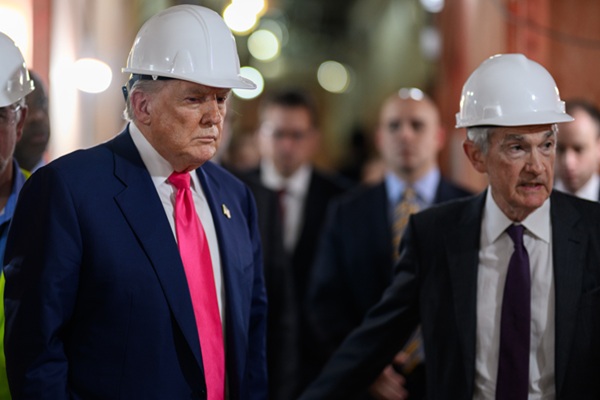
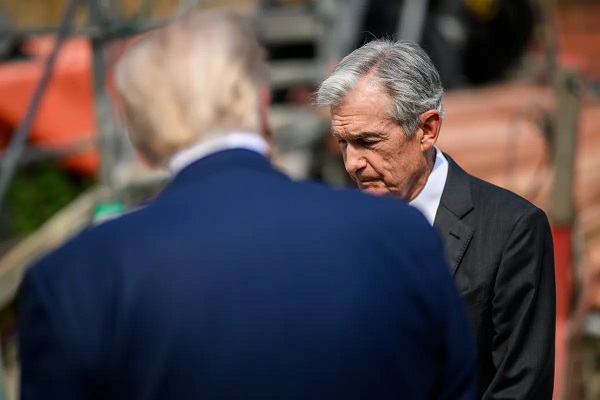
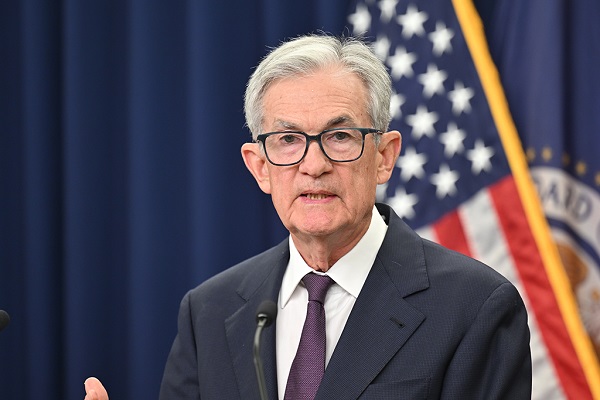
Federal Reserve Chair Jerome Powell said the US central bank has received grand jury subpoenas from the Justice Department that could lead to a criminal indictment linked to his June congressional testimony on renovations at the Fed’s headquarters.
In a statement issued Sunday, Powell rejected suggestions that the action stemmed from his testimony or the renovation project itself. The move marks a sharp escalation in President Donald Trump’s long-running confrontation with the Fed chair, as the administration intensifies pressure for aggressive rate cuts.
Powell said the threat should be viewed in the broader context of sustained political pressure and reaffirmed his commitment to perform his duties with integrity in service of the American public.
Geopolitical risks intensified after Iran warned it would retaliate against US military bases and Israel if President Donald Trump follows through on threats of military action to protect protesters, as mass demonstrations pose the biggest challenge to Tehran’s leadership since 2022. Iran’s parliament speaker said any attack would make US assets and Israel “legitimate targets”, while Israeli sources said the country was on high alert amid fears of US intervention. Violence also escalated in Gaza, with Palestinian casualties reported as regional tensions broadened. Iranian authorities accused the US and Israel of fuelling unrest, raising the risk of miscalculation across an already volatile Middle East.
Separately, India moved closer to imposing sweeping new security rules on smartphone makers, including proposals that would require companies to share source code and notify authorities of major software updates. The draft standards have triggered pushbacks from global giants such as Apple and Samsung, which argue the measures have no global precedent and could expose proprietary technology. The proposals underline India’s push to tighten digital sovereignty but also risk straining relations with multinational firms operating in the country.
Data Spotlight
US consumer sentiment showed a tentative improvement, with the University of Michigan index rising for a second straight month to 54.0 in January 2026, the highest since September. Gains were driven largely by lower-income households, while higher-income sentiment softened. Despite easing tariff concerns, overall confidence remains nearly 25% below January 2025 levels as worries over high prices and a cooling labour market persist. Inflation expectations were mixed: year-ahead expectations held at 4.2%, the lowest in a year but still elevated, while long-term expectations edged up to 3.4%.
Labour market data reinforced the picture of gradual cooling rather than sharp weakness. The US added 50,000 jobs in December, below expectations and following downward revisions to prior months, with gains concentrated in services such as food services, healthcare and social assistance, while retail shed jobs. The unemployment rate edged down to 4.4% as employment rose and the number of unemployed fell, even as labour force participation dipped slightly.
Takeaway:
WHAT HAPPENED OVERNIGHT
- US stocks hit record highs as chips lead broad rally
- S&P 500 closed at a record high, lifted by strong gains in chipmakers and selective cyclicals.
- Nasdaq and Dow also advanced, capping a strong first full trading week of 2026.
- Semiconductor stocks outperformed, with Broadcom up 3.8% and Lam Research surging 8.7% after a target-price upgrade.
- Mega-caps supported sentiment, as Alphabet gained 1% and Tesla rose 2.1%.
- Vistra jumped 10.5% after Meta Platforms agreed to purchase power from its nuclear facilities.
- S&P 500 closed at a record high, lifted by strong gains in chipmakers and selective cyclicals.
- US Treasury yields test four-month highs on mixed labour signals
- The benchmark 10-year US Treasury yield touched a four-month high near 4.2%, before easing back to around 4.17%.
- Mixed US jobs data kept rate outlook uncertain, clouding expectations on the pace of Fed easing this year.
- The data supports expectations of a Fed pause in its rate-cutting cycle next month.
- The benchmark 10-year US Treasury yield touched a four-month high near 4.2%, before easing back to around 4.17%.
- US Dollar pares gains but stays firm as jobs data backs cautious Fed
- The dollar index eased back toward the 99 level, giving up earlier gains but holding near a one-month high.
- Mixed US labour data shaped sentiment, with slower job creation offset by a lower unemployment rate.
- The report reinforced expectations of a cautious Fed, favouring gradual rather than aggressive rate cuts.
- Cooling, not collapsing, labour market supports the case for measured policy easing.
- The dollar index eased back toward the 99 level, giving up earlier gains but holding near a one-month high.
- Crude oil prices jump on Iran unrest, Ukraine escalation
- Brent crude prices gained around 2% as markets priced in rising geopolitical supply risks.
- Iran protests raised concerns over potential disruptions from a key OPEC producer.
- Russia–Ukraine conflict escalation renewed fears of supply interruptions tied to the war.
- Brent crude settled up 2.18% at $63.34 per barrel, while WTI crude rose 2.35% to $5.12 per barrel.
- Brent crude prices gained around 2% as markets priced in rising geopolitical supply risks.
Day’s Ledger
Economic Data
- India December CPI Data
Corporate Actions
- October-December Earnings: HCL Technologies, Tata Consultancy Services, and Anand Rathi Wealth
- Generic Engineering Construction and Projects Limited
Policy Events
- FOMC Member Bostic Speaks
- ECB's De Guindos Speaks
- German Buba Balz Speaks
Tickers to Watch
- ASHIANA HOUSING October-December area booked declined 17.9% to 5.56 lakh sq ft, while value of sales fell 11.7% to ₹4.0 billion.
- AVENUE SUPERMARTS (DMART) October-December profit rose 18.3% YoY to ₹8.6 billion, while revenue increased 13.3% to ₹181.0 billion.
- EMBASSY DEVELOPMENT October-December pre-sales surged QoQ to ₹13.9 billion from ₹4.1 billion, with collections up 15.6% to ₹4.2 billion.
- ICICI LOMBARD: Initiated internal inquiry after inadvertent sharing of unaudited October-December draft financial information.
- IREDA October-December profit jumped 37.6% YoY to ₹5.9 billion and net interest income rose 34.7% to ₹9.0 billion.
- LEMON TREE HOTELS: Warburg Pincus affiliate to invest up to ₹9.6 billion in subsidiary Fleur Hotels, which will be listed separately within 12–15 months.
- LLOYDS ENGINEERING WORKS: Entered agreement with The Materials Works, USA, to manufacture and sell EPS Gen 4 cells using patented technology.
- MAHINDRA & MAHINDRA December sales volumes fell 27.1% YoY to 85,501 units, exports declined 9.3%, while production rose 25.4%.
- NTPC: Signed agreement to acquire Sinnar Thermal Power (1,350 MW) for ₹38.0 billion, raising group installed capacity to 86,987 MW.
- PHOENIX MILLS October-December retail consumption grew 20% to ₹47.9 billion.
- SHRIRAM FINANCE: Moody’s affirmed Ba1 long-term rating and revised outlook to positive.
- SIGNATURE GLOBAL’s October-December pre-sales fell 27% YoY to ₹20.2 billion, area sold dropped 42% to 1.44 million square ft., while collections rose 14% to ₹12.3 billion.
- VEDANTA: NCLT Mumbai approved scheme of arrangement involving multiple group entities.
- VISHAL MEGA MART: Vice President–Supply Chain S. Raamesh resigned, effective January 9.
- WEBSOL ENERGY SYSTEM: Andhra Pradesh approved a 4 GW greenfield solar cell and module project with a planned 100 MW captive solar plant.
Must Read
- Why Blaming a Missed Call Won’t Explain the India–US Trade Impasse
- Global coal demand set to slow gradually; India may buck the trend
- One State, One Bet: How Tamil Nadu Rewired India’s Electronics Map
- Iran Edges Closer to a Revolution That Would Reshape the World
- Powell Says Justice Department Served Fed With Subpoenas
- Reliance Halts Cell-Making Plans After Failed Bid for China Tech
- UK, Germany Talk NATO Forces in Greenland to Calm US Threat
- Denmark's dilemma: Defending a territory on its way out
See you tomorrow with another edition of The Morning Edge.
Have a great trading day
Armies fight wars; nations win them.
Modern security is less about missiles and more about muscle in three places: a resilient economy, cutting-edge technology, and cohesive society.
Military hardware is now the visible tip of an invisible triangle whose base is capital, code, and cohesion. Nations that neglect human capital, industrial capacity, and institutional trust may fight bravely—but they will bleed strength faster than they can replace it.
Former Finance Secretary Arvind Mayaram writes, for India, the strategic shift is simple but stark: the real security debate is about supply chains, semiconductors, schools, and social solidarity, not just ships and squadrons. The choices made on economic reform, technological depth, and inclusive growth today will decide who endures when pressure escalates tomorrow.
More From BasisPoint