.png)


Krishnadevan is Editorial Director at BasisPoint Insight. He has worked in the equity markets, and been a journalist at ET, AFX News, Reuters TV and Cogencis.
July 1, 2026 at 10:20 AM IST
Cummins India is what stock pickers call a pick-and-shovel stock. A pick-and-shovel stock has its origins in the late 1840s, when real wealth was made by merchants who sold essential tools like picks, shovels, and denim pants to every hopeful miner chasing the California Gold Rush.
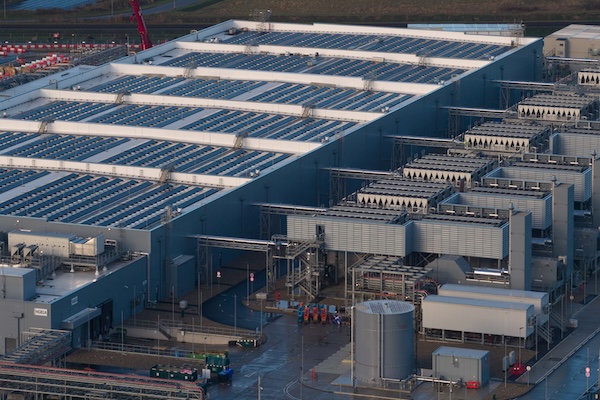
Enter Cummins India, a company investors increasingly believe has found its tech moment. Data centre capex is surging, hyperscalers are signing up for megawatt blocks of backup power, and the company’s earnings now come with a reassuring line about “data centres contributing 30–35% of domestic PowerGen revenue.”
While the investor pitch is that the company is a cyclical equipment play on India’s data centre boom, a closer reading reveals that Cummins India is not valued for selling more gensets, but for selling more certainty.
After all, data centre operators buy generators because regulators, clients and boards will not tolerate downtime. Uptime is now a board‑level KPI, turning backup power for machinery into an insurance policy.
Cummins India appears tied to data centre capex, but those orders effectively function as long-term service annuities that investors still do not fully value. The hype is around gensets, but the predictable cash flows come from maintenance.
Cummins India reported a 24% jump in domestic PowerGen revenue in 2025-26, with data centres now contributing roughly a third of that business. But the management still describes future growth as “moderate” across segments. PowerGen, the division that sells gensets, accounted for about 40% of the company’s total sales.
At the same time, its distribution business, comprising spares, service, extended warranties, and retrofit kits, grew by 22%, with the company emphasising that growth was mainly driven by solution selling rather than price increases. By focusing on service packages, real-time diagnostics for data centres, and lock-in contracts, it signalled a shift toward sticky, recurring revenue. That is not how a typical capital goods company sounds.
Cummins India treats data centre customers distinctly. It offers them customised aftermarket support, service teams trained for 99.99% uptime, and extended warranty structures that let CFOs treat it as an opex line item rather than capex.
The company’s workhorse QSK60, used in most current data centre builds, is localised. Cummins can control costs and local content there. The heavier QSK78 and QSK95 units needed for bigger sites are imported. When global demand for data centres strains the supply of imported engines and lengthens lead times, it is the parent that adds capacity. The subsidiary responds by strengthening relationships with clients who are suddenly more concerned about when hardware will arrive and how long it will last.
The cash‑flow engine runs through two channels. The first comes from orders booked six to twelve months before sites go live. The gensets are then installed, and revenue is recognised. The second comes from shorter-term warranty contracts. When the standard warranty expires, the maintenance packages kick in. Every megawatt of data centre backup that Cummins India installs is effectively a seed for 5-10 years of higher‑margin distribution income.
Should that matter for valuation? A classic capital‑goods cyclical earns its premium on volume growth and operating leverage, then gives it back when capex cycles turn. A business that adds a service annuity on top of those cycles is different. Its earnings path depends less on fresh orders and more on how large and complex the installed base becomes.
Data centres, with their hypersensitive uptime requirements, are almost ideal applications for this. They compel clients into long‑term relationships with whoever understands both local regulation and global engine quirks. Cummins India sits at the intersection of strict emission norms and parent-level hardware capabilities. That is a structural advantage, not just a tailwind.
For Cummins India shareholders, the question to ask is not how many megawatts of data centre capacity India will add, but how quickly Cummins India can grow distribution and service revenue faster than PowerGen without eroding margin.
The challenge for competitors is different. They may be able to match Cummins, but matching a service book built on decades of installations, regulatory familiarity and dedicated data centre teams is harder. The gap will widen if imported high-horsepower engines grow as a share of projects, because that raises the value of an OEM capable of navigating both local norms and the parent’s global supply chain.
If boards remain intolerant of downtime, regulators keep tightening emissions rules, and the parent continues to fund heavy engine capacity offshore, then Cummins India’s earnings will become increasingly sensitive to the size and behaviour of its installed base, and less to the timing of the next capex spike.
Cummins India’s valuation will depend on what investors choose to focus on. It can be the still-visible equipment cycle or the service cash flows that, for now, sit a few rows lower in the investor presentation deck.
More From BasisPoint