.png)

Equities Post Worst Session Since June 2024 as HDFC Bank Rout, Oil Surge Combine
An end-of-day recap of all that transpired in the Indian markets, highlighting the major price movements and the factors driving them

Dehuti Jani is an experienced project manager who also works as an independent financial journalist.
March 19, 2026 at 11:27 AM IST
Indian equity benchmarks slumped sharply on Thursday in their worst session since June 2024, as a governance shock at HDFC Bank and a dramatic surge in crude prices following fresh attacks on West Asia energy facilities wiped out all gains accumulated over the previous three sessions. The Nifty50 fell 2.89% to 23,002.15, while the BSE Sensex lost 2.87% to settle at 74,504.27, as sentiment collapsed through the session. India VIX surged 21.79% to settle at 22.80, its sharpest single-session spike in weeks, signalling that near-term uncertainty is likely to remain elevated. The catalyst for the crude surge was particularly alarming, brent crudespiked 11% to $119.50 per barrel during market hours after reports emerged that Saudi Arabia had halted oil loading at the port of Yanbu following drone strikes on Samref refineries and fires at several Aramco facilities, dramatically escalating the scope of the West Asia conflict beyond Iran.
Broader markets fell in line with the benchmarks, with the Nifty MidCap 100 and Nifty SmallCap 100 declining 3.19% and 2.94% respectively, as selling was widespread across all segments. Nifty Auto was the worst-performing sectoral index, followed by Nifty Financial Services and Nifty IT, as the combination of surging input costs, governance concerns and hawkish Federal Reserve commentary created a perfect storm of negative catalysts.
Top Movers of the Day
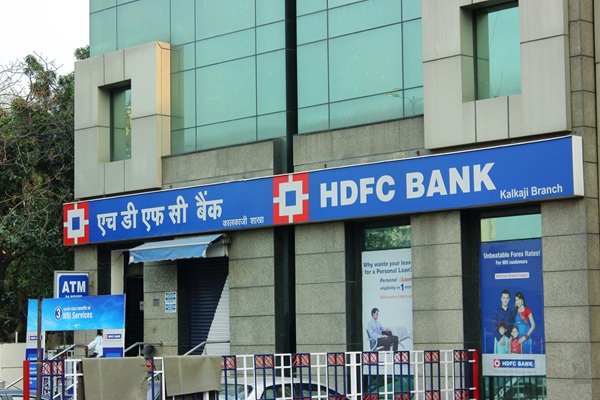
HDFC Bank suffered one of its worst single-day selloffs since the Covid-19 crash, plunging 8.6% to a 52-week low of ₹770 on the NSE after part-time Chairman Atanu Chakraborty resigned citing "ethical concerns."
ICICI Bank and ICICI Prudential Life Insurance slipped up to 4% on the BSE after reports emerged that Prudential is exploring an exit from its life insurance joint venture with ICICI Bank.
Kotak Mahindra Bank declined around 3%, emerging among the top laggards, as pressure in private banking stocks weighed on sentiment.
Manappuram Finance dropped nearly 5%, extending losses amid continued weakness in NBFCs and microfinance-related concerns.
SBI slipped over 1%, contributing to weakness in the PSU banking pack.
Auto stocks came under heavy broad-based selling pressure, with all 15 Nifty Auto constituents in the red. Samvardhana Motherson International, Bharat Forge and Ashok Leyland fell over 4% each.
IT stocks came under significant selling pressure after the Federal Reserve held rates unchanged for a second consecutive time and Chair Jerome Powell delivered hawkish commentary. Coforge, Wipro, TCS and Infosys dropped more than 2.5% each, while Mphasis, Tech Mahindra and HCL Technologies each fell over 2%.
Gujarat Alkalies and Chemicals bucked the weak market trend, surging over 13% from a flat open at ₹431.95 to an intraday high of ₹489 on the NSE.
Adani Total Gas surged over 12% in an otherwise weak market, defying the broader selloff even as Iran's strikes on key energy facilities in Qatar triggered a fresh spike in oil prices.
Oil marketing companies tanked as much as 6% on the crude spike, with HPCL slipping 5.58%, IOC declining 3.9% and BPCL falling 3.39%, as surging input costs threatened to severely squeeze their marketing margins.
Futures & Options
Nifty March 2026 futures closed at 23,125.70, a premium of 123.55 points over the spot Nifty, which lost 775.65 points or 3.26% to settle at 23,002.15 in the cash market. The wide premium reflected aggressive hedging and defensive positioning in the derivatives segment as the market experienced one of its sharpest single session falls in recent memory. India VIX zoomed 21.79% to 22.80, marking a dramatic reversal from the easing trend of the previous three sessions and signalling a sharp return of near-term volatility fears as the West Asia conflict escalated further and the HDFC Bank governance shock rattled investor confidence. HDFC Bank, Reliance Industries and ICICI Bank were the most actively traded stock futures contracts in the F&O segment on the NSE. The March 2026 derivative contracts are set to expire on 30 March 2026.
Bonds
The Indian government bond market remained shut on Thursday, 19 March 2026, in observance of the Gudi Padwa holiday.
Forex
The Indian currency derivatives market was closed on Thursday, 19 March 2026, on account of the Gudi Padwa holiday.
Crypto
Crypto markets pulled back sharply on Thursday, with Bitcoin slipping nearly 4% to trade at $70,865 as short-term indicators flashed sell signals amid a broader risk-off mood driven by surging energy prices and hawkish Federal Reserve commentary. Ethereum fell 5.6% to $2,193, while major altcoins bore the brunt of the selloff, with XRP, BNB, Solana, Dogecoin, Hyperliquid and Cardano all plunging over 6%. Tron was a rare exception, edging up 0.45% against the broader downtrend.
US Stock Futures
US stock futures were little changed on Thursday after the Dow Jones Industrial Average dropped to a fresh 2026 low in the previous session, as inflation fears continued to grip Wall Street. Dow futures slipped 21 points or 0.1%, while S&P 500 and Nasdaq 100 futures each declined 0.1% and 0.2% respectively. Micron Technology fell more than 4% in premarket trading despite the semiconductor company nearly tripling its revenue in its most recent quarter, aided by a memory supply shortage, as investors focused on the broader macro headwinds rather than company-specific results.
US Treasury Notes
Yields on US Treasury climbed higher on Thursday, driven by a surge in global energy prices and a cautious stance from the Federal Reserve following its latest policy decision. The benchmark 10-year note yield rose to approximately 4.28%, its highest level in several months, as persistent inflation fears stemming from the West Asia conflict continued to weigh on bond prices. The interest-rate-sensitive 2-year note traded around 3.80%, reflecting the market's heightened sensitivity to both geopolitical uncertainty and the Fed's increasingly hawkish signals on the pace of future rate cuts.
Top News
- West Asia crisis: Govt identifies 22 vessels for safe passage via Hormuz
- HDFC Bank 'a strong institution with strong fundamentals': FinMin official
- No material concerns on HDFC Bank's governance and conduct, says RBI
- India's HDFC Bank says chairman exit may be over rift with management; stock falls
- Iran crisis lifts India bottled water prices, erasing Modi tax cut gains
- India in talks with Russia, Belarus, Morocco to boost fertiliser imports, sources say
- India's JSW unit seeks government help to secure gas supplies amid shortages
- Novo Nordisk patent expiry opens door to cheaper weight-loss drugs in India
- Labour ministry taps influencers to promote pension scheme for workers
- Tamil Nadu surpasses Gujarat, Maharashtra to become top textile exporter
- US national debt surges past $39 trillion just weeks into war with Iran
- Exclusive: US weighs more troops as Iran war enters possible new phase
- Israel reopens key Gaza crossing amid new truce push
More From BasisPoint