.png)

Can a Participation Deficit Explain India’s Low Per Capita Income?
A new study argues that India’s low per capita income stems less from population size or inequality than from a deep “participation deficit” that keeps most workers out of high-productivity activity.
Batabyal is a Distinguished Professor of economics and the Head of the Sustainability Department at the Rochester Institute of Technology, NY. His research interests span environmental, trade, and development economics.
April 29, 2026 at 10:56 AM IST
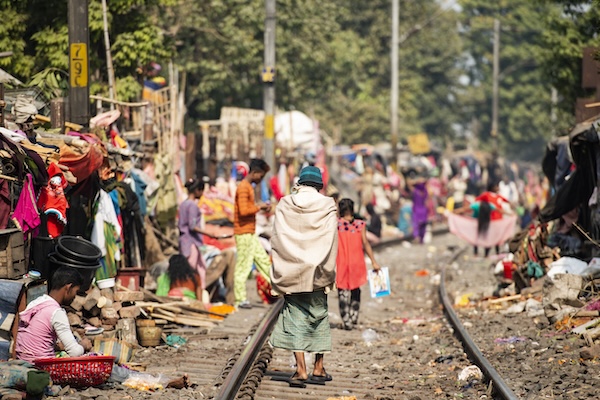
India presents a striking development paradox: despite sustaining GDP growth of 6-7% annually for three decades, its per capita income remains among the lowest of major economies—approximately $2,400, compared with China’s $12,500. New research argues that conventional explanations—population size, inequality, or sectoral composition—are insufficient. The real culprit, the authors argue, is a structural participation deficit: a majority of Indians are excluded from high-productivity economic activity, and this exclusion, rather than population size or resource scarcity, keeps per capita incomes low.
Critiquing Existing Theories
The authors systematically review mainstream explanations and find them inadequate. For instance, the population argument is incomplete, as China, with a comparable population, has achieved per capita incomes about five times higher through structural transformation. The structural transformation framework correctly identifies the drag of low-productivity agriculture, but can imply that agriculture is inherently unproductive rather than organisationally constrained. Amartya Sen’s capability approach, while valuable, is insufficiently operationalised for the specific question of productive participation.
Participation-Centric Framework
The core contribution of this research lies in what the authors describe as a “participation-based identity,” in which per capita income is expressed as the combined effect of each group’s population share, quality of participation, and productivity. The participation factor is shaped by four determinants: capability (market knowledge, digital literacy), access (infrastructure, financial systems), structure (formal versus informal employment), and aspiration (incentives toward productive activity).
The authors argue that this framework exposes what aggregate GDP masks: even strong growth concentrated in a narrow high-productivity tier—such as information technology, finance, organised services—raises the per capita average only marginally when the majority remain in low-quality activities. They introduce a Participation Gap Index to quantify the weighted shortfall between potential and actual participation across population groups, arguing that a high index suppresses per capita income.
Three Structural Constraints
This research identifies three mutually reinforcing constraints that sustain India’s participation gap. First, sectoral misallocation is a fundamental constraint. Agriculture employs roughly 45% of the workforce but contributes only 15–18% of GDP—a productivity gap that is larger than in many comparable economies. Manufacturing, which in other development trajectories has served as an “escalator” absorbing low-skill agricultural labour into organised, higher-productivity employment, has not expanded sufficiently in India. This pattern is consistent with what Dani Rodrik terms premature deindustrialisation. Workers exiting agriculture instead move into low-end informal services, classified statistically as services but, economically, still characterised by low productivity.
Second, spatial exclusion concentrates high-productivity opportunities in a handful of metropolitan clusters like Mumbai, Delhi, and Bengaluru. Per capita incomes in Maharashtra or Delhi are several times those in Bihar or Uttar Pradesh, and barriers to mobility— cost, language, loss of social networks—are substantial. This geographical concentration of opportunity excludes many from activities where their participation would yield the highest returns.
Finally, capability constraints persist. Even where opportunities exist, individuals and enterprises often lack the market awareness, digital literacy, regulatory knowledge, and entrepreneurial capacity needed to exploit them. For example, an artisan may have internet access but lack the skills to sell on e-commerce platforms. Similarly, a small manufacturer may produce export-quality goods but struggle to navigate certification requirements. These capability gaps, the research contends, are compounding and self-reinforcing.
Policy Implications
The research argues that addressing these constraints requires a coordinated approach: transforming agriculture through organised farmer-producer organisations and direct market linkages; expanding labour-intensive manufacturing through a rebalanced industrial policy; developing industrial infrastructure in tier-2 and tier-3 cities; and building capabilities broadly through market-linked skill development, locally anchored digital empowerment, and simplified regulatory access for small enterprises.
The central conclusion is straightforward: India’s low per capita income is not a demographic inevitability. It is the outcome of limited, uneven, and poorly organised participation in productive economic activity. Raising average incomes requires improving the quality of participation for the majority—not merely accelerating growth at the frontier.
Which Way Now?
There is merit in the idea of a Participation Gap Index, and the research makes a coherent case for a participation-centred perspective on India’s per capita income challenge. However, although it outlines an econometric strategy, it does not present regression results, estimation outputs, or statistical tests. This creates a gap between theoretical ambition and empirical validation.
In other words, while the Participation Gap Index may be a conceptual innovation, it is not yet operationalised with actual data. What is needed now is empirical grounding to assess the explanatory power of this seemingly novel concept.
More From BasisPoint