.png)

Building Boxes in a Storm
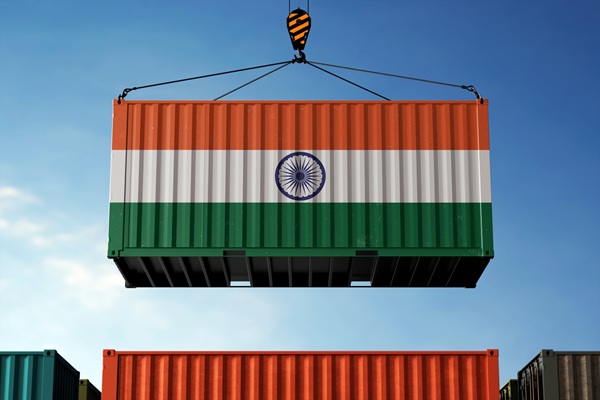
A Countercyclical Manufacturing Gambit: India bets ₹100 billion on container production amid global trade flux, eyeing niche value and logistics leverage over volume dominance.
Sharmila Chavaly, a former civil servant who held key roles in the railways and finance ministries, specialises in infrastructure, project finance, and PPPs.
February 7, 2026 at 3:51 AM IST
India’s budget announcement of a ₹100 billion scheme to create a “globally competitive container manufacturing ecosystem” comes at a time of profound tumult in global trade. The ambition is clear, it is to capture a strategic slice of a foundational logistics industry. However, a key factor is that the launch pad is not a stable expanse to build on. It is, today, a shifting geopolitical and economic landscape, which makes this plan a quintessential long-term, counter-cyclical punt. Its success will hinge not on riding a wave of global growth, but on navigating headwinds with precision and learning from the playbooks of other maritime nations.
It is unclear whether the scheme has fleshed out monitorable timelines and steps. Since the budget included extremely strange status updates on some of last year’s announcements (for e.g., “Update Final EFC note has been shared with D/o Expenditure with request to convene EFC meeting”. And complete silence on the effectiveness of last year’s Shipbuilding Financial Assistance Policy) which point to inadequate implementation planning, it would be prudent to detail how best at least this scheme can it best be implemented, given its context, the competition, and the time factor.
I. The Headwinds:
Recent analyses indicate that the traditional engine of container demand, the US import market, is in a sustained decline, with volumes falling nearly 6% year-on-year as of late 2025. While the cause is attributed primarily to tariff policies triggering a “global recalibration”, this is not a mere cyclical dip, it is a structural shift: trade flows are rapidly rerouting to regions like Africa, the Middle East, and Latin America, which saw import growth exceeding 15%, while North America languished.
For India, this presents a dual reality. The global container market is softening, with falling spot rates and a tepid growth forecast of 0.5-1% for 2026, which could depress new container orders from major shipping lines. However, within this disruption lies a latent opportunity: the very diversification of supply chains and the boom in regional trade corridors adjacent to India create new demand nodes. India’s strategy cannot be to simply build boxes for a fading Atlantic-Pacific trade paradigm; it must build for the emerging multipolar network where its own geography is an asset.
II. The Precedent: Lessons from niche shipbuilding
China’s dominance in container manufacturing is even more overwhelming than in shipbuilding, commanding over 90% of global production. Confronting such a behemoth on cost and scale alone would be a strategy for doom. The histories of South Korea and Japan offer a wise lesson: specialization and technological ascendancy are paths to viability.
When confronted with China’s rise in commoditised shipbuilding, South Korea pivoted decisively towards the high-value, complex end of the spectrum: liquefied natural gas carriers, mega-container ships, and offshore platforms. Japan focused on advanced fuel-efficient designs and specialized chemical carriers. They moved up the value chain where competition was based on engineering, not just labour cost.
The analog for container manufacturing is clear. India’s ecosystem would be best guided to not initially aim at out-producing China in standard dry boxes. Strategic lessons suggest:
1. Specialisation: Targeting niche, higher-value segments like refrigerated (reefer) containers, tanks for chemicals, or robust containers for specific mining or agricultural commodities.
2. Innovation: Developing or integrating smart container technologies (IoT sensors for tracking condition, location, and security), which add digital value.
3. Integration: Leveraging containers as a tool for national logistics efficiency, perhaps through design tweaks optimized for India’s rail-road multi-modal corridors under the Gati Shakti plan.
III. The Feasibility: Timeline, Funding, and Global Context
Is it achievable in five years? The physical act of setting up a factory and producing a container can be quick (a quality box can be built in under a day on an automated line). However, building a competitive ecosystem with a reliable supply chain for steel and coatings, skilled labor, quality certification (CSC plates), and a reputation for reliability is a 5-7 year endeavour. The five-year funding window aligns with this, but the clock will start ticking on enabling the ecosystem, not just the first production run.
What does ₹100 billion (~$1.2 billion) mean? Context is critical. This sum is significant but has to be seen as catalytic capital, not the total investment. It is probably intended for production-linked incentives (PLI), grants for technology adoption, and support for ancillary clusters. A revealing comparison can be made with historical support to China’s sector, which benefited from decades of state-directed industrial policy, subsidized steel, and captive domestic demand. A more contemporary parallel is the US flagship programme, which provided a similar scale of funding (~$1.6 billion) to resurrect its commercial shipbuilding. The US goal was national security and jobs; India’s is strategic industrial capture. The funding size seems reasonable for a start, but its effectiveness will depend entirely on attracting multiples more in private investment.
IV. Defining and Measuring Success
Success in five years should not be measured by displacing China as the global volume leader. More realistic and strategic Key Performance Indicators would include:
· Domestic Capture: Increasing the share of Indian-made containers in the domestic leasing and shipping market from near-zero to 40-50%.
· Export Diversification: Achieving 15-20% of production for export, initially to the booming regional markets in the Middle East, Africa, and Southeast Asia.
· Value-Addition: Having at least 20% of production in specialized or “smart” container variants.
· Ecosystem Development: Establishing 2-3 major manufacturing clusters with integrated paint, flooring, and door-handle suppliers, and a trained workforce pipeline.
V. A Proposed Implementation Framework with Milestones:
To transform this counter-cyclical punt into a strategic victory, a disciplined, phased implementation is non-negotiable.
Year 1: Foundation & Demand Assurance
· Milestone: Clear notification of the scheme’s PLI and incentive structure. Simultaneously, issue a mandate for Indian Railways’ logistics arm, CONCOR, and major port trusts to source a defined percentage of their new and replacement container requirements domestically. This creates the immediate baseline demand. (Note: Annual reports indicate that CONCOR owns 120,000-130,000 TEUs and its capital expenditure plans and tender history show continuous procurement, with the Gati Shakti National Master Plan and port-led development as structural growth drivers. The growth of Container Freight Stations, the DFCs, etc also creates a parallel, competitive demand stream for private container operators).
· Action: Secure land and anchor tenants for 2-3 proposed container manufacturing clusters near integrated steel plants (e.g., Paradip, Vishakhapatnam, JNPT).
Years 2-3: Ecosystem Ramp-Up & Niche Focus
· Milestone: First manufacturing lines are operational, producing standard 20ft/40ft dry containers for the assured domestic demand. Launch, in parallel, an “Innovation Challenge” with funding, for firms to prototype and pilot smart or specialized containers.
· Action: Forge technology partnerships with global leaders in refrigeration units or container software. Establish a national testing and certification lab for containers.
Years 4-5: Market Expansion & Sustainability
· Milestone: Domestic market share target met. First significant export orders secured, ideally for specialized units to regional partners. Anchor one global lessor (Triton, Textainer, etc) to place a substantial order from an Indian plant.
· Action: Begin a strategic review for Phase 2 of the policy, focusing on deepening technology integration and scaling for greater global competitiveness as the world trade cycle potentially turns.
While the container manufacturing scheme is a bold wager on the future architecture of global trade, by securing domestic demand as a launchpad, and measuring success through strategic indicators rather than raw volume, India can use this five-year window not to win the old game, but to skilfully position itself in the new one being played out in a recalibrating world.
More From BasisPoint