.png)

BHAVYA Scheme: Building on Past Failures
Another plug-and-play park arrives. We have seen this before. What did it deliver?

Sharmila Kantha is an industrial policy specialist and author. Formerly a consultant at the CII*, she has worked extensively on economic policy and India’s international engagement.
April 3, 2026 at 7:41 AM IST
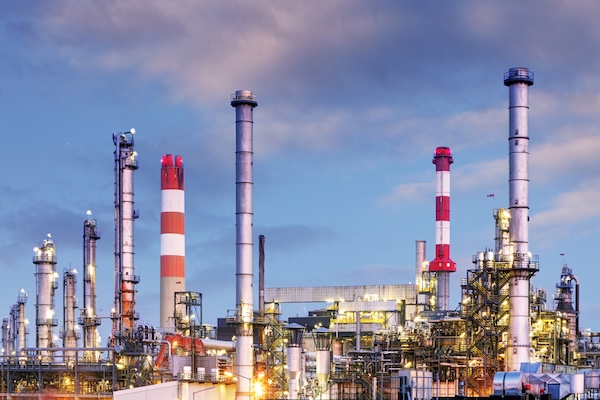
On March 18, the government announced the BHAVYA or Bharat Audyogik Vikas Yojna scheme with an allocation of ₹336.60 billion for developing 100 plug-and-play industrial parks across the country.
The announcement was followed up with a 238-page report from the National Industrial Corridor Development Corporation compiling the ‘overwhelming media traction nationwide’ in national and regional print. Digital, TV and social media platforms also seem to have been nudged to reiterate the benefits of the scheme, going by the tweets from prominent industry leaders.
All this sounds as if no such industrial park scheme had ever been conceptualised earlier over almost 80 years of the convoluted and largely unhappy history of India’s post-Independence manufacturing. On the contrary, the nation’s economic policy domain is littered with one ‘landmark’ industrial park scheme after another, the same as various parts of the country are littered with decaying remnants and gothic infrastructure for parks now abandoned.
Since the Industrial Policy Resolution of 1956, industrial estates have been promoted in the hope that providing basic infrastructure would encourage factories, with appropriate licences accorded in those days, to establish themselves in remote areas.
State industrial policies often aimed to acquire land, develop sheds and facilities, and help generate jobs, and many a small plot saw some activity and then degenerated into unoccupied ruins. Export Processing Zones too were initiated, followed by Export-Oriented Units Scheme and Special Economic Zones. The National Manufacturing Policy 2011 conceived National Investment and Manufacturing Zones, still awaited or perhaps shelved altogether.
NICDC’s website offers a long ‘our journey’ in industrial parks, starting 2006. To begin with, Japan kindly supported the Dedicated Freight Corridor as a railway line specifically for freight movement between Delhi and Mumbai, and from Delhi to Kolkata. Twenty years later, these Western and Eastern rail freight corridors are 96.4% complete, with the eastern section fully operational and the western sector still missing 100-odd kilometres. The patience of the Japanese government deserves high praise in this instance.
The rail freight corridor idea germinated the Delhi Mumbai Industrial Corridor project, again supported by Japan. DMICDC, a development corporation for implementing DMIC, was set up in 2008. Planning for various industrial corridor projects and trunk infrastructure along the rail freight corridors took up most of the next decade, and the DMICDC was redesignated as the National Industrial Corridor Development and Implementation Trust in 2016, to coordinate and supervise the development of industrial corridors.
Another eight years later, as of December 2024, trunk infrastructure in four industrial parks, approved in 2014 and 2015, was completed. These include Dholera Special Investment Region in Gujarat, Shendra Bidkin Industrial Area in Maharashtra, Integrated Industrial Township Vikram Udyogpuri in Madhya Pradesh and Integrated Industrial Township Greater Noida in Uttar Pradesh. It may be noted that with completion of trunk infrastructure, the industrial regions are finally available for plot allotment to manufacturers.
As of end March 2025, the process of constructing other facilities, allotment of plots, construction of factories, job generation, and actual production is yet to fully take off and the employment potential of 97,389 workers is a long wait ahead. Four more industrial parks continue to work towards trunk infrastructure construction, as per the annual report of NICDIT for 2024-25.
In August 2024, the government decided on 12 new industrial smart city projects or integrated manufacturing clusters, alongside the seven designated industrial corridors, at a cost of ₹286.02 billion. The model remains the same, with the state government providing the land and the central government through the NICDIT supplying the equity for trunk infrastructure. Once the contractors are appointed, the construction phase may take up to 4 years.
A number of sector specific industrial parks have also gained currency in the past, including for electronics, textiles, and chemicals, the success of which is mixed.
In this context, the BHAVYA scheme, for industry policy watchers, appears to be yet another well-intentioned strategy that is doomed to go into protracted development. It is a matter of conjecture about where India will be in the global manufacturing space four years down the road when the trunk infrastructure might be ready, by which time many other countries will have pulled themselves into advanced, strategic and high-tech industries while India works on its manufacturing policy.
Let us, however, not be too negative on the scheme and attempt a degree of optimism.
The scheme proposes industrial parks that will come with pre-approved land, core infrastructure of internal roads, utilities, common treatment facilities, factory sheds, testing labs, warehouses and social infrastructure including worker housing and amenities.
Industrial parks of 100-1000 acres will be taken up and financial support of ₹10 million per acre will be provided along with 25% of the external development costs. All 100 industrial parks are proposed to be completed by 2032.
This sounds reasonable in general especially if the state governments are amenable to being loaded with so many parks, which should not be a problem in dual-engine cases.
The Budget for 2026-27 plans an outlay of ₹30 billion for NICDIT and another ₹30 billion for the ‘new scheme for plug and play industrial parks’. An estimated outlay of ₹25 billion for industrial parks shows up in the Budget estimates for 2025-26. However, the actual expenditure during the year was a paltry ₹2.5 billion. It is not clear if the estimate refers to the 12 parks announced in August 2024 or to the BHAVYA scheme announced in March 2026.
The creation of 100 new plug and play industrial parks will truly be transformative. Unfortunately, this story has played out several times in the past and 2032 is distant enough for us not to be able to follow the narrative.
More From BasisPoint