.png)

Sharmila Chavaly, a former civil servant who held key roles in the railways and finance ministries, specialises in infrastructure, project finance, and PPPs.
June 24, 2026 at 5:13 AM IST
Tourism is one of the world’s fastest-growing economic sectors, generating over 10% of global GDP and supporting nearly 348 million jobs in 2024 alone. For a country like India, which ranks 8th globally in tourism economy size, contributing $231.6 billion in 2023, the sector is not merely a luxury but a strategic driver of structural transformation, with the potential to lift livelihoods across hospitality, transport, handicrafts, and allied services.
When the World Bank President says that New York City attracts 60 million tourists annually while the whole of India gets just 14 million, it underlines how broken Indian tourism is. And has been for a while.
Let’s look at the numbers: Foreign Tourist Arrivals, or foreign passport holders, were just over 10 million in 2024, compared to 10.9 million in 2019. If we include Non-Resident Indians, the figure rises to 20.57 million, but that’s still a fraction of what cities like New York or Paris achieve. The tourism budget, modest at around $270 million, just took a 91% haircut on overseas promotion. India ranks 39th globally on the WEF’s Travel & Tourism Development Index, though it has more natural and cultural wealth than most other countries.
One global trend which India mirrors, however, is that of international tourism spending outpacing arrivals. UN Tourism reports that visitor expenditure has surged past pre-pandemic levels even as traveller numbers lag—a shift toward higher per-trip spending worldwide. In India, international visitor spending hit a record $32.74 billion (₹3.1 trillion) in 2024, 9% above the 2019 peak. This looks encouraging until you realise what it conceals—we are failing to capture the enormous mid-tier demand, the millions of travellers, both domestic and foreign, who choose Vietnam, Thailand, or Sri Lanka instead because India feels too hard, too chaotic, too unsafe.
Vietnam welcomed over 501,000 Indian tourists in 2024 alone: a 297% surge from pre-pandemic levels. Thailand, with its visa-free policies and better infrastructure, pulled in roughly four times that number, i.e., over 2.1 million Indian visitors. These are not just numbers but votes of confidence that India is losing, one traveller at a time. Tourists in India often face the same afflictions of chaos, sanitation failures, the absurdly high prices of good hotels (five-star hotels in Goa reach ₹60,000/night in peak season), and the pressure on infrastructure of religious mass tourism.
Can India fix its tourism problems? More importantly, does India even want to fix it? And want it badly enough to confront the rot honestly, and to rethink what “success” in the sector even means?
I. A Country That Should Be the World’s Favourite Destination
Which are some of the countries around us that have been performing well in tourism?
Vietnam, where the chaos is charming. The same post-colonial scars as India, the same explosive growth, the same dizzying sensory overload. In addition, Vietnam was ravaged by war in ways India never was. Yet it attracts nearly twice as many international arrivals as India. Its streets are cleaner, its visas simpler, its guides accredited.
Sri Lanka, with resilience in ruins. A country that has endured civil war, political collapse, and economic implosion, yet still draws discerning travellers with its focused, high-quality wellness and wildlife circuits.
Bhutan, where a fee buys a soul. The poster child of “High-Value, Low-Volume,” where a daily fee of $100–$200 funds free healthcare and conservation, ensuring that every tourist is a net contributor to the nation’s soul, not a burden.
And last, look at the lessons from Thailand, a cautionary tale if ever there was one. Mass tourism made it rich but, in the process, nearly destroyed Maya Bay, the cove made famous by the film The Beach. In 2018, the bay was completely closed to tourists and underwent a massive rehabilitation. Today, it has reopened with strict visitor limits and seasonal closures. Remarkably, researchers have documented the largest school of blacktip reef sharks ever recorded in its waters, a testament to what happens when we let nature breathe.
India, meanwhile, has been coasting along on its inheritance. This is the tragedy of Indian tourism: a country that could have been the world’s favourite destination has become the world’s most exhausting one.
II. The Tourist’s Ordeal: A Journey Through Dysfunction
We can plot the path tourists typically take from arrival and see where India fails them.
Arrival
The ordeal begins at the airport. Touts offering “special” taxi deals, fake guides brandishing laminated ID cards, currency exchangers offering predatory rates. The e-visa process, though improved, remains slow for many nationalities; visa-on-arrival is available to only a handful of countries — a bureaucratic bottleneck that sends potential visitors to Thailand or Vietnam instead.
Transit
Once the tourist leaves the airport, the real struggle begins. Last-mile connectivity is abysmal; public transport is unreliable; auto-rickshaws operate in a regulatory grey zone where prices are negotiated, not metered. The absence of fixed-rate vouchers or digital transparency means tourists are perpetually at risk of being overcharged, and they know it, and that suspicion dogs them through their stay. Lastly, train reservations are difficult to get, and there are complaints about the quality of maintenance by the railways.
Can the tourists at least walk in urban areas instead? In June 2026, the Supreme Court declared walking on a footpath a fundamental right, “integral to the right to movement”. Yet our cities remain hostile to pedestrians. A 2025 study of Bengaluru’s footpaths found that 95% had discontinuities forcing pedestrians onto busy carriageways. In a country that aspires to be a global tourist destination, we have built cities that are hostile to the very act of being a pedestrian, which is what many tourists prefer.
Add to this risks like air pollution, an invisible companion in most of North India (poor air quality in Delhi generates travel advisories that directly suppress foreign arrivals) and traffic congestion — see the figures of hours-long jams and spikes in local pollution in most hill stations.
Destination: Crowded, Dirty, and Undignified
Public toilets are either absent or unusable. Littering is endemic and unpunished. Contrast this with, say, Singapore (17 million foreign tourists annually), where strict, visible fines are enforced, or Switzerland, where cleanliness is a civic consensus.
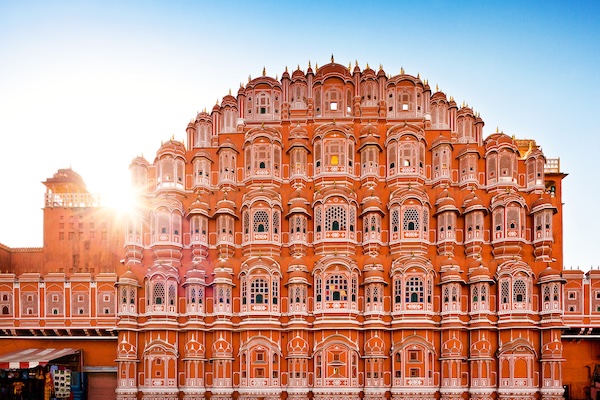
The warning signs have been flashing red for a while, but are shrugged off. And in August 2025, there was the ignominy of UNESCO issuing a warning that Jaipur’s Walled City, a World Heritage site since 2019 - faces potential delisting due to rampant encroachment and violations of heritage bylaws. If Jaipur, part of India’s Golden Triangle along with Agra and Delhi, loses its Heritage City tag, it will send a message to the world that India cannot or will not bother to care for its own treasures.
Elsewhere, notwithstanding the ‘Digital India’ tag, key pilgrimage sites like Srisailam see digital payment systems crippled by poor network connectivity, making it almost mandatory for travellers to carry large amounts of cash for temple services, accommodation, and fuel, as many establishments do not provide cashless payment options.
And, among other ills, women’s safety remains abysmal, with travel advisories abroad routinely citing concerns, most of which are fully endorsed by Indian women. Coupled with the absence of reliable support systems like Iceland’s safety branding or Japan’s legendary reputation for integrity, this often keeps India entirely off some itineraries.
Even in the sphere of wildlife tourism, India is fast gaining the unfortunate reputation of being irresponsible; it is increasingly criticised for commodifying animals. Overcrowding in parks has been linked to changes in tiger breeding behaviour and reduced fear of humans, with the response of the authorities found wanting.
III. The Invisible Crisis: What the Tourist Doesn’t See
These are among the well-documented and visible problems. But beneath the surface, out of sight of the tourist’s curated gallery, lie deeper crises that threaten not just the visitor experience but the very viability of these destinations.
Broadly, they fall into three categories:
-
Ecological collapse, where tourist numbers outstrip the natural resources that sustain them;
-
Environmental erasure, where the landscapes tourists come to see are quietly disappearing; and
-
Social displacement, where the local communities that host tourism are priced out or pushed out of their own homes.
Ecological Collapse: When Tourists Drink the Locals Dry
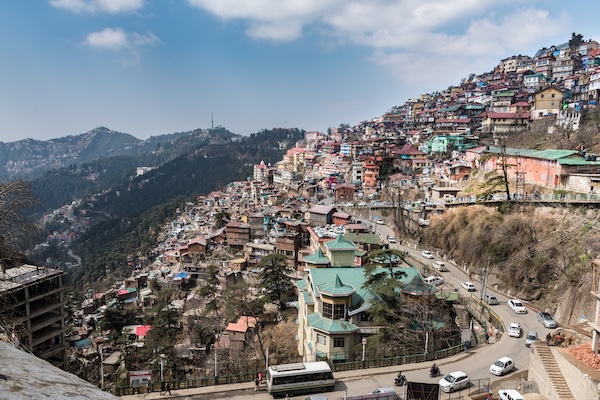
Hill stations depend on natural springs and limited groundwater. Tourist surges lead to excessive water consumption and severe shortages for residents. In Coorg, local farmers face drought exacerbated by the tourism boom. In Shimla, authorities had to cut the water supply to six days a week to avoid a crisis. The underlying equation is brutally simple: tourism thrives on natural resources, but when it consumes them faster than they can replenish, both tourists and locals lose.
Environmental Erasure: The Forests That Aren’t There
Many tourists travel to and within India for its landscapes—the Himalayan oaks, the Western Ghats sholas, the tiger reserves. But those landscapes are quietly disappearing, even as official data insists otherwise. India's figures show forest cover expanding dramatically, but that's because the definition of "forest" was changed to include tea gardens and coconut plantations. The National Green Tribunal opened a case in 2024 following reports that India has lost 23,000 square kilometres of tree cover this century (an area larger than El Salvador), with 95% of that loss occurring in natural forests between 2013 and 2023. (This is without even considering the planned infrastructure push on Great Nicobar, which threatens primary tropical forests.) The forests tourists come to see are vanishing, even as the government reports the opposite.
Social Displacement: When Tourism Pushes Out the Hosts
Overtourism is also a social justice issue. In Goa, locals are priced out of their communities as property prices soar. In Himachal, unregulated homestay construction has driven up land prices and displaced locals. Across tiger reserves, Adivasi groups are protesting illegal evictions from their ancestral lands, often framed as “conservation” but effectively prioritising wildlife tourism over traditional livelihoods. Project Tiger has already identified over 110,000 people for eviction from core areas. And when tourism becomes a force that pushes people out of their homes, the “incredible” begins to look inexcusable.
IV. The Structural Failure: Why None of This Is an Accident
Underlying all of this is a foundational failure: India has no systematic framework for determining the ecological or experiential carrying capacity of its tourist sites. UN Tourism defines carrying capacity as “the maximum number of people who can visit a destination at the same time without destroying the physical, economic, and socio-cultural environment, and without unacceptably reducing visitor satisfaction.” India has ignored this at its peril. The result? The Taj Mahal smothered in smog, Goa’s beaches eroding under concrete, Himalayan trekkers leaving behind mountains of trash.
The failure extends to the most basic systems. At Srisailam — one of the 12 Jyotirlingas — digital payments are crippled by poor network connectivity, with many commercial establishments accepting only cash as payment for services like accommodation and fuel. This is a trust failure in a country that labels itself “Digital India.”
V. The Elephant in the Room: Religious Mass Tourism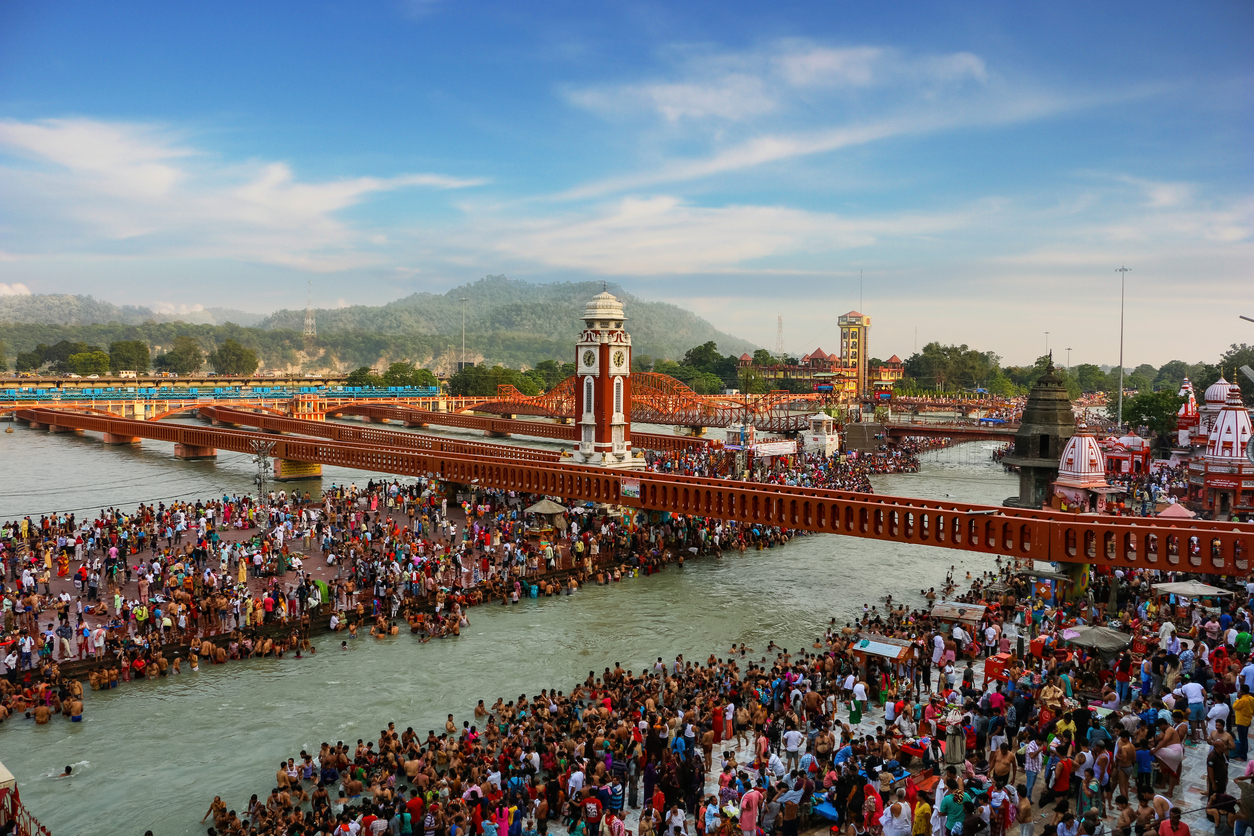
Pilgrimage tourism has grown to become Indian tourism’s domestic engine, but it is an engine that runs on fumes. Sites like Varanasi, Tirupati, and Haridwar are ecological and cultural disasters - sewage in rivers, deforestation, chaotic crowds. The model is “volume at all costs,” with zero regard for sustainability. And when pilgrimage travel becomes entangled with political identity, it creates a hostile environment for all travellers, threatening India’s brand as a diverse, welcoming destination.
Even the simple act of providing shade is neglected. Pilgrims at Gaya, Ayodhya, and countless other sites walk under the harsh sun with little respite. The need for canopied trees - along roads, paths, and in courtyards - is urgent, not just for comfort but as an essential requirement, as is enforcing stringent standards of hygiene and sanitation, and the protection of waterways in such destinations.
VI. Can this be fixed? Yes, but only if we really want to fix it
Here’s the good news: such problems have been tackled elsewhere and solved.
Venice capped cruise arrivals and uses real-time crowd monitoring to redirect tourists via mobile alerts. Kyoto employs AI-based crowd forecasting, tourist-free zones, and a reservation system for its iconic Moss Temple, which limits visitors to 150 per day and requires a sutra-copying ritual before entry—transforming tourism into privilege. Hawaii’s Hanauma Bay slashed daily visitor caps from 3,000 to 1,400 and doubled entrance fees; visitor experience improved, environmental damage reduced, and revenue per tourist increased. Bhutan embedded carrying capacity into national identity, charging $100–$200 per tourist per day to fund health, education, and conservation.
Rwanda offers another striking model. Gorilla trekking permits cost $1,500 per person, with a portion directly funding local communities and conservation. The result? High-Value tourism that supports both wildlife and livelihoods. Costa Rica’s payment for ecosystem services scheme rewards landowners for preserving forest cover—a model that could work in India’s Himalayan and Western Ghats regions.
These aren’t abstract ideas but operational models.
So what would an Indian version look like?
Immediate (0–12 Months)
-
Restore overseas promotion funding - the 91% cut is self-sabotage.
-
Visa reforms: faster e-visa processing and expanded visa-on-arrival access for key source markets.
-
Incentivise direct international flights to Tier-II tourist hubs—Kochi, Goa, Jaipur, Guwahati—to decentralise arrivals.
-
Real-time crowd monitoring at five iconic sites to enable dynamic ticketing and redirection.
-
Tourist safety corridors: visible “Pink Police” booths with female officers at airports and major tourist zones; a national helpline for real-time dispute intervention.
-
Price transparency: mandate digital metering/fixed-rate vouchers for taxis; create a public blacklist for scam operators.
Medium-term (1–3 Years)
-
Accreditation and skilling: a national Tourism Service Cadre with star-rated certification for guides, drivers, homestay hosts, and vendors.
-
Carrying capacity frameworks: develop national guidelines for ecological and experiential carrying capacity for all major destinations.
-
Sanitation and waste management: invest in clean toilets, dustbins, and waste segregation, and ensure punitive action for offences, with digital transparency.
-
Circuit-based infrastructure: move beyond the Golden Triangle; develop integrated circuits combining culture, nature, wellness, and adventure.
-
Women’s safety infrastructure: well-lit, camera-monitored pathways to hotels, tourist sites, and transport hubs.
-
Localised financing models: The Goa government’s Homestay Scheme offers a promising template: local residents are eligible for a one-time grant of ₹200,000, along with marketing support and training. The Centre’s push to make homestays eligible for Mudra loans (up to ₹1 million) can empower grassroots entrepreneurs, but standards need to be strictly monitored.
Longer-term (3–10 Years)
-
Rebrand “Incredible India” from the inside out: The name stays as it’s too valuable to discard, but its meaning must shift. “Incredible” can no longer mean chaotic, exhausting, and unmanaged. It must come to mean curated, sustainable, and welcoming. This requires not a new logo but a new reality: carrying capacity frameworks, accredited guides, safety corridors, and a tourism model that treats visitors as guests, not revenue units. When the structural changes are real, the brand will follow.
-
Pilgrimage as managed event tourism: treat major pilgrimage sites like mass events, with strict caps, advanced booking, environmental remediation, and a deliberate decoupling of spiritual experience from political assertion.
-
Elevate heritage to global status: Hampi is the best example: it should not be a day trip from Goa. Produce a global documentary series on the Vijayanagara Empire. Create a multi-day, immersive “Hampi Circuit” with signature ticketing, luxury stays, and an international arts festival.
-
Destination stewardship councils: make tourism planning a partnership, not a top-down directive. Include local communities, businesses, and environmental groups in all decisions.
-
Vision @ 2047: the government’s target of 100 million inbound tourists by 2047 is ambitious, but the type of tourist matters more than the number. The goal should be to increase spending per tourist while protecting the carrying capacity of every site.
Epilogue: The Pivot We Still Haven’t Made
The World Travel & Tourism Council projects that travel and tourism could contribute almost $500 billion (₹42 trillion) to GDP and support 64 million people by 2035. That’s a staggering figure, but it’s not guaranteed. It depends entirely on whether India chooses to manage its inheritance rather than merely mine it.
The world is moving towards sustainable, curated, high-value tourism. India can lead this shift only if it has the courage to tell the truth to itself and its visitors, because the alternative, i.e., more chaos, more scams, more pollution, more religious frenzy, isn’t just a lost opportunity. It’s a tragedy for a country with more to offer than almost any other on earth.
So, can we “fix” Indian tourism? Not unless we really want to and want it badly enough to stop treating it as a cash cow. The goal for 2035 should not just be to provide 64 million jobs, but for India to become the destination that proves that tourism can enrich without eroding.
More From BasisPoint