Dear Insighter,
Within forty-eight hours last week, two men were stabbed in Mumbai for reasons that defy reason.
In the first incident, a commuter on a late night local train asked another passenger to close the compartment door because the monsoon rain was blowing in. The request bruised an ego. A knife appeared. A young man died.
Two days later, outside Mahim station, another man accidentally bumped into a passer-by. The stranger claimed his phone had broken and, after a heated exchange, stabbed him several times. He collapsed on the pavement. But complete strangers rushed to his aid, bundled him into a vehicle and got him to hospital in time to save his life.
The same city. The same week. The full range of human behaviour.
I found myself thinking about those stories while travelling.
One afternoon, we ducked into a bar simply to take a break before continuing our journey. Nearly three hours later, we were still there. The manager, who was also behind the bar, had taken us on an impromptu masterclass in brewing. He spoke about malts, fermentation, ales and lagers, the chemistry behind different beers and why their Kokum Gose had unexpectedly become their bestseller. We bonded over a shared preference for bitter beers. He expected nothing in return except the pleasure of talking about something he genuinely loved.
He spoke about moving from Kerala to Bengaluru, then Delhi, before finally settling in Goa. To him, Goa felt like home because it shared Kerala's rhythm. Tourism was woven into everyday life, people rarely seemed in a hurry and strangers found it easier to become acquaintances.
I am not naturally someone who strikes up conversations with strangers. But every now and then, I am reminded how much richer life becomes because of that. In an age obsessed with thirty-second reels and shrinking attention spans, someone had happily spent hours explaining a craft simply because two people were curious enough to listen.
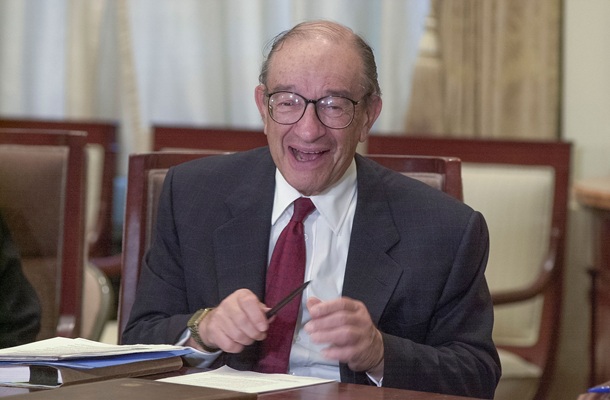
No modern policymaker embodied that contrast more completely than Alan Greenspan.
For nearly two decades, Greenspan was celebrated as "The Maestro", the central banker who seemed capable of steering the world's largest economy through almost any storm. Then history became less charitable. As Vivek Kaul reminds us, Greenspan's legacy is inseparable from what later became known as the Greenspan Put. A committed believer in free markets ended up creating an environment where investors assumed the Federal Reserve would cushion every major market decline.
Years later, Greenspan admitted he had found "a flaw" in his understanding of how markets function. Few policymakers have acknowledged error so candidly.
That is what makes Kevin Warsh's arrival as Fed Chair so intriguing. As R. Gurumurthy argues, Warsh appears determined to revive one aspect of Greenspan's approach while discarding another. Rather than projecting confidence through elaborate forecasts, he prefers discretion, flexibility and intellectual humility. V. Thiagarajan sees the same instinct. The Fed under Warsh is signalling that policy should respond to incoming data, not to the need to maintain an illusion of certainty.
The first meeting under Warsh reflected that philosophy. Anuj Agarwal notes that the June statement was almost half the length of previous ones, stripped of much of its familiar forward guidance and focused instead on price stability.
India's central bank is wrestling with much the same dilemma.
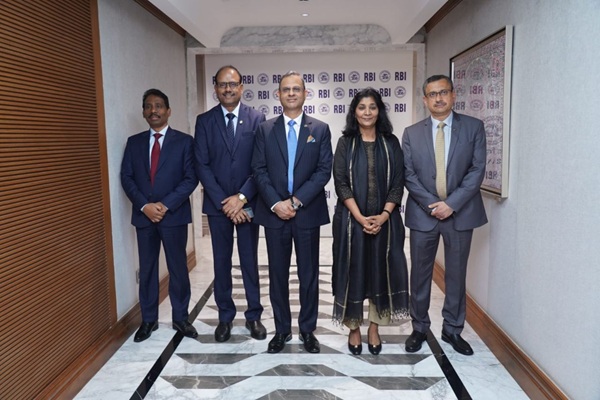
According to BasisPoint Groupthink, Governor Sanjay Malhotra has made it clear that the RBI is not preparing markets for imminent rate hikes despite interpretations of the June policy that suggested otherwise. Inflation remains a concern, but the Bank wants evidence that price pressures are broad based and persistent before acting.
As Nishat Anjum and Richard Fargose explain, that clarification has quietly reshaped market expectations. Predictions of aggressive tightening have softened. The debate has shifted from how many rate hikes lie ahead to whether they will be needed at all if inflation remains largely supply driven.
Smita Roy Trivedi and Abhiman Das, however, raise, possibility that recent measures to attract foreign currency deposits may simply be buying time. If global rates remain elevated while India relies on capital inflows instead of monetary tightening, today's stability could become tomorrow's inflation.
The weather, unfortunately, has little interest in giving policymakers that luxury.
The monsoon has arrived hesitantly and, as Shubhada Rao, Vivek Kumar and Yuvika Singhal point out, the early numbers warrant attention rather than alarm. Rainfall was 42% below normal as of late June. India has recovered from poor starts before, including in 2019, so there is no reason to declare the season lost.
Few numbers carry as much emotional weight in India as the exchange rate, and Arvind Mayaram asks a deceptively simple question. How should we reconcile a nation approaching a $4 trillion economy with a currency that has weakened from around ₹31 to the dollar in the early 1990s to nearly ₹95 today?
Dhananjay Sinha dismantles what initially appeared to be a dramatic jump in rural wages. The reported 17% increase in March turns out to be largely statistical, driven by changes in the Labour Bureau's methodology rather than a sudden improvement in rural incomes. Strip away the methodological revisions and wage growth is the weakest in four years.
B L Chandak turns our attention to something that rarely appears in official dashboards: trade credit. It is the web of trust that quietly keeps millions of MSMEs functioning every day. Businesses extend credit to one another without banks standing in the middle. When payments are delayed and liquidity is hoarded, that trust begins to fray. Anupam Sonal argues that the RBI must move beyond supervising individual institutions to stewarding an increasingly interconnected financial ecosystem. Meanwhile, the Yield Scribe argues that India should take the next logical step in opening its government bond market by making sovereign securities Euroclearable. The proposal is less about surrendering control than removing unnecessary operational friction.
In his sweeping examination of monetary regimes, Michael Debabrata Patra traces the journey from Bretton Woods through monetary targeting and inflation targeting to today's more fragmented world. Every monetary regime eventually reveals its limitations. The parallels with today's tariff disputes and geopolitical fragmentation are difficult to ignore.
Sharmila Kantha argues that India's declining investment in R&D reflects policy choices as much as business priorities. If innovation is genuinely a national priority, policy must reward it consistently.
Sagari Gupta examines India's growing dependence on Russian crude. What began as an opportunistic response to discounted prices has evolved into a significant concentration risk. The discounts have narrowed, but dependence has grown. Renewable energy presents a similar challenge. India has become one of the world's fastest-growing solar markets and, as Keshav Thakur notes, added a remarkable 44.6 GW of capacity in 2025-26. Yet, one crucial component remains overwhelmingly imported. Installing panels is only half the story. Building the manufacturing ecosystem beneath them is the harder half.
Moving on to corporate India, Krishnadevan V examines the funding structure behind Jio Platforms ahead of what is expected to be India's largest IPO. The sharp rise in finance costs has prompted understandable concern, but much of it reflects deferred spectrum payments, leases and capitalised interest beginning to flow through the income statement. The real question is whether operating cash flows will comfortably absorb those costs over time.
His analysis of ITC tells a similarly nuanced story. The company's FMCG ambitions are becoming increasingly specialised, moving deeper into health foods, natural baby care and premium convenience products. Strategically, the direction is sound. Financially, however, cigarettes still generate the overwhelming majority of profits.
Krishnadevan's third piece explores another industry in transition. Wealth management firms are discovering that buying assets under advice is far easier than buying profitable franchises. Relationships may begin with individual bankers, but loan books, alternative investments and client infrastructure usually remain with the institution.
Perhaps nowhere is that distinction between platform and product more relevant than artificial intelligence.
Dev Chandrasekhar argues that TCS may be uniquely positioned to build India's first truly sovereign enterprise AI model. Unlike companies starting from scratch, TCS sits atop decades of proprietary enterprise data spanning banking, insurance, retail and manufacturing through the wider Tata ecosystem. In an era where data is becoming the scarcest strategic resource, that corpus may prove more valuable than any technology partnership.
We build institutions because we crave certainty, then spend most of our time adapting when certainty disappears. Trade credit functions because suppliers trust buyers. Currencies retain value because people trust institutions. Financial markets depend on confidence. Innovation flourishes because entrepreneurs believe tomorrow is worth investing in. Even central banking, for all its equations and models, is ultimately an exercise in maintaining public trust.
Until next week, yours in the imperfect business of being human.
Also Read:
Central-Bank Balance Sheets: Ballast or Buoyancy? by V Thiagarajan: A central bank’s balance sheet is more than an accounting record. Its structure shapes growth, credibility, capital flows and policy power.
The Right to Gravy and Entitlement by Krishnadevan V: A Kerala consumer court case over a bowl of complimentary gravy asks what happens when small acts of generosity stop feeling like generosity and start feeling like rights.
In God We Trust; Everyone Else Gets Audited by Krishnadevan V: Allegations of cash siphoned from donation boxes at the Ram temple in Ayodhya raise the oldest question in institutional life: who watches the watchers, even when the box belongs to God.
Five Reasons Why Modi Should Attend Khamenei's Funeral by Rajesh Ramachandran: With Khamenei dead and fresh attempts to hyphenate India and Pakistan in regional discourse, Modi's presence in Tehran would be a statement about where India actually stands.
India-US BTA: Negotiating in the Shadow of a Collapsing Bargain by Ajay Srivastava: Before the bilateral trade agreement could be finalised, the strategic premise that animated the US offer quietly collapsed, and what remains on the table looks less like a partnership and more like an export order.
When Too Many Board Seats Become a Corporate Governance Problem by R. Gurumurthy: A gentleman who sits on thirteen boards, advises six more companies and still finds time for leisurely conversation raises the unsettling possibility that corporate governance has become far more ceremonial than shareholders have been led to believe.
India and Europe Are Courting Again, but Still Misreading the Signals by Kirti Tarang Pande: The India-EU free trade agreement may be signed by year's end, but the harder negotiation is whether Europe can stop reading India's caution as chaos, and India can stop reading Europe's process as condescension.
Did British Rule Leave Indian Women Better Off in the Long Run? by Amitrajeet A. Batabyal: A new paper argues that British colonial institutions reshaped social norms around women's legal rights in ways that continue to influence economic and social outcomes in India today.
Beyond the Taj by Sharmila Chavaly: New York City draws 60 million tourists a year while all of India draws 14 million, and the gap is not a marketing problem but a structural one rooted in safety, sustainability and a long habit of treating tourism as a cash cow rather than a strategic asset.
The Last Lesson of Adulthood by Kalyani Srinath: Letting go rarely arrives with drama; more often it enters quietly, on the day you stop making the call you always made, and what remains is not loss but the strange, open-handed strength of making room.
Can the Manchester Model Save Britain? by Diane Coyle: As Andy Burnham's prospects of succeeding Keir Starmer grow, attention turns to what a decade of patient, infrastructure-led regional strategy in Greater Manchester actually teaches about how prosperity is built, gradually and then suddenly.
.png)