.png)

Asian Markets Turn Risk-Off as Iran Fears and Rising Yields Weigh
Here’s your quick read to start the day: a chatty, no-fuss look at overnight moves, the big story, what’s on the docket, and the tickers you need to watch.
May 20, 2026 at 2:04 AM IST
GLOBAL MOOD: Cautious Risk Off
Asian markets traded in a risk-off mode on Wednesday as investors reacted to rising global bond yields and renewed geopolitical uncertainty surrounding the US-Iran conflict.
Sentiment weakened after President Donald Trump said he was “an hour away” from approving military strikes on Iran before postponing the decision, reinforcing fears that tensions in West Asia could escalate again with little warning. Elevated oil prices and concerns over supply disruptions continued to fuel inflation worries, prompting another selloff in global bond markets. US 30-year Treasury yields climbed to their highest level since 2007, reflecting investor concerns that interest rates may remain higher for longer.
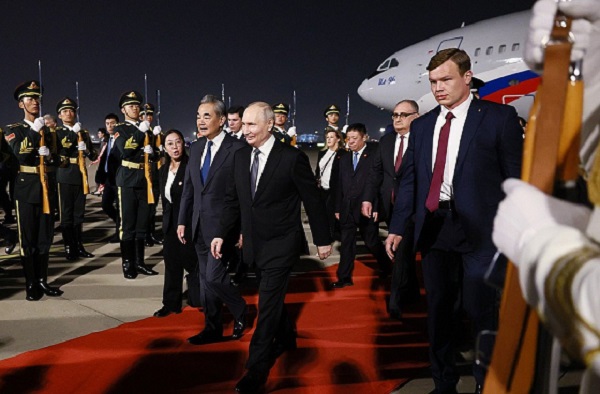
Equity markets across Asia declined, with losses led by technology and small-cap stocks in South Korea and Japan. Investors also monitored the upcoming Xi-Putin summit in Beijing for signals on shifting geopolitical alliances and global power dynamics. The combination of geopolitical risks, inflation concerns and rising borrowing costs kept overall market sentiment cautious and defensive.
THE BIG STORY
At the same time, Trump renewed pressure on Iran by warning that the US could still launch military strikes within days if negotiations failed, despite pausing an earlier planned attack following Tehran’s latest peace proposal. The comments reinforced concerns that the conflict in West Asia remained highly unstable and that the risk of renewed military escalation continued to threaten global energy markets and inflation expectations.
Separately, reports indicated that the Trump administration planned to reduce the scale of US military commitments available to NATO allies under the alliance’s force model framework. The move reflected Washington’s increasing push for European nations to assume greater responsibility for regional security and highlighted the broader restructuring of global defence and geopolitical alliances underway.
Data Spotlight
In the housing sector, pending home sales increased 1.4% month-on-month in April, marking a third consecutive monthly rise and indicating that buyer demand remained resilient despite higher mortgage rates and economic uncertainty. Strength was broad-based across most regions, supported by limited housing supply and continued price stability. The National Association of Realtors warned that without a significant increase in supply, home price growth could continue to outpace wage growth and further pressure affordability.
Labour market data also remained firm, with ADP reporting that private employers added an average of 42,250 jobs per week over the latest four-week period, extending the recent improvement in hiring activity.
Takeaway:
WHAT HAPPENED OVERNIGHT
- US stocks extended losses as rising yields pressured risk sentiment
- S&P 500 declined 0.7%, while Nasdaq fell 0.8% and the Dow Jones lost more than 300 points.
- Continued selling in US Treasuries weighed on equities as investors reacted to rising inflation concerns.
- Higher oil prices linked to the Middle East conflict reinforced fears of prolonged restrictive monetary policy.
- AI infrastructure and technology shares continued to correct after strong gains earlier this month.
- Seagate Technology extended losses, falling around 10% for the week following cautious industry commentary.
- Major technology companies including Amazon, Tesla and Meta Platforms also closed lower.
- Utility and power-sector stocks outperformed after NextEra Energy announced its acquisition of Dominion Energy in the largest power-sector deal on record.
- S&P 500 declined 0.7%, while Nasdaq fell 0.8% and the Dow Jones lost more than 300 points.
- US Treasury yields surged as inflation and rate hike fears intensified
- The US 10-year Treasury yield climbed to 4.7%, its highest level in 16 months.
- US 30-year bond yields surged to 5.2%, reaching their highest level in 18 years.
- Elevated oil and fuel prices continued to reinforce inflation concerns across global markets.
- Stalled US–Iran negotiations delayed expectations for restoring Middle East energy supply.
- Recent CPI and PPI reports showed inflation accelerating sharply due to higher energy costs.
- Strong US labour market and resilient economic activity increased expectations of further Federal Reserve tightening.
- Recent jobs data, ADP employment figures and stronger retail sales supported the view that the economy remained resilient despite rising rates.
- Investors increasingly priced in the possibility of additional Fed rate hikes later this year.
- The US 10-year Treasury yield climbed to 4.7%, its highest level in 16 months.
- US Dollar rose to six-week high as inflation fears strengthened hawkish expectations
- The US dollar index climbed to 99.4, its highest level in around six weeks.
- Rising energy prices linked to the Middle East conflict continued to fuel inflation concerns.
- Markets increasingly expected the Federal Reserve to keep interest rates higher for longer or potentially tighten policy further.
- Oil prices eased slightly after reports that NATO may help secure shipping routes through the Strait of Hormuz if disruptions persist into July.
- Despite the pullback in oil, energy prices remained elevated enough to sustain inflation worries.
- Market expectations shifted sharply from multiple 2026 rate cuts toward the possibility of a Fed rate hike by year-end.
- Investors awaited upcoming FOMC minutes and flash US PMI data for additional guidance on monetary policy and economic momentum.
- The US dollar index climbed to 99.4, its highest level in around six weeks.
- Oil eased as us–iran negotiation optimism reduced supply fears
- Brent crude fell 0.73% to settle at $111.28 per barrel.
- WTI crude for June delivery declined 0.82% to $107.77, while the more-active July contract settled at $104.15.
- Oil prices softened after comments from US Vice President JD Vance signalled progress in US–Iran negotiations.
- Markets interpreted the remarks as reducing the immediate risk of renewed military escalation in West Asia.
- Investors also took comfort from indications that both Washington and Tehran preferred avoiding a return to direct conflict.
- Despite the decline, oil prices remained elevated overall as the Strait of Hormuz situation continued to pose supply risks.
- Brent crude fell 0.73% to settle at $111.28 per barrel.
Day’s Ledger*
Economic Data
- UK April CPI
- Germany April PPI
- UK April PPI
- US Weekly Cushing Crude Oil Inventories
- Teamlease Services board to consider share buyback
- Earnings: Action Construction Equipment, Apollo Hospitals Enterprise, Bosch, DCM Shriram Industries, Eris Lifesciences, Grasim Industries, GVP Infotech, HCL Infosystems, Honeywell Automation India, JK Lakshmi Cement, Kesoram Industries, Khadim India, Kwality Wall's (India), Lenskart Solutions, Ola Electric Mobility, Oriental Aromatics, Samvardhana Motherson International, Sanghvi Movers, UFLEX, and Whirlpool of India,
POLICY
- FOMC Meeting Minutes
- BoE Governor Bailey Speaks
- BoE MPC Member Mann
Tickers to Watch
- BHARTI AIRTEL launches ‘Priority Postpaid’ 5G service with plans priced between ₹449 and ₹1,749.
- GODFREY PHILLIPS receives ad-hoc insurance payout of ₹1.0 billion related to recent fire incident at Andhra Pradesh plant.
- INDUSIND BANK clarifies it has not received any SEBI summons related to insider trading allegations; terms reports involving former officials unsubstantiated.
- JSW ENERGY to acquire 10.7% stake in Toshiba JSW Power for ₹1.5 billion.
- M&M FINANCIAL SERVICES board approves issuance of non-convertible debentures worth ₹22 billion.
- SUN PHARMA ADVANCED RESEARCH COMPANY ‘s licensing partner Ocuvex Therapeutics receives US FDA complete response letter for PDP-716 NDA due to inspection-related observations at manufacturing facility
- ZEE ENTERTAINMENT to invest up to ₹1.0 billion in optionally convertible debentures of subsidiary ZBullet Enterprises.
Must Read
- Insurance Promoters Must Share Cost of Customer Harm
- Is India’s Energy Shock the Same as the Pandemic Shock?
- India Telecom’s Pricing Power Story Is Starting to Fray
- Private Credit’s Shadow Banking Boom Carries Familiar Risks
- Is India’s Teacher Knowledge Gap Quietly Undermining Learning?
- Russians covertly trained by China return to fight in Ukraine
- US Senate advances measure curbing Trump's Iran war powers
- US not in a hurry to extend China trade truce, Bessent says
- World awaits new Fed Chair's vision on independence
See you tomorrow with another edition of The Morning Edge.
Have a great trading day
MGNREGA Repeal: A Reset for Rural Employment Guarantee
Come July 1, VB-GRAM-G will replace MNREGA.
Sharmila Kantha writes, the new scheme guarantees higher work hours and a shift in the cost-sharing ratio between the central and state governments, but will it be transparent, clear and well calibrated to avoid MGNREGA’s legacy problems and successful in addressing worker security remains to be seen.
(*Compiled from various media sources)
More From BasisPoint