.png)

Asian Markets Slide as Investors Question West Asia Truce
Here’s your quick read to start the day: a chatty, no-fuss look at overnight moves, the big story, what’s on the docket, and the tickers you need to watch

August 3, 2026 at 2:46 AM IST
Global Mood: Cautiously Risk-off
Drivers: Korea leads selloff, Trump cancels Iran strike on deal outline
Asia-Pacific markets opened sharply lower on Monday as investors adopted a risk-off stance despite a decline in oil prices following signs of easing tensions in West Asia. Equities across South Korea, Japan and Australia retreated as concerns over geopolitical uncertainty, global growth and monetary policy outweighed relief from lower energy prices. Although President Donald Trump announced that a planned military strike on Iran had been cancelled, investors remained sceptical about the durability of any ceasefire agreement.
The muted reaction highlighted lingering concerns that repeated diplomatic efforts have failed to produce a lasting settlement. Market participants also remained cautious amid the absence of a formal framework governing the proposed reopening of the Strait of Hormuz and continuing hostilities across the region. Investors are increasingly concerned that abrupt shifts in policy and military strategy could keep energy markets volatile and inflation risks elevated. Developments in Gaza also underscored the fragility of broader peace efforts, reinforcing the cautious mood prevailing across global financial markets.
THE BIG STORY
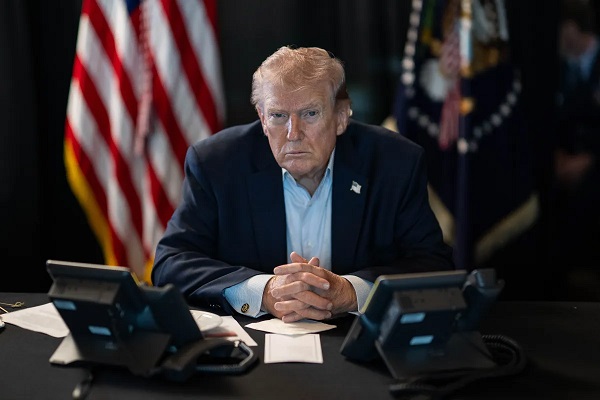
Trump announced Saturday he was cancelling a planned fresh attack on Iran, saying West Asian countries had requested time to reach a deal for the "immediate, complete and total" reopening of Hormuz and an end to Iran's nuclear threat. Israel joined the commitment, Trump said, in the latest of several abrupt strategic reversals in a five-month war that has spread from the Gulf to the Red Sea and the Egyptian Mediterranean. Saudi Crown Prince Mohammed bin Salman stressed dialogue and de-escalation following a call with Trump, while Iran's foreign minister dismissed US threats as "cognitive warfare" and said Tehran was boosting its deterrence. With no formal framework in place and both sides having repeatedly violated previous pauses, markets and analysts are treating the latest ceasefire signal with familiar caution.
In Gaza, the gap between Trump's diplomatic declarations and the reality on the ground widened further as Israeli airstrikes killed at least 15 Palestinians on Sunday, the biggest single-day toll in weeks, a day after Trump hailed a "historic" Hamas disarmament breakthrough. Israel's energy minister said there had been no deal to halt attacks, that he was "very sceptical" Hamas would disarm, and that Israel may need to take full control of Gaza if it does not. Hamas meanwhile said it would not take any action on weapons before an Israeli withdrawal. The contradictions between Trump's announcements and the positions of both Israel and Hamas suggest the Gaza breakthrough, like the Iran ceasefire, remains far more fragile than the White House's framing implies.
Data Spotlight
South Korea's exports surged 62.8% year-on-year to $98.89 billion in July, beating estimates of 59.0%, driven by a record $41.01 billion in semiconductor shipments, up 178.8%. Computer shipments jumped 404.0%, while exports to China nearly doubled and shipments to the US soared 67.8% on AI server investment. It was the second-highest export total on record, after June's historic crossing of the $100 billion mark.
The University of Michigan Consumer Sentiment Index was revised up to 55.2 in July, a five-month high, with improvement broad-based across all demographic groups. Year-ahead inflation expectations held at 4.2% and long-run expectations remained steady at 3.3%, though overall sentiment stayed 11% below year-ago levels.
US employment costs rose 0.9% in Q2 2026, matching Q1's pace and slightly above forecasts of 0.8%, as wages gained 0.9% and benefits rose 1.0%. Annual employment cost growth held steady at 3.4%, suggesting labour cost pressures remain contained but persistent.
Takeaway: South Korea's record semiconductor exports underscore the scale of AI-driven demand reshaping global trade flows, while improving US consumer sentiment and contained employment cost growth offer the Fed modest encouragement on the inflation front. However, with sentiment still well below year-ago levels and wages growing steadily, the path to the 2% inflation target remains gradual.
WHAT HAPPENED OVERNIGHT
US stocks end higher as Amazon's blowout results soothe AI spending fears
- The S&P 500 gained 0.70%, Nasdaq rose 1%, and the Dow added 0.53%, with weekly gains of 1.05% and 1.59% for the S&P 500 and Nasdaq respectively, though both ended July roughly flat to down 3.2%.
- Amazon surged over 15% after posting its biggest quarterly revenue growth in over four years, with AWS strength allaying fears that AI infrastructure spending was irresponsible or too slow to pay off.
- Microsoft rose a further 3%, adding to Thursday's 15% surge, as back-to-back megacap beats helped restore confidence in the AI trade.
- Three Fed officials who dissented in favour of a hike this week called for immediate action to bring inflation to the 2% target, with September hike odds rising slightly to 65% from 63% on Thursday.
- The S&P 500 equal-weighted index logged its fourth straight month of gains, benefiting from limited exposure to heavyweight AI stocks that have underperformed recently.
US Treasury yields return to January 2025 highs as hawkish Fed dissenter comments reinforce tightening case
- The 10-year yield rose to 4.73%, its highest since January 2025, as three FOMC dissenters publicly called for immediate rate action after voting for a 25bps hike this week.
- Kashkari said he would prefer smaller hikes now rather than waiting, Hammack warned prolonged inflation would make it more costly to bring back to target, and Logan flagged upside inflation risks.
- Despite the hawkish push, September hike odds held at 65% after Warsh offered little forward guidance on the policy path for the rest of the year.
US Dollar rebounds but posts worst weekly performance in three months on Fed guidance vacuum
- The dollar index rebounded to 100.3 on Friday but remained down 1.5% for the week, its worst weekly performance in three months, with a monthly decline of 1.3% for July.
- The greenback came under pressure as investors questioned whether the Fed is doing enough to bring inflation back to target after its fifth consecutive hold.
- Warsh reiterated the Fed's price stability commitment but offered little guidance on the policy outlook for the remainder of the year, leaving markets without clear direction.
- September hike odds eased but held at 65%, with markets continuing to price roughly a two-thirds probability of a 25bps increase despite the week's dollar weakness.
Day’s Ledger*
Economic Data
- India July S&P Global Manufacturing PMI
- July HCOB Eurozone Manufacturing PMI
- US July S&P Global Manufacturing PMI
Corporate Actions
- Earnings: Great Eastern Shipping Company, GlaxoSmithKline Pharmaceuticals, INOX India, Indian Renewable Energy Development Agency, JM Financial, Jindal Stainless, SBI Funds Management, Thomas Cook (India)
Tickers to Watch
- AARTI DRUGS: April-June net profit down 6.9% YoY to 501.7 million rupees from 539.1 million rupees; revenue up 19% YoY to 7.0278 billion rupees.
- ITC: April-June standalone net profit down 27.1% YoY to 35.788 billion rupees from 49.12 billion rupees; revenue down 14.4% to 169.08 billion rupees from 197.61 billion rupees.
- MARUTI SUZUKI INDIA: April-June standalone net profit down 10.8% YoY to 33.52 billion rupees, but beats CNBC-TV18 estimate of 32.64 billion rupees; margins under pressure despite robust revenue growth.
- INDIAN OIL CORPORATION: April-June standalone net loss at 26.613 billion rupees, worse than CNBC-TV18 poll estimate of 18.24 billion rupees loss.
- GLENMARK PHARMACEUTICALS: April-June consolidated net profit up 930% YoY to 4.83 billion rupees from 470 million rupees.
- ABB INDIA: April-June (Q2 CY26) standalone net profit up 3% YoY to 3.623 billion rupees from 3.52 billion rupees.
- MUTHOOT FINANCE: April-June net profit up 38.8% YoY to 27.99 billion rupees; NII up 29.6% to 50.986 billion rupees from 39.331 billion rupees.
- CENTRAL DEPOSITORY SERVICES (CDSL): April-June net profit up 15% YoY to 1.175 billion rupees; revenue up 13% to 2.928 billion rupees; EBITDA up 6% to 1.379 billion rupees, margin narrows to 47.1% from 50.4%.
- PERSISTENT SYSTEMS: April-June net profit down 8.7% QoQ to 4.83 billion rupees; revenue up 6% QoQ to 43.03 billion rupees ($452.4 million); EBIT down 12% QoQ to 5.815 billion rupees, margin narrows to 13.5% from 16.2%.
- BLUE DART EXPRESS: April-June profit up 81.2% YoY, driven by healthy revenue growth and stronger operating performance.
- NCC: Bags three orders worth 10.5271 billion rupees (excl. GST) in July 2026, across Buildings and Water divisions.
- STERLITE TECHNOLOGIES: Secures 9.6 billion rupee multi-year supply agreement from an undisclosed domestic telecom operator for optical fibre cables; initial 2-year term with option to extend by 2 more years.
- CLEAN MAX ENVIRO: April-June revenue up 107% YoY to 8.32 billion rupees; adjusted EBITDA up 74% to 4.94 billion rupees; PAT at 550 million rupees vs loss of 166 million rupees a year ago; margins narrow to 50% from 70.6%; commissions 0.53 GW renewable capacity, reiterates FY28 EBITDA guidance of 30 billion rupees.
- APL APOLLO TUBES: April-June net profit up 11% YoY to 2.63 billion rupees; revenue up 8.5% to 56.07 billion rupees; EBITDA up 10.6% to 4.113 billion rupees, margin improves to 7.3% from 7.2%.
- MARATHON NEXTGEN REALTY: Enters Mumbai's Sewri micro-market with residential redevelopment project worth 4.5 billion rupees GDV.
- POWERICA: Signs PPA with GUVNL to develop 100 MW wind power project in Gujarat.
Must Read
- The World Needs Compassionate AI
- Blumenthal’s Tariff Should Push India, China and Russia into a Cosy Corner
- RBI’s Tightrope Narrows as Oil, Rupee and Inflation Risks Rise
- India Needs Trade Stress Tests Before It Signs More Trade Deals
- Simpler Applications Can Lift Welfare Benefit Uptake
- Trump’s New Tariffs Are an Opportunity to Fight Back
- Indian drugmakers in no rush to shift to US despite tariff threat
- Minus N-power plans, fresh private investments fell 32% sequentially in Q1
- Power firms race to secure nuclear sites: NTPC, Adani, Tata identify locations
(*Compiled from various media sources)
See you tomorrow with another edition of The Morning Edge.
Have a great trading day
More From BasisPoint