.png)

Asia Markets Rise as Iran Deal Hopes Lift Risk Appetite
Here’s your quick read to start the day: a chatty, no-fuss look at overnight moves, the big story, what’s on the docket, and the tickers you need to watch.
May 21, 2026 at 2:04 AM IST
GLOBAL MOOD: Cautious Risk On
Drivers: US-Iran Talks, Hawkish Fed Signals.
Markets reflected a cautiously risk-on mood on Thursday, with Asia-Pacific equities tracking overnight gains on Wall Street as easing oil prices improved investor sentiment. Hopes that the US and Iran were nearing an agreement helped calm fears of a prolonged disruption in the Strait of Hormuz, a critical route for global energy supplies. Brent crude retreated after recent sharp gains, reducing immediate concerns around inflation and energy-driven economic stress.
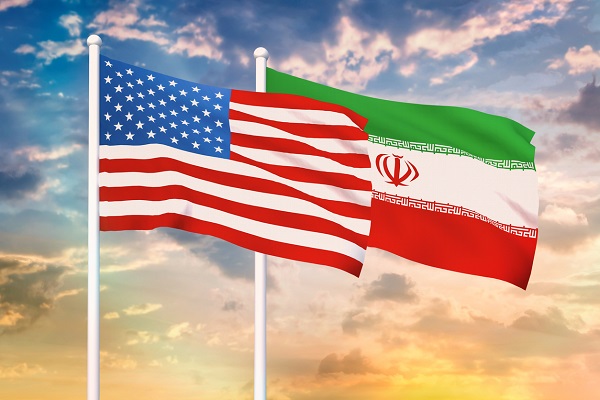
Investor optimism strengthened after US President Donald Trump said negotiations with Iran were in their “final stages,” raising expectations that diplomatic efforts could prevent further military escalation in West Asia. However, underlying caution remained intact as Trump warned that Washington was still prepared to launch additional strikes if talks failed, while Iran reiterated threats of a broader regional conflict in response to any renewed attack.
Markets were also weighing the implications of increasingly hawkish signals from the Federal Reserve. Minutes from the Fed’s April meeting showed policymakers growing more concerned that elevated oil prices and geopolitical tensions could keep inflation persistent, reinforcing expectations that US interest rates may remain higher for longer.
THE BIG STORY
Iran responded with renewed warnings, with the Revolutionary Guards stating that any further attack could trigger a broader regional conflict extending beyond West Asia. The fragile diplomatic backdrop continued to keep markets focused on risks to global energy supply and inflation, especially as elevated fuel prices remained politically and economically sensitive.
Separately, minutes from the Federal Reserve’s April meeting revealed growing concern among policymakers that inflation pressures linked to the Iran conflict and higher energy prices could require additional monetary tightening. Several officials signalled support for removing language in the Fed statement that implied a future easing bias, reflecting an increasingly hawkish stance within the central bank. The minutes also suggested incoming Fed Chair Kevin Warsh could inherit a more inflation-focused and restrictive policy environment than previously expected.
The combination of persistent geopolitical tensions and rising inflation concerns reinforced expectations that US interest rates could remain higher for longer.
Data Spotlight
Japan’s exports surged 14.8% year-on-year in April 2026 to near-record levels of ¥10.5 trillion, significantly beating expectations and marking the fastest growth in three months. The strong performance was driven by robust demand from China, the US, ASEAN economies and the European Union, highlighting continued resilience in global trade despite geopolitical uncertainty. However, Japan’s flash S&P Global Composite PMI eased to 51.1 in May from 52.2 previously, indicating that private-sector growth momentum moderated even though expansion continued for a 14th consecutive month.
In the US, Nvidia reported quarterly revenue above expectations at more than $81 billion and projected July-quarter revenue of around $91 billion. The company also announced an $80 billion share buyback programme, reinforcing investor confidence in continued AI-related spending despite slightly softer-than-expected forward guidance. Nvidia shares recovered after initial volatility and traded higher following the release. Broader US equities also advanced, with the S&P 500 rising 1% and the Dow and Nasdaq 100 gaining around 1.2%, supported by easing oil prices and improving optimism around a possible US–Iran agreement. Meanwhile, three supertankers successfully crossed the Strait of Hormuz with full cargoes, helping reduce immediate fears of severe energy supply disruptions.
Takeaway:
WHAT HAPPENED OVERNIGHT
- US stocks rebound as tech shares and easing oil prices lifted sentiment
- Wall Street indices rallied more than 1% after a three-session selloff driven by geopolitical and inflation concerns.
- Dow Jones rose 1.31%, S&P 500 gained 1.08% and Nasdaq advanced 1.55%.
- Technology and semiconductor stocks led gains ahead of earnings from Nvidia.
- Nvidia shares rose ahead of results, and the company later announced an $80 billion share buyback programme alongside stronger revenue guidance.
- Semiconductor shares rallied strongly, with Arm Holdings and Astera Labs posting sharp gains.
- Falling oil prices improved sentiment around travel and leisure stocks, with major airlines and cruise operators rising strongly.
- Retail shares weakened after Target warned about a challenging macroeconomic environment.
- Walmart also declined ahead of earnings results.
- Intuit fell after reports that the company planned significant job cuts.
- Wall Street indices rallied more than 1% after a three-session selloff driven by geopolitical and inflation concerns.
- US Treasury yields eased as Iran deal hopes reduced inflation concerns
- The US 10-year Treasury yield fell to 4.60% after reaching a 16-month high of 4.7% in the previous session.
- Markets reacted positively after Washington signalled progress toward a potential agreement with Iran.
- Donald Trump said negotiations with Tehran were in their final stages.
- Reports that supertankers successfully crossed the Strait of Hormuz helped ease supply disruption concerns and pushed oil prices lower.
- Lower energy prices reduced some immediate fears of further inflation acceleration.
- Previous inflation data had already shown signs that higher energy costs were spreading into broader areas of the economy.
- FOMC minutes indicated that several Federal Reserve policymakers remained open to additional rate hikes if inflation stayed elevated.
- Markets still broadly expected the Fed to keep rates unchanged this year, though implied odds of a December hike remained around 50%.
- The US 10-year Treasury yield fell to 4.60% after reaching a 16-month high of 4.7% in the previous session.
- US Dollar eased as Iran deal optimism improved market sentiment
- The US dollar index held lower around 99.1 after retreating from early-April highs reached in the previous session.
- Optimism surrounding potential progress in US–Iran negotiations reduced safe-haven demand for the greenback.
- Donald Trump said negotiations with Iran were in their final stages, helping push oil prices lower for a second consecutive session.
- Despite the recent decline, crude prices remained significantly above pre-war levels, sustaining inflation concerns.
- Investors continued to monitor the risk that elevated energy prices could keep global inflation pressures persistent.
- FOMC minutes indicated that many Federal Reserve policymakers remained open to additional rate hikes if inflation stayed above target.
- The US dollar index held lower around 99.1 after retreating from early-April highs reached in the previous session.
- Oil prices dropped sharply as Iran deal hopes eased supply fears
- Brent crude fell 5.63% to settle at $105.02 per barrel, while WTI crude declined 5.66% to close at $98.26 per barrel.
- Oil prices dropped after Donald Trump said negotiations with Iran were in their final stages.
- Markets interpreted the comments as increasing the likelihood of easing supply disruptions from West Asia.
- Investors expected a potential agreement could eventually help restore oil flows and reduce pressure on global energy markets.
- Despite the sharp decline, traders remained cautious as disruption risks in the Middle East continued and no final agreement had yet been reached.
- Brent crude fell 5.63% to settle at $105.02 per barrel, while WTI crude declined 5.66% to close at $98.26 per barrel.
Day’s Ledger*
Economic Data
- India May S&P Global Flash PMI Data
- US Weekly Initial Jobless Claims
- US April Housing Starts Data
- US May S&P Global Flash PMI Data
Corporate Actions
- Earnings: Ashoka Buildcon, Aurobindo Pharma, Bikaji Foods International, Century Enka, Datamatics Global Services, Electrotherm (India), Emami, Engineers India, GAIL (India), GMR Power and Urban Infra, ICRA, ITC, JSW Cement, LG Electronics India, Life Insurance Corporation Of India, Mahanagar Telephone Nigam, Rail Vikas Nigam, Ramco Systems, Rashtriya Chemicals and Fertilizers, Reliance Power, Repco Home Finance, Sun TV Network, VA Tech Wabag, and Welspun Corp,
POLICY
- BoE Gov Bailey Speaks
Tickers to Watch
- ADITYA BIRLA CAPITAL plans to issue 112 million shares worth up to ₹40 billion via preferential allotment to GRASIM, SURYAJA INVESTMENTS and IFC.
- CROMPTON GREAVES CONSUMER ELECTRICALS expanded its lighting portfolio with new stabilisers and LED lamps.
- GLENMARK PHARMACEUTICALS’ arm IGI unveiled ISB 2301, a multispecific immune cell activator targeting solid tumours.
- HCLTECH released an AI report warning that 43% of enterprise AI initiatives risk failure amid tightening execution timelines.
- HG INFRA ENGINEERING excluded projects worth ₹41.42 billion from its executable order book amid uncertainty around MSRDC projects.
- JK CEMENT emerged as the preferred bidder for a 1,188-hectare limestone mining block in Andhra Pradesh.
- JSW ENERGY approved a QIP fundraise, setting the floor price at ₹534.05 per share.
- KEI INDUSTRIES will acquire 26% in Solarcraft Power India for ₹0.06 billion through shares and CCDs, securing 11.25 MW solar capacity in Rajasthan.
- KRN HEAT said its Neemrana plant received approval under Rajasthan’s RIPS-2024 scheme, potentially enabling fiscal incentives.
- PACE DIGITEK secured a ₹2.65 billion BSNL BharatNet order in Sikkim for network infrastructure deployment and maintenance.
- RVNL emerged as the lowest bidder for a ₹1.64 billion East Coast Railway signalling project involving Multi-Section Digital Axle Counters.
- SHAILY ENGINEERING launched a generic Semaglutide Injection in Canada using its ShailyPen Neo injector platform.
Must Read
- Hasn’t Central Banking Moved Beyond Brainard?
- Bank Indonesia Has Chosen Currency Defence Over Comfort
- RBI Announces $5 Billion Swap To Inject Liquidity
How Trump's revenge tour against Republicans could cost the party in November
India's fertiliser subsidy bill for FY27 may rise by Rs 70,000 cr on West Asia crisis, official says - Elon Musk’s SpaceX Files for Potentially Largest-Ever IPO
- US-Iran state of affairs: Why the Hormuz crisis is far from over
- Xi and Putin unite to criticise US, but fail to clinch big gas deal
See you tomorrow with another edition of The Morning Edge.
Have a great trading day
𝐒𝐡𝐨𝐮𝐥𝐝 𝐩𝐫𝐢𝐯𝐚𝐭𝐞 𝐜𝐫𝐞𝐝𝐢𝐭 𝐰𝐨𝐫𝐫𝐲 𝐩𝐨𝐥𝐢𝐜𝐲𝐦𝐚𝐤𝐞𝐫𝐬 𝐚𝐧𝐝 𝐫𝐞𝐠𝐮𝐥𝐚𝐭𝐨𝐫𝐬?
Information remains sparse, while the extent of interconnectedness across the financial system is difficult to assess.
A Federal Reserve study last year concluded that stress in private credit markets posed negligible danger to the banking sector and would have virtually no impact on bank capital through existing linkages. That conclusion may reflect optimism more than prudence.
Rahul Ghosh writes, consider the scale involved. The stock of sub-prime securities that precipitated the 2008 financial crisis was under $1 trillion, barely a third of today’s estimated private credit universe. Yet the collapse of those instruments destabilised the global financial system and imposed severe economic hardship worldwide. The risks are undeniably higher, but so are the returns. Empirical studies suggest private credit loans generate spreads more than three times those earned on conventional bank lending.
More From BasisPoint