.png)

Are We in the Goldilocks Scenario?
India’s Goldilocks moment looks enticing, yet surging growth and vanishing inflation signal a fragile equilibrium, a lull before the storm.
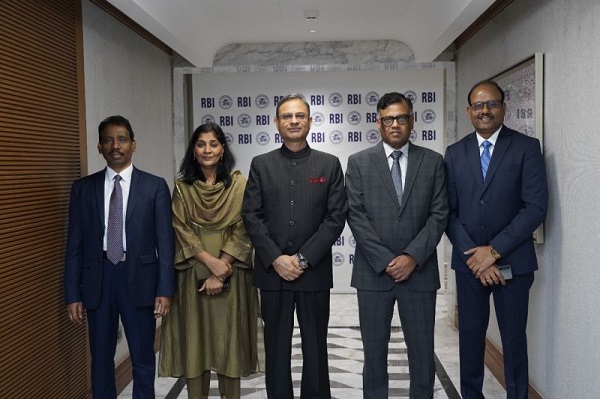

Mridul Saggar is a Professor and Head of Centre for Macroeconomics, Banking & Finance at IIM Kozhikode. He was formerly RBI Executive Director and a member of its Monetary Policy Committee and Financial Market Committee.
December 10, 2025 at 10:03 AM IST
Delivering the December monetary policy, RBI Governor Sanjay Malhotra said, “Inflation at a benign 2.2% and growth at 8.0% in April-September present a rare Goldilocks period.” From a macro viewpoint, however, Goldilocks will be a state where growth is moderate and sustainable, avoiding both recession and boom, and inflation is in sync with its target on a durable basis, exhibited in its dampened variance.
India’s July-September real GDP growth turned out to be rocking 8.2% and the economy has exhibited a growth acceleration over the last four quarters. This should signal a classic overheating.
“Goldilocks” is a macroeconomic puzzle
Domestic engines have been fired up to offset any expected cooling from the tariff hit to external demand. Monetary and regulatory policies have been eased to support credit growth. More favourable tax slabs for the middle class under the new tax regime and the GST changes have got the tax multiplier to work. Monetary policy tightening through 250-bps rate hikes during May 2022 to February 2023 to offset the equal reduction during August 2018 to May 2020 had delivered a soft landing in which low inflation supported real consumption demand.
Consequently, growth dynamics have indeed surprised on the upside. Real GDP growth hit a six-quarter high in July-September. Nominal GDP growth, however, hit a four-quarter low. The scissors effect in nominal and real GDP growth is plausible if the inflation dampens sharply, as it indeed has. However, the real growth has been above what is supported by potential GDP, with near-zero inflation, which is certainly a macroeconomic puzzle.
Productivity & capex can’t fully explain it
Has there been a dramatic rise in total factor productivity growth? RBI’s KLEMS data comes with a lag and shows total factor productivity growth slowed a tad in 2022-23. Later, anecdotal evidence does not support a story of any dramatic improvement in productivity. In fact, Indian firms so far seem to be missing the Artificial Intelligence-led boom story. India is, therefore, not attracting global capital on that count.
A big-ticket, capex cycle has not kicked off in India in the face of global uncertainties despite the de-seasonalised capacity utilisation rates staying somewhat above the long-term average for 13 successive quarters.
The sum of high-frequency indicators and anecdotal evidence suggests that the economic activity, while being reasonably resilient, is not as robust as it appears. Urban consumption confidence has shown a dramatic improvement since the middle of 2023-24, while rural consumer confidence after post-pandemic normalisation has been holding around the long-term average.
Consumer confidence has been backed by actual spending. Holiday effects have magnified. E-commerce retailers have reported a 23% year-over-year jump in online sales during Diwali and a 27% jump in online sales during Black Friday. Vehicle registrations have stayed robust beyond holiday effects. However, it is not clear what part of it is supported by the post-pandemic K-shaped recovery and what part is broad-based.
We also know that current deflation is aided in part by base effects, and post-pandemic corporate pricing power remains good, though it is not translating into inflation feeding on itself. Naurki.com’s JobsSpeak Index is giving the impression that white collar job creation has gathered some momentum despite technology displacement. However, GST collection dropped sequentially and stalled on year in November. Credit card spending has fallen by over 6% in the last two months.
Unravelling the puzzle requires better measurement
It is not as if the growth story in India has ended or dampened. Sentiments in favour of India may be weak at the current juncture. In addition, overvalued stock markets may be putting potential foreign investments, both portfolio and direct, on the sidelines. However, what the investors need is confidence that Indian institutions and legal systems work.
The fact is that macro-policy formulation is suffering because of statistical problems. There is little gain by evading acknowledging the obvious, that national statistics measurement needs all-around improvement.
This is despite the massive effort the MoSPI has put in to improve them over the last one and a half years after a lost decade. The quality of statistics is already improving and will make further strides next year, though it will probably fall short of addressing all problems in the absence of the entire administrative machinery rallying to plug the gaps. MoSPI by itself can’t produce all macro statistics and depends on regulators and administrative data for quite a few. India has set up the National Single Window System to make some progress in ease of business. Can’t Centre, States, sub-national bodies and their myriad ministries and administrative offices set a single statistical system to reduce reporting burden and yet provide quick, reliable data?
Two decades after the introduction of VAT and eight years since the introduction of GST, we still do not have a business registry that is the source of key national statistics in most advanced economies. The US had a long series of meaningful longitudinal databases by setting up a Panel Study of Income Dynamics (PSID) as early as 1968, and that moved from annual to bi-annual data since 1999, enabling it to have a good cross-check on the reliability of consumption expenditure data. If India is to avert an urban bias in its national statistics, it must make more efforts through sample and panel data surveys.
Most importantly, we still haven’t been able to set up a good system to capture real output in the services sector that accounts for 63% of the gross value added in the last five years. Without having a clear idea of both input and output prices in the services sector, it will not be possible to have a reliable fix on the value added in this sector, and so the overall activity levels to take a call on growth-inflation trade-offs.
Improved RBI communication may boost credibility
The rate cut may have surprised half the market, but it was not like the June policy surprise of a 50-bps rate cut coupled with a 100-bps forward commitment to CRR cuts that no one guessed or understood, and its effects were dampened by a premature change in stance from accommodative to neutral.
This time around, the Governor prepared the markets with a hint 12 days before the policy announcement by stating, “We do not see any signal suggesting that this space (scope for rate cut) has diminished… there is certainly room.”
Two days later, Deputy Governor Poonam Gupta, speaking at a MoSPI workshop in Mumbai, added to the central bank’s signal when she said, “Any forecasting exercise, by its very nature, has the risk of incurring forecast errors. Such errors are a common feature around the world. These are generally larger when there are unpredictable shocks or events”. She then went on to point to the food in the CPI basket.
Those savvy with the lingo of the central bankers would have seen it as a cue that the RBI would revise its inflation forecasts down, thus adding to the signal of room for rate cut(s).
However, the communication was not so transparent when it came to explaining the motive of buy-sell swap or on IMF’s quality assessment of India’s macro statistics or the classification of its exchange rate regime as a crawling peg, for obvious reasons of not wanting to be dragged into avoidable controversy. A lot of press questions or commentary around the macroeconomy accompanying the policy exhibited poor understanding of the issues, and the policymakers’ responses were short on educating the public on those issues. Explanation, engagement and education are part of their communication job.
IMF has obviously C-flagged India’s macro-statistics on grounds of quality, timeliness and other shortcomings. It has recommended methodological improvements to avoid over- or underestimating economic activity, especially by relying on producer price indices and the use of double deflation techniques. There is little point in deflecting these issues by suggesting that base revision exercises will address these concerns when they would do so only partially.
RBI is managing exchange rate quite well
In fact, in a more recent period, the RBI is allowing greater exchange rate flexibility, enabling it to act as an automatic stabiliser. Nominal dollar/rupee exchange rate breaching 90 is of little consequence from the viewpoint of economics and the consequent rupee depreciation of a little above 6% on a year-on-year basis seems a very good offset to any likely tariff impact on external sector. This is especially true at a time when capital inflows have dried on a net basis and all the critiques about India’s “sliding rupee” who in part took recourse to India’s Article IV assessment for India, have not bothered to take note that therein IMF’s External Balance Assessment (EBA) REER index and level models suggested an overvaluation of 5.4% and 4.1%, respectively.
In its December policy, RBI announced a 25-bps cut in policy repo rate, liquidity infusion of ₹1 trillion through open market purchases of bonds and ₹450 billion through $5 billion buy-sell swaps. If liquidity infusion was the purpose behind the swap, as was explained by the RBI, it could have also done that part through OMOs. However, RBI’s net forward sale positions had touched a high of nearly $90 billion in February 2025 following mindless moves since October 2024 to artificially prevent rupee depreciation rather than to allow it to adjust smoothly as it is doing now, while keeping a lid against any speculative shorting by the currency traders. About $29 billion of that has since been unwound till September 2025, but $59 billion (latest data October $63.60 billion) still remains. A $5 billion buy-sell swap will help the RBI address the legacy problem, cushioning any reserve fall, which, in any case, remains at a very healthy level of $686 billion (latest available data for November 28, 2025).
Forecasting bias corrected, but large uncertainties remain
A 50-bps upgrade to the 2025-26 growth projection and a 60-bps downward projection to the 2025-26 inflation projection when half-year numbers for growth and inflation numbers for the first seven months are known is not usual, but at least it has come now rather than in the last policy of the year.
The forecasting exercise needs improvement. However, what is more important is that the April-September 2026-27 inflation projections are now looking credible given the available information set at the current juncture.
If one were to see the visual fan charts accompanying the MPC’s resolution, it looks as if inflation is expected to stay above the lower tolerance limit of 2% only with a 70% confidence interval. So, there is still a large probability of inflation breaching 2% and sinking lower, opening room for further rate cutting. But on the other side, the confidence interval for inflation staying below the upper tolerance limit of about 6% is 50%. This means RBI should not be ruling out rate hikes either. This justifies the retention of a neutral stance rather than the alternative of changing the stance to accommodative and holding rates in this policy to preserve ammunition for the future.
What is important is that markets should understand the uncertainty bands around central forecasts, instead of expecting central banks to remove all uncertainties for them, even when large uncertainties prevail. Framing monetary policy under uncertainty is a science as well as a great art. But so is the job of corporate treasuries and financial intermediaries to make their investment decisions in this environment, and their bonuses must be hard-earned.
It is the Lull before the Storm and requires policy buffers
The governor seemed conscious of these risks, while, like a typical central banker, he imparted confidence in his narrative. However, capital flows are notoriously volatile, and EMEs face sudden surges, stops and reversals. It is in this context that it is important for the RBI to have a complete realisation that present growth-inflation dynamics are not Goldilocks but a lull before the storm. It needs to build macro-prudential buffers and create monetary policy in good times, as Dr Y.V. Reddy** so astutely did before the Global Financial Crisis.
US regulatory weakness is systemically important
Similar trends are building up once again. The signing of the Presidential executive orders in February 2005, expanding powers over independent regulatory agencies, established the Guiding and Establishing National Innovation for the US. Stablecoins Act (GENIUS) Act of July 2025 that has led a boom in the entire crypto space, the ongoing rolling back of the supplementary leverage ratio (eSLR) for large banks replacing it with a flat 2% buffer for Global Systemically Important Banks (G-SIBs) with a variable buffer tied to their G-SIB surcharge, effective from April 2026, the significant changes proposed by the Fed recently in the Comprehensive Capital Analysis and Review and the Dodd-Frank Act Stress Testing intended to weaken stress tests and free up capital for lending, Basel III end-game modifications reducing intended capital and liquidity buffers in the wake of 2023 banking crisis, especially in the view of rising share of internet/ digital/ tokenised deposits that can potentially dramatically increases the speed of bank runs and several moves for financial deregulation.
The world is already sitting on an asset price bubble that is waiting to either implode or explode. It may start either from the AI segment of the equity or from cryptos and spill over to real estate. Timing of the next crisis is hard to predict, but it is getting nearer by the day and may more likely happen anytime over the next 1-2 years, though one should also keep a watch for it coming earlier. The Bitcoin price has already corrected 28% from its October 6, 2025, peak. The Case-Shiller’s cyclically adjusted Price-Earnings Ratio (CAPE) applied to the S&P 500 remains on a steep climb and has crossed 40 in December, which is markedly higher than 32.6 in September 1929 just before the Great Crash that marked the start of the Great Depression or the 27.6 in May 2007 on the eve of the or the GFC and is only slightly underneath the all-time high of 44.9 in December 1999 before the dotcom bubble burst.
The folly pointed out by Reinhart and Rogoff – that of believing “This Time it is Different”- is getting repeated. The current high valuations are being justified on claims that, unlike the internet firms during the Dotcom bubble, AI companies are profitable. The AI story is actually no different. A Harvard Study in August this year documented that 95% of investments in gen-AI have produced zero returns. Sundar Pichai, in an interview with the BBC last month, acknowledged that there were “elements of irrationality” and every company would be affected if the AI bubble were to burst. The street has ignored that warning for now because Nvidia results surprised on the upside. It also chose to forget the $600 billion drop in its market cap on account of a 17% single-day drop in its price on January 27, 2025, on China’s DeepSeek unveiling an open-source large language model. But isn’t such volatility a tell-tale sign of a bubble? Aren’t markets too frothy? Investors are clearly building castles in the air with valuations surging far in excess of fundamentals.
It would be a myth to draw comfort from the fact that India may be impacted less by global markets crashing. It is true that, in the first place, global investors see no traction in Indian companies as they do not see any investible stocks in the AI space. If one were to apply CAPE to the Nifty 500, it has been hovering a little above or below the 40 mark since the start of 2024, and the only time this phenomenon was seen earlier was before the GFC, when the India CAPE actually touched 50 at the end of 2007. House prices are also on fire in certain metropolitan regions in India.
Is there space for further rate cuts now?
With what confidence can we say that rates can only go up from here? Given the fan charts and the neutral stance, there is still scope for policy rates to move in either direction. After all, central banks remain data-dependent, and they never say never to anything. Policy repo rate was dropped to 4.0% in the pandemic, and if this is any indication of our effective lower bound, there is still a space for a 125-bps reduction should any crisis cause a growth collapse. On the flip side, repo rates were raised to 6.5% in the last tightening cycle and have been raised to as high as 9% in July 2008 on the back of overheating of the economy and WPI inflation reaching a high of 11.9%; and, in April 2001, following the Indian rupee coming under pressure following stock market turbulence. Complacent markets should also not forget that RBI resorted to raising short-term interest rate as a first line of defence in the wake of steep exchange rate depreciation following the Taper Tantrum crisis and raised its Marginal Standing Facility rate to 10.25% in July 2013 and quickly siphoned off excess liquidity to push it to the operational rate.
I have no intention to be a party pooper here, but while markets and central banks can do a tango for now, there is a tryst with destiny to follow.
* The views expressed are personal.
Also read:
MPC Signals Maturity as Policy Counters Shocks with Confidence
MPC Moves Signal the Arrival of a Post-Cycle Policy Regime
More From BasisPoint