.png)

For much of the Global South, electricity is destiny. While the energy transition is often framed in climate terms, billions of people understand it primarily as a means of expanding opportunity, ensuring affordability, and improving service delivery.
Thus, the next phase of the clean-energy revolution will be led not by countries that build more solar panels, but by those that modernize their grids, markets, and institutions accordingly. Modernization will be the main priority because greener grids are more complicated.
The old electricity model was simple: plants generated power that the grid then transmitted directly to business and household consumers. The new model is different. Electricity is becoming decentralized as homes, farms, and private enterprises adopt rooftop solar, battery-storage systems, and electric appliances, and citizens are no longer passive consumers but “prosumers” who generate power as well as consume it.
Decentralization and renewables introduce complexity, because while expectations for consistent quality service remain in place, solar and wind power are more variable, and energy systems’ assets are more widely distributed. To keep up, clean grids need shared digital rails – much like the internet – where diverse assets communicate along an open, interoperable backbone.
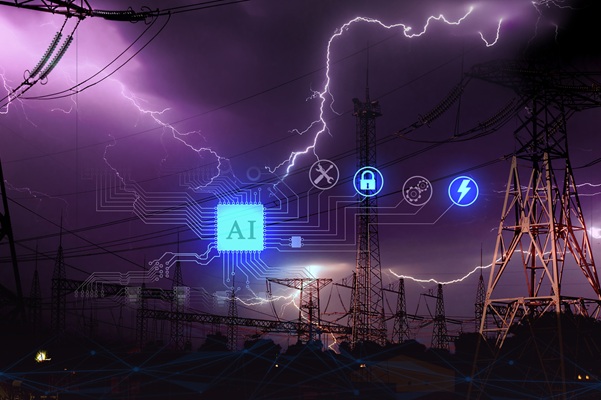
In fact, AI-ready grids built on interoperable rails with real-world data and capabilities will be as crucial to the Global South’s development as traditional infrastructure like roads and ports. Leveraging AI applications in energy delivery is a no-brainer. The technology is perfectly suited to improve demand forecasting; rationalize purchasing and delivery processes; and reduce technical losses. It is already facilitating predictive maintenance to prevent outages, streamlining billing and collections, and bolstering utilities’ financial health.
The prospective gains are considerable. For too long, operational inefficiencies and distribution losses have created an implicit tax across developing economies, ultimately increasing electricity costs and reducing reliability. In this context, an AI-integrated grid can serve a crucial function: transforming clean energy into tangible benefits for citizens, in the form of higher service quality, reduced expenditures, fewer service interruptions, and expedited connections. Energy will be democratized like never before.
Moreover, AI-enabled systems demand a host of skillsets, so their adoption will expand the opportunities available to entrepreneurs and workers who contribute to the sector’s growth. But unlocking these gains will require a more comprehensive approach. Currently, the AI-enabled landscape is fragmented, with pilots for a new dashboard in one city, a new predictive model in a single utility, and a new “smart meter” in the next town over. These projects rarely “converse” and usually depend on proprietary systems, meaning they cannot scale. The result is duplication and higher costs.
The Global South has seen this problem before, namely in the buildout of basic digital infrastructure. That experience showed that modernization without interoperable foundations can leave you locked into rigid systems that are expensive to upgrade, difficult to audit, and vulnerable to cyber risks.
Thus, properly leveraging AI in the energy sector is both a technical challenge and a strategic imperative. Whether energy modernization will serve prosumers’ best interests ultimately depends on whether systems are interoperable or fragmented.
To put itself on the right path, India has launched a major strategic initiative to create an India Energy Stack, as part of its broader digital public infrastructure buildout. The IES is being designed for globally extensible frameworks, like the Network for Humanity’s proposed Digital Energy Grid, which would ensure interoperability across the energy value chain. This work lays the foundation for the future, as does the Indian Ministry of Power’s initiative to install 200 million smart meters, thus enabling real-time measurement nationwide.
Responding to the explosive growth of rooftop solar panels, the IES will create the digital foundations for multiple new uses and markets, including peer-to-peer trading. Much like digital-payment technologies, interoperable energy platforms can enable millions of entrepreneurs – installers, aggregators, battery owners, and energy service agents – to make new income streams, particularly across Tier-2 and Tier-3 (less developed) regions. Equally important, this digital foundation will strengthen the grid because interoperable platforms and standardized asset identities allow utilities and system operators to optimize millions of distributed resources in real time.
This reflects India’s overall approach to digital public infrastructure, which aims to create new competitive ecosystems. The country’s public platforms will allow startups and service providers to drive innovation without starting from scratch, and utilities will gain access to modular solutions that help them avoid vendor lock-in. The point is to enhance existing systems rather than pursue a complete overhaul.
India offers a model for the rest of the Global South. How developing countries think about the underlying architecture of markets will determine whether they can move directly to the next phase of the digital revolution rather than remaining digitally dependent on others. Of course, least developed countries and small island developing states face many obstacles, from fragmented markets and fragile economies to limited budgets. But the International Solar Alliance could help to overcome these barriers. With 125 member countries committed to cooperating on solar deployment, the ISA promises to become a global engine for AI-driven, citizen-focused grid transformations everywhere through a global mission on AI for energy.
The basic recipe for success is no secret. We need structured programs to modernize regulation, build capability, pilot interoperable digital systems, incentivize seed funding for innovation, and mobilize blended finance to support scalable solutions. All these steps must be taken together as part of a national or even regional mission. That is how the Global South can move from siloed pilots to building systems at scale.
The clean-energy transition is entering its platform era. The Global South does not need to copy the old grid model (which wealthy countries are modernizing at great expense). Instead, it can leapfrog to the next stage by combining renewables with AI and digital public infrastructure. India is already showing the way.