.png)

A System That Adjusts by Moving the Pain Somewhere Else
From Hormuz to HDFC Bank, the adjustment isn’t absorbed but displaced, into the rupee, the consumer, and wherever policy won’t let it land.

Phynix is a seasoned journalist who revels in playful, unconventional narration, blending quirky storytelling with measured, precise editing. Her work embodies a dual mastery of creative flair and steadfast rigor.
March 30, 2026 at 3:42 AM IST
Dear Insighter,
I stared at a blank screen for three hours this morning, which is probably how long it takes the average person to realise the rupee has quietly absorbed another shock they didn’t vote for, didn’t quite notice, and will eventually pay for anyway.
Writer’s block, it turns out, is a lot like exchange rate policy. You sit there hoping clarity will arrive on its own, that something external will unlock movement, while all along the adjustment is happening somewhere else, silently, incrementally, and almost always in a way that leaves you slightly worse off than before.
It’s not a lack of material (there’s far too much of it) but a lack of clarity about where the adjustment is actually landing. Because everywhere you look right now, across energy markets, currency policy, institutional credibility, and corporate governance, the pattern is the same. The shock is real, the response is visible, but the burden doesn’t stay where it starts. And when it keeps moving, you don’t get clarity by staring at it longer. You get it by changing the frame.
So let’s do that.
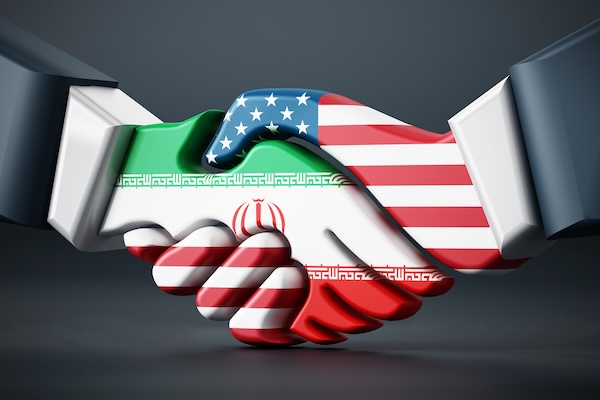
Welcome to the Strait of Hormuz, the world’s most consequential twenty-one miles of water. Highlights include breathtaking geopolitical tension, a thriving ecosystem of ceasefire rumours, and some of the most competitive crude oil pricing you’ll find anywhere, provided you are standing on the right side of it. The strait carries roughly one-fifth of the world’s crude oil and, at present, roughly one hundred percent of the world’s anxiety. Amenities include fragmented energy markets, a rupee under steady pressure, and inflation that hasn’t yet arrived but is very clearly packing its bags. Disclaimer: There are no refunds.
The travel brochure version of this crisis sounds more honest than the official one, because it cannot pretend that temporary explanations are sufficient for structural shifts. What Aabhas Pandya notes is that markets are still trading ceasefire optics rather than supply realities, treating what is increasingly a permanent fracture as though it were a temporary disruption. A pause in hostilities is not the same as normalised flows. A headline is not the same as a pipeline.
And as Yield Scribe observes, what is actually unfolding beneath the surface is something far more consequential. Energy markets are fragmenting not by supply, but by route. WTI near $100. Brent around $113. Dubai crude closer to $130. Oman near $160. A gap of $60 to $65 between benchmarks that, in theory, should not diverge this dramatically. The reason is not scarcit, but immobility. Geography has inserted itself back into pricing in a way markets had almost forgotten how to process.
The same barrel now carries a different value depending on which side of a strait it is located. That is not just a price shock, but a structural repricing of access. For India, which imports over 85% of its crude, access is a vulnerability.
G. Chandrashekhar writes that crude, crops, and currency are converging into a potent inflationary threat. Elevated crude implies fuel price increases likely as early as May, with pass-through effects across transportation, manufacturing, and logistics. The burden, as he notes, will not be evenly distributed. It will be regressive, falling most heavily on those least equipped to absorb it.
Dhananjay Sinha observes markets are still conditioned to treat geopolitical shocks as transient deviations from equilibrium. This one is not. The equilibrium itself is shifting: alliances are fragmenting and institutional anchors are weakening. And yet, as R. Gurumurthy notes, India’s policy response has been to manage the visibility of the shock rather than its source. Bond yields are being contained. Import costs are only partially transmitted. Fiscal signalling remains cautious but not contractionary. The visible edges of the problem are being softened, which means the adjustment has to go somewhere else.
It is going to the rupee.
Sakshi Gupta captures the policy contradiction. In a tariff-driven shock, a weaker rupee can act as a buffer, restoring competitiveness. In an energy-driven shock, that logic inverts. Each unit of depreciation raises the domestic cost of imports, widens the current account deficit, and adds to inflationary pressure. The currency stops cushioning the system and starts amplifying the shock.
Madhavi Arora quantifies what that amplification might look like. If Brent averages above $100, the current account deficit could breach 2.5% of GDP. The dollar-rupee could move toward 96. Bond yields could drift higher. Arvind Chari introduces an even more uncomfortable layer. The rupee has been among the worst-performing currencies since late 2024, weakening even in an environment where the dollar itself softened globally. His interpretation is difficult to ignore. India may be implicitly prioritising trade competitiveness over capital attraction. But global capital does not think in rupees. It thinks in dollars.
Which brings us, inevitably, to the question of policy response.
What should the RBI actually do? Gaura Sen Gupta argues for calibrated depreciation alongside continued liquidity support, not a sharp interest rate defence, not large-scale reserve drawdown. BasisPoint Groupthink goes a step further: two proposals from former central bankers, both sitting outside current orthodoxy, suggest the RBI could do more with its balance sheet than conventional tools allow.
Drawing also on Christine Lagarde's framework, the Groupthink argument is that the focus must shift from baseline forecasting to risk management: adjust liquidity to lean against emerging inflation pressures without committing prematurely to a rate cycle. V. Thiagarajan offers the necessary corrective to anyone tempted to treat reserve accumulation as the answer: reserves alone cannot substitute for credibility. Reputation and communication are earned gradually and lost quickly.
Michael Debabrata Patra adds a pointed institutional dimension. The IMF, he argues, has drifted from its foundational purpose of ensuring exchange-rate stability. Its selective scrutiny, particularly its reluctance to call out major economies, raises legitimate questions about its role. His suggestion that India consider withholding permission for certain IMF analyses reflects a broader shift, the gradual erosion of unquestioned institutional authority in a world that is becoming more openly transactional.
Rajesh Mahapatra writes that what appears to be a conflict over ideology or resources is increasingly a contest over control of the strait itself. Even if hostilities subside, the assumption of free and frictionless passage may not return. Instead, access could become conditional, priced, negotiated, and controlled. He adds in another piece that India must move beyond markets to secure supply through strategy, diversification, and calibrated statecraft.
Karan Mehrishi notes that this is the sharpest test yet of India’s multi-alignment strategy. Relationships with Israel, Iran, the UAE, the US, and others are now intersecting in ways that make passive balancing increasingly difficult. Rajesh Ramachandran offers a counterpoint: India may be better off not being drawn into mediation it cannot influence. But he also points to a missed opportunity, the absence of a principled stance on targeted assassinations.
Gold, meanwhile, is telling its own version of the story.
G. Chandrashekhar notes that current prices embed a significant war premium, perhaps $700 to $1,000 per ounce. When that premium unwinds, the correction could be sharp. V. Thiagarajan’s gold-oil ratio provides a useful interpretive lens. When gold rises without oil, it signals financial anxiety rather than real economic strength. That is where markets appear to be positioned today.
R. Gurumurthy adds a distinctly Indian complication. Gold ETFs, which promise efficiency, often fail to deliver it. Persistent gaps between NAV and market price reflect structural limitations in arbitrage and market depth. In India, gold is not just a commodity; it is a financial instrument shaped by the imperfections of the system around it.
Governance reveals a similar pattern of deferred adjustment.
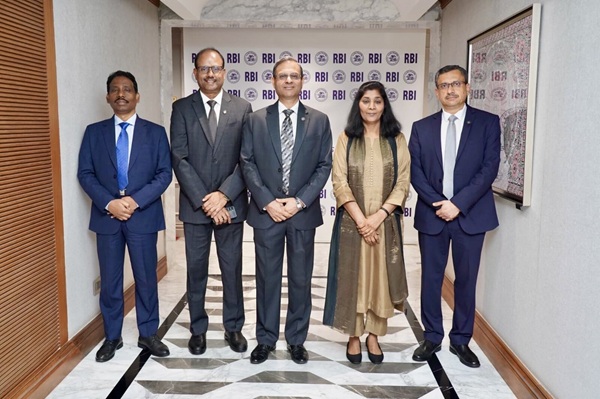
Anupam Sonal frames the HDFC Bank episode as a test of institutional maturity rather than an isolated event. Krishnadevan V notes that accumulated equity in senior management creates not just alignment, but influence, influence that can complicate oversight. He also highlights that institutional investors, despite holding overwhelming ownership, exercised limited engagement when it mattered.
Srinath Sridharan argues that large NBFCs must be governed with the same discipline as banks if they are systemically important. Rabi N. Mishra warns that regulatory capability must keep pace with financial innovation or risk falling permanently behind.
Chandrika Soyantar adds a balance sheet dimension: Nifty-500 companies, excluding BFSI, are sitting on roughly ₹16 trillion in surplus cash, accumulated faster than revenue, with no clean instrument to return it without distorting ownership or resetting expectations.
Sangeeta Godbole shifts attention to the WTO, where new rulebooks are being written without India’s participation. Her argument is not about abandoning principle, but about recognising that absence has consequences. Sharmila Kantha offers a measured view on Chinese investment, openness without naivety. And Arvind Mayaram cuts through a recurring misconception. India’s problem is not institutional capacity, but incentive design — systems deliver what they are rewarded for.
Three hours of nothing. Not because there was nothing to say, but because there was no clear answer to a simpler question. Where does the adjustment land?
The rupee absorbs the pressure because rates cannot. The consumer absorbs it because prices cannot. Investors absorb it because governance does not. Institutions defer it because incentives allow them to.
The brochure, if it were fully honest, would end with a disclaimer (in very small print): conditions subject to change, adjustment unavoidable, burden unevenly distributed.
Until next time, still trying to keep up with where it’s all moving.
Phynix
Also Read
Stop Calling It a Favour by BasisPoint Groupthink: Fuel price stability isn't a concession from the state; it's being financed by the same economy the state is addressing.
World Bank's Recantation of a Dogma by TK Arun: After decades of condemning state-led industrial policy, the World Bank has done its Galileo moment. Some Indian economists are still burning Nehru at the stake.
Tariffs Lift Camlin Fine but the Real Story Lies in Blends by Krishnadevan V: The tariff recovery and the specialty re-rating are two different theses, and the market is pricing both simultaneously.
When Scale Becomes a Systemic Risk by Srinath Sridharan: Concentrated systems rarely weaken at the margins; they falter when overcentralised cores lose the flexibility to absorb stress.
Basel's Endgame Stalls as Regulators Wrestle with Bank Size by Rahul Ghosh: In trying to restrain the largest banks or elevate the rest, regulators have edged into doing both without fully committing to either.
Make in India Cannot Afford a Policy Muddle by Reform Compass: India's manufacturing share of GDP has fallen from 18% in 1979 to 13% in 2024, and political will without policy coherence produces slogans, not outcomes.
LG India's Summer Optimism Faces Weather, War and Cost Uncertainty by Dev Chandrasekhar: The recovery thesis rests on a hot summer arriving on schedule; weather and geopolitics are variables that analyst confidence cannot neutralise.
India's Laws Don't Falter in Drafting, They Fail in Delivery by Ninupta Srinath: The problem isn't weak legislation but uneven execution, with delays, diffused accountability, and a growing gap between law on paper and law in action.
Pressure Mounts on India as WTO Talks Focus on E-Commerce and Investment Deals by Ajay Srivastava: MC14 at Yaoundé is shaping up as either a modest compromise or a deeper fracture, and India's position on the e-commerce moratorium will determine which.
Bus Lanes Over Grand Plans: Why BRT Deserves a Second Shot by Alok Kumar Mishra: India cannot metro its way out of urban congestion, and BRT still offers a faster, cheaper alternative if treated with the seriousness it has never quite received.
The OPD Waiting Room Is a National Anxiety Clinic by Srinath Sridharan: A hospital waiting room asks frightened people for devotional patience while offering vagueness at the desk and outrage on the television.
Blaming Yourself First is Empowerment, Not Masochism by Kirti Tarang Pande: When the next headline tries to push you into petrol-queue panic, ask what you actually decided, not what the market did.
A Lot Can Happen Over Rajma Chawal by Kalyani Srinath: The deepest conversations don't always happen over coffee; sometimes they happen in the pauses of a simple meal between old friends.
The Global Economy's Many Chokepoints by Michael Spence: In a network optimised for efficiency over resilience, single points of failure extend far beyond geographical bottlenecks like the Strait of Hormuz.
More From BasisPoint