.png)

Takaichi in New Delhi: Momentum, Limits and the Shadow of Beijing
More than a routine summit, Takaichi's visit underscored converging India-Japan interests on China, security and supply chains, while exposing the limits of deeper strategic alignment.
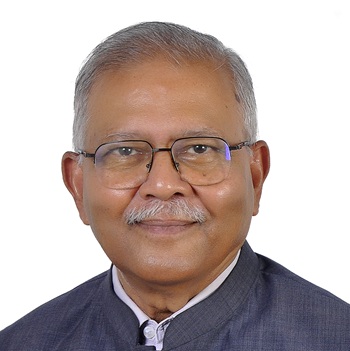
Ashok K. Kantha is former Ambassador/High Commissioner of India to China, Sri Lanka and Malaysia, Subhas Chandra Bose Chair Professor of International Relations, Chanakya University, Bengaluru, and Distinguished Fellow at the Vivekananda International Foundation, New Delhi.
July 4, 2026 at 10:13 AM IST
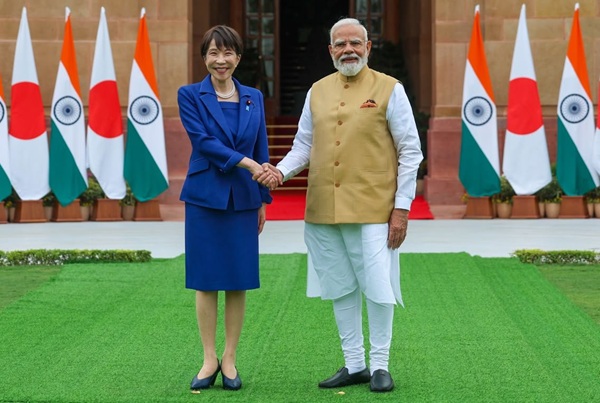
Prime Minister Sanae Takaichi's visit to India can be read at several levels at once: a bilateral relationship recovering its stride after a period of drift, a clear message to Beijing, and a measure of New Delhi's desire to seek strategic space at a moment when Washington, the traditional anchor of Indo-Pacific architecture, looks distracted and transactional. The visit produced no dramatic breakthrough, but it was a statement of intent and a probe into how far India and Japan can go together.
The strategic backdrop
The visit unfolded against an unusually unsettled backdrop. Japan-China relations had sunk to their lowest point in years after Takaichi told the Diet in November 2025 that a Chinese use of force against Taiwan could threaten Japan's survival; Beijing reacted harshly, both in its demarche and its punitive export control listings.
Tokyo's own politics had been turbulent too, Takaichi's rise following LDP factionalism, even as she pushed an "evolved" Free and Open Indo-Pacific pitched against the Belt and Road Initiative. India, meanwhile, has been navigating a volatile China relationship and an unpredictable Washington, with a growing sense that New Delhi's strategic space is being squeezed between an inconsistent United States and an assertive China, and that the Indo-Pacific's architecture requires diversification and de-Americanisation to some degree to remain credible.
What the summit produced
The outcomes, while not dramatic, were substantive. The Joint Leaders' Statement pairs Takaichi's "evolved FOIP" with Modi's MAHASAGAR vision rather than India simply endorsing Japan's framework as in past summits, with more pointed language on the East and South China Seas, both leaders underscoring the importance of resisting coercion and preserving autonomy, phrases that point unmistakably to China.
On defence, the visit produced an inaugural co-development agreement on a naval radio antenna project ("Unicorn"); cooperation has historically meant exercises rather than joint development, so even a modest project marks a structural shift, reinforced by plans for the next "2+2" ministerial before year end. On economic security, new agreements responded to the year's energy shocks, including a dialogue on Indian crude and petroleum stockpiling under the "Power Asia" framework and a Japanese pledge on India's IEA membership. On technology, the AI statement pairs Japanese precision manufacturing with Indian software. On connectivity and investment, the E10 Shinkansen offer and the reaffirmed 10 trillion yen target represent commitments rather than delivery.
The China factor and Beijing's response
Much of this amounted to a message aimed at Beijing as much as at each other: an explicit East/South China Sea formulation, a first defence co-development pact, and a critical-minerals partnership framed around supply-chain resilience. The timing, days after fresh export control listings targeting Japanese entities and against the Taiwan-related rupture, made this hard to read any other way. Beijing's response unfolded over two days, and the sequencing was instructive: on July 2, Guo Jiakun dismissed Takaichi's renewed FOIP framing as invoking "free and open" while sowing "division and rivalry," while on 3 July, once the critical-minerals cooperation had been reported, his tone shifted to procedural caution that such cooperation "should not target any third party.”
That official restraint sat awkwardly alongside Chinese media commentary, which ran well ahead of it, The Paper and Sohu depicting the visit as Takaichi "selling" her Indo-Pacific strategy; more combative Sohu pieces read the visit's themes as oriented at containing China. The commentary reflected two anxieties: Japan's activism complicating China's efforts to dominate the Western Pacific; and India-Japan coordination being harder for Beijing to counter. China knows how to deal with American pressure; it is less comfortable with Asian coalitions that operate autonomously.
The limits of collaboration
The visit also highlighted areas of convergence and divergence. Both countries oppose coercion, seek to preserve maritime freedoms, view China's military modernisation with concern, and are committed to diversifying supply chains. But divergences remain. Japan's security posture is still shaped by its US alliance, which limits its autonomy, whereas India insists on strategic independence and resists any framework resembling containment. Japan's economic relationship with China is far deeper than India's, and India's continental border challenge creates different priorities from Japan's maritime focus. In technology cooperation, ambition outpaces substance. The AI statement pairs Japanese precision manufacturing with Indian software as though the two already meet in the middle, but the semiconductor cooperation both governments tout remains concentrated in downstream activities, assembly, testing and packaging, well short of the wafer fabrication and chip design that would mark a genuine shift in the value chain. That gap was visible elsewhere too: for instance, the single defence co-development project remains modest in scale. These gaps are a useful corrective to any reading of the summit as a realignment; evidence suggests steady, incremental progress rather than the sweeping partnership the joint statements sometimes project.
A personal aside on how the mechanism began
When I served as Joint Secretary (East Asia) in the Ministry of External Affairs, we first proposed the idea of an annual Prime Ministerial exchange ahead of Manmohan Singh's visit to Tokyo in December 2006. My Japanese interlocutors were sceptical at the outset, regarding annual summits as demanding and out of step with the measured tempo of Japanese diplomacy, and it took sustained persuasion to bring them round to the view that a fixed annual rhythm would insulate the relationship from domestic politics on either side.
The idea found its way into the Joint Statement of December 14, 2006, recording the decision to hold summit-level meetings annually, alternating between capitals. Two decades on, the mechanism has produced sixteen summits, interrupted only by extraordinary circumstances like the Covid-19 pandemic, and it is against that consistency, rather than any single summit's deliverables, that Takaichi's visit is best judged.
Overall significance
The real significance of the visit lies not chiefly in its communiqués but in the strategic context. The United States is increasingly seen as inconsistent in its commitments, its preference for bilateral deals treating the Quad as supplementary rather than central, which has opened space for India and Japan to assume greater leadership. Japanese commentary read the visit in these terms, the Asahi Shimbun previewing it around maritime and economic security pillars, Sankei framing it as the completion of Takaichi's Quad-country circuit. For India, this was precisely the opening described above, room to hedge between Washington and Beijing without renouncing strategic autonomy. Whether that space can be seized will depend on Japan's domestic bandwidth, India's own hedged calculus, and China's response.
Japan's domestic constraints are real: a fragile coalition and a sluggish economy mean Takaichi's ability to sustain a more assertive posture depends on Japanese companies seeing India as a credible alternative to China for manufacturing. India's calculus is more complex still: New Delhi values Japan as a trusted partner but is aware of Japan's own structural limitations, demographic decline, a constrained defence budget, dependence on the US for extended deterrence, and is pursuing an increasingly multipolar hedge. India will judge Japan's reliability by delivery, not rhetoric.
Taken together, the visit is best understood as a reaffirmation rather than a breakthrough. It gave Japan a credible answer on its post-Abe staying power and reaffirmed India's centrality to Tokyo's regional strategy, while showing that Asian powers can coordinate on shared China concerns without waiting for American sponsorship. The defence co-development pact and the prospective 2+2 mark an incremental but real step in a security relationship that has historically lagged the economic one. But these commitments will mean little unless converted into delivery, and the China factor will remain the relationship's most persistent undertow. Whether the visit becomes a turning point depends on what both capitals do next.
More From BasisPoint