.png)

Asian Markets Turn Cautious as Investors Weigh Tech Earnings and West Asia Risks
Here’s your quick read to start the day: a chatty, no-fuss look at overnight moves, the big story, what’s on the docket, and the tickers you need to watch.

August 6, 2026 at 2:15 AM IST
Global Mood: Cautiously Risk-on
Asia-Pacific markets traded mixed on Thursday as investors weighed optimism surrounding artificial intelligence-related spending against mounting geopolitical uncertainty in West Asia. The mood remained cautious, with declines in South Korean and Japanese equities offsetting modest gains elsewhere. Investors also assessed another round of corporate earnings after strong demand for Nvidia's products reinforced expectations of sustained investment in AI infrastructure.
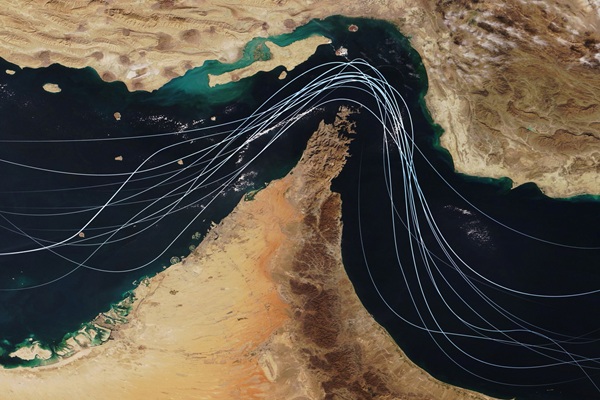
However, geopolitical concerns continued to limit broader gains. Iran's warning of potential retaliation against Gulf energy infrastructure renewed concerns about possible disruptions to oil supplies and the wider implications for inflation and economic growth. Investors also monitored developments surrounding negotiations over the Strait of Hormuz, where reports of possible concessions to Tehran added to uncertainty over the region's long-term security outlook.
While optimism over technology spending continued to support equity markets, the prospect of renewed conflict and uncertainty surrounding global energy supplies encouraged a more selective approach to risk-taking. Market participants are also awaiting fresh corporate earnings and additional signals on the direction of monetary policy.
Iran escalated its diplomatic pressure campaign Wednesday, warning Gulf states through high-level contacts with Saudi, Qatari and Turkish counterparts that any new US strike on Iranian territory would trigger retaliation against critical energy infrastructure across the region. The message, delivered by Foreign Minister Araqchi, was unequivocal: attack Iran and Gulf oil facilities burn. Saudi Crown Prince Mohammed bin Salman subsequently urged Trump to delay military action and return to negotiations, underlining how Iran is effectively using its Gulf neighbours as a buffer, putting states that host US bases and depend on energy exports in an increasingly uncomfortable position between Washington and Tehran.
The shape of a potential Hormuz deal meanwhile came into sharper focus — and it represents a significant concession to Iran. A senior Iranian source and two regional officials told Reuters the proposed Iran-Oman framework would give Tehran control over inbound traffic through the strait, a major shift in the regional balance of power that the US has repeatedly said it would never accept. Iran reported "significant progress" in the bilateral talks, while regional sources pushed back against suggestions a deal was imminent. If confirmed, an arrangement ceding any Iranian authority over Hormuz would effectively mean the war launched in February had ended on terms more favourable to Tehran than Washington, with the strait, which was freely open to all ships before the conflict, now subject to Iranian oversight. Trump, speaking at a Las Vegas rally, said he preferred a deal to killing people but added "at some point we're gonna" leaving the military threat alive even as diplomacy edges forward.
Data Spotlight
US private payrolls rose just 44,000 in July, the weakest gain in six months and below forecasts of 70,000, as leisure and hospitality shed 11,000 jobs and goods-producing sectors contracted. Education and health services led gains at 36,000. Pay growth held at 4.4% for job stayers, while job switchers saw a 7.0% increase, the largest since August 2025.
The 30-year fixed mortgage rate rose 5 basis points to 6.81% in the week ending July 31st, a one-year high, as renewed West Asia hostilities pushed oil prices and Treasury yields higher. Mortgage applications fell 2.9% for a third consecutive weekly decline, with purchase applications down 3.6% and refinancing down 1.9%.
Takeaway: Weak private payroll growth and services employment slipping back into contraction point to a softening US labour market, even as services activity remains in expansion. Mortgage rates hitting one-year highs and persistent price pressures tied to the West Asia conflict keep the Federal Reserve's policy dilemma firmly in focus.
WHAT HAPPENED OVERNIGHT
US stocks mixed as SpaceX and AMD stumble despite Iran deal progress lifting Dow to record
- The Dow rose 0.49% to a record close, while the S&P 500 slipped 0.17% and Nasdaq fell 0.83%, as SpaceX and AMD earnings disappointed despite ongoing Iran deal optimism.
- A proposed deal giving Iran control over ships entering the Gulf through the Strait of Hormuz emerged as one of the biggest concessions yet to Tehran, though markets remained cautious after repeated false starts.
- AMD dropped 7% despite forecasting above-estimate quarterly revenue, as investors demanded greater evidence that AI spending would translate to faster growth.
- ADP data showed US private payrolls grew by just 44,000 in July, well below expectations, ahead of Friday's nonfarm payrolls report.
- Minneapolis Fed President Kashkari said now is the time to start slowly raising rates, with September hike odds dipping to 54.9% from 58.3% a week ago.
US Treasury yields hold retreat from 18-month highs as fuel price declines limit rate hike risks
- The 10-year yield held at 4.60%, maintaining its pullback from this week's 18-month high of 4.75%, as declining wholesale gasoline and diesel prices eased near-term inflation concerns.
- US officials continued to signal progress toward an Iran agreement that would restore regional energy exports, softening fears of unrestrained price growth after oil-driven inflation surged in April-June.
- A tame ADP report strengthened the dovish case within the FOMC, though yields remain sharply higher since the Fed's July decision.
- Warsh's hesitation to confirm higher rates as his preferred inflation tool drove a steepening of the yield curve, with the long end surging while the short end eased.
- The Treasury allocated the bulk of higher debt needs in bills, keeping note and bond issuance unchanged, reflecting the sensitivity around longer-duration supply given Warsh's balance sheet reduction push.
Dollar falls below 99.8 to seven-week low as yen intervention and Fed uncertainty weigh
- The dollar index slipped below 99.8, extending last week's sharp decline triggered by an estimated $88 billion JPY intervention by the US Treasury and Japanese counterpart, with dollar selling featuring in the operation.
- Foreign investors trimmed holdings of long-term dollar-denominated assets following Warsh's reluctance to confirm rate hikes as his preferred inflation tool, amplifying the post-Fed dollar weakness.
- A fresh pullback in energy prices and a soft ADP report further dimmed September Fed hike expectations, adding to the dollar's downward pressure.
- The yen and JGB plunge that precipitated the intervention reflected broader stress in the currency and bond markets, with the episode compounding the dollar's structural headwinds from the Fed's policy ambiguity.
Oil mixed as Hormuz deal hopes offset Houthi tanker attack and surprise crude stock build
- Brent settled at $79.45/bbl, up 0.11%, and WTI at $75.22, down 0.73%, as cautious deal optimism was tempered by conflicting signals and fresh supply disruption risks.
- Iran and Oman reached an understanding on Hormuz management coordinates with a joint announcement being finalised, though Iran denied peace talks with the US were under way.
- Trump characterised Tuesday's talks as an "all-day negotiation" while threatening to hit Iran "really hard" if no deal is reached, maintaining the familiar pattern of conflicting signals.
- Houthis said they attacked a Saudi oil tanker off Yanbu, adding to Red Sea shipping risks just as deal optimism had been easing the geopolitical risk premium.
- US crude inventories rose 2.5 million barrels to 407 million barrels last week, against expectations for a 1.5 million barrel draw, with a larger-than-expected Cushing build adding additional downward pressure on WTI.
- The Caspian Pipeline Consortium repeatedly suspended operations this week due to safety concerns and tanker shortages amid escalating Black Sea attacks, adding another supply disruption front.
- China further relaxed fuel export controls for a second consecutive month, providing a modest offset to tightening global supply conditions.
Day’s Ledger*
Economic Data
- German June Factory Orders
- Euro Zone ECB Economic Bulletin
- US Weekly Initial Jobless Claims
Corporate Actions
- Earnings: Britannia Industries, Edelweiss Financial Services, Hindustan Construction Company, Hero MotoCorp, Life Insurance Corporation of India, Lupin Limited, NCC Limited, Reliance Power, Shipping Corporation of India
Tickers to Watch
- NAVIN FLUORINE INTERNATIONAL: April-June consolidated net profit at 2.433 billion rupees vs 1.172 billion rupees a year earlier, marking a significant improvement.
- CUMMINS INDIA: April-June standalone revenue up 17.9% YoY to 34.26 billion rupees, beating estimate of 32.86 billion rupees; net profit down 7.9% to 5.43 billion rupees, missing Street estimate of 6.52 billion rupees, on margin pressure.
- PB FINTECH: April-June consolidated net profit up 92.4% YoY, driven by sustained growth across insurance and credit businesses.
- BAYER CROPSCIENCE: April-June net profit up 15.4% YoY, aided by stronger margins and a one-time gain, even as revenue declines.
- NEULAND LABORATORIES: April-June net profit at 148 million rupees vs 14 million rupees a year earlier; revenue more than doubles to 641.5 million rupees from 292.7 million rupees.
- COHANCE LIFESCIENCES: Receives Form 483 with five observations from USFDA following inspection of its Hyderabad manufacturing facility.
- SIS: April-June consolidated net profit up 9.4% YoY to 101.7 million rupees; revenue up 29.7% to 4.6036 billion rupees, on robust domestic and international security operations growth.
- ASTER DM QUALITY CARE: April-June net profit falls sharply despite strong revenue, patient volume and operating earnings growth; revenue up 21.6% YoY to 1.311 billion rupees from 1.078 billion rupees.
Must Read
- Review of the MPC Decision: The Fine Print on Outperformance
- The MPC Must Show the Way Back to 4%
- A Little Help for Japan and the Return of Managed Currencies
- The Mirage of Market Exchange Rates
- India may charge gas users to fund planned $42 billion fuel reserves, sources say
- Unanimous MPC vote on rates signals stability amidst global uncertainty
- Siam's E20 U-turn deepens debate over fuel quality and vehicle safety
- Why is the government offloading stake in LIC? | Explained
(*Compiled from various media sources)
See you tomorrow with another edition of The Morning Edge.
Have a great trading day
More From BasisPoint