.png)


Dr K. S Sujit, Professor at the School of Business and Management, Christ University, Bangalore
Dr Nandini M. is Assistant Professor at Christ University.
September 8, 2026 at 4:11 AM IST
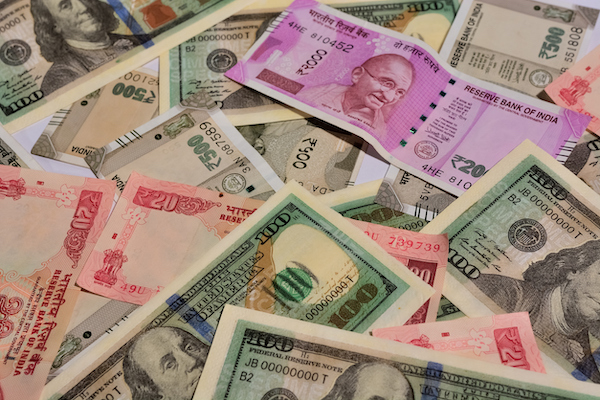
India’s foreign exchange reserves have crossed $700 billion, putting it among the five countries with the largest reserve holdings. That cushion has been built over several decades, helped by the strength of India’s services exports, remittances and a cautious approach to external financing. The RBI has also played a central role in building and managing the buffer. By conventional measures, India is better placed than ever to withstand global financial turbulence.
Yet an interesting policy question remains. The Prime Minister has repeatedly urged citizens to moderate discretionary imports such as gold and consider domestic alternatives to foreign holidays and destination weddings. If India has built such a substantial reserve cushion, why does it still matter how Indians spend dollars abroad?
The answer lies in a more fundamental question: How much foreign exchange is enough for a rapidly growing economy, and is India earning foreign exchange fast enough to support that growth?
Foreign exchange reserves are a country’s financial insurance. They provide a buffer against sudden capital outflows, currency volatility, external debt obligations and disruptions to essential imports. India’s position is vastly different from 1991, when reserves covered only a few weeks of imports. But reserve adequacy is not simply about the size of the stock. How much is enough depends on what the country may have to pay for when conditions turn difficult. For India, that includes a large oil import bill, swings in capital flows, external debt repayments and shocks arising from geopolitical tensions.
And the calculation changes as the economy gets bigger. India now has a far larger trade and financial footprint than it did two or three decades ago, which also means that more money moves in and out of the country.
Visible Outflows
Take gold for instance. In 2025–26, India imported 721 tonnes of gold, 4.8% less than the 757 tonnes imported a year earlier. Yet the import bill jumped from about $58 billion to $71.98 billion. The reason was largely the surge in gold prices: Indians bought less gold by weight, but paid much more for it.
Outbound tourism tells a similar story. The FICCI-Nangia NXT report estimated India’s outbound tourism market at $18.82 billion in 2024. Overseas holidays, destination weddings and international spending are natural consequences of rising incomes and greater global integration. They should not automatically be treated as economic problems. But they are discretionary sources of foreign exchange demand.
The larger vulnerability is elsewhere: energy.
Oil is a much harder problem to tackle. India spent about $133 billion on crude imports in 2023–24 and around $137 billion in 2024–25. Nearly 88% of its crude requirement was met through imports in 2023–24, and dependence stayed above 88% in the first half of 2024–25. A foreign holiday can be postponed and a gold purchase delayed. Oil cannot simply be switched off.
When global oil prices rise, India’s import bill increases, the current account comes under pressure, the rupee faces depreciation pressures and inflationary risks rise. Geopolitical tensions in major oil-producing regions can therefore quickly become an external-sector problem.
Earning Capacity
This is why the focus on gold and tourism, while understandable, can obscure the deeper issue. Reducing oil dependence through renewable energy, electrification and domestic energy innovation would have a much greater and more lasting impact on India’s external position than temporarily curbing discretionary imports.
China and Japan offer a broader lesson. Their large external buffers were built alongside strong productive and export capabilities. The lesson for India is not simply to accumulate reserves, but to build the capacity to generate foreign exchange through globally competitive production and services.
India has one clear advantage when it comes to earning foreign exchange: its services sector. IT services have become a major source of export earnings, while remittances from Indians working overseas provide another steady inflow. But the goods side of the external account tells a different story. India buys considerably more merchandise from the rest of the world than it sells, with energy and intermediate goods accounting for a significant part of the import bill.
The gap has been widening. India’s merchandise trade deficit rose from about $283.5 billion in 2024–25 to $333.2 billion in 2025–26. Imports increased from $721.2 billion to $775 billion, while exports edged up from $437.7 billion to $441.8 billion. In the first quarter of the current fiscal, the deficit was $86.86 billion, compared with $68.75 billion in the same quarter a year earlier.
None of this means that India should try to eliminate its trade deficit. A growing economy will import machinery, energy, technology and other inputs that it needs to expand. What matters is what happens on the other side of the equation. Are those imports helping build businesses that can eventually sell more to the world and earn the foreign exchange needed to pay for them?
That is the more useful way to think about Viksit Bharat@2047. India cannot build external strength simply by asking households to buy less gold or take fewer holidays abroad. It has to earn more from the rest of the world.
That means making Indian manufacturing more competitive, moving further up the value chain in technology and pharmaceuticals, expanding knowledge-intensive services and reducing the economy’s dependence on imported energy. Reserves will remain an important safety net. But a country is in a much stronger position when the dollars keep coming in because its companies are selling more, rather than because it has accumulated a larger stockpile of them.
The real measure of external strength will not simply be how many dollars India holds, but whether its growth consistently creates the dollars it needs.
More From BasisPoint