.png)

Andrés Velasco, a former finance minister of Chile, is Dean of the School of Public Policy at the London School of Economics.
July 8, 2026 at 4:06 AM IST
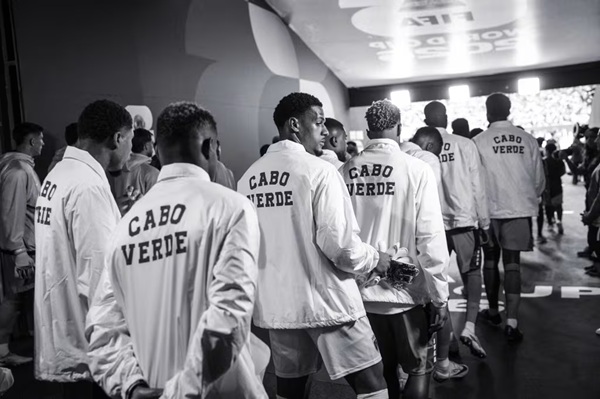
The inevitable was about to happen: Argentina would dispatch Cape Verde. But then, deep into extra time, wonder struck: Sidny Lopes Cabral, aged 23 but looking 17, took a pass on the left flank and, instead of lobbing the ball in search of a header, shifted direction (sending the defender skidding the wrong way) and let fly a curling wonder of a shot that ended in the farthest and most unreachable corner of the Argentine goal.
A tiny island state of around a half-million people, pitted against the world champion. A player who a few years ago was trundling the soggy fields of Germany’s fifth division, now making football history. Even the most hard-bitten of Albiceleste fans had to admit it was a moment of beauty.
This World Cup began with a grudge: by expanding the field from 32 to 48 teams, too many minnows had been allowed in, muttered old-time football hands. Cape Verde? Curaçao? Haiti? Uzbekistan? Who had ever heard of these teams?
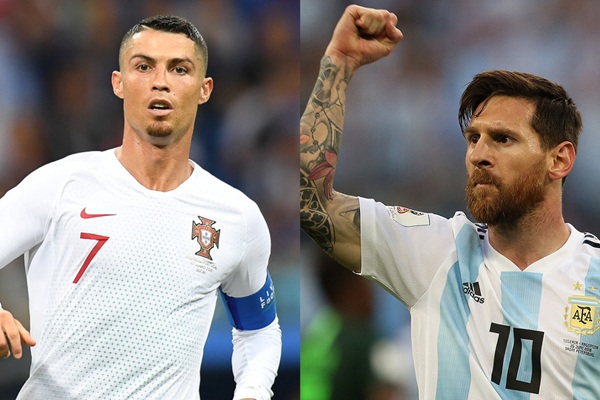
Yet Cape Verde was unbeaten in the group stage. Curaçao drew against an Ecuadorian squad led by Chelsea star Moisés Caicedo. The Democratic Republic of the Congo (a vast country but a minnow in football terms) managed to tie Cristiano Ronaldo’s Portugal and gave England a run for its money.
And that was far from the end of it: Paraguay sent mighty Germany home; Morocco disposed of the Netherlands’ clockwork orange; and Norway, which may be filthy rich but is still tiny, eliminated five-time winner Brazil. So far, this has been the little guys’ World Cup.
In a world of great-power rivalry and hyper-scaling tech behemoths, you would be forgiven for thinking that the bulky bully always has the edge. But you would be wrong.
Start with business. A quarter-century ago, Google was a minnow; Meta and Tesla were yet to be born. One-third of the 100 largest Nasdaq-listed firms were not publicly traded in 2000. As the players sweat in the American heat, new companies are no doubt being launched that will one day displace today’s hyper-scalers.
Which countries have been wild economic successes in that quarter-century? Little guys Singapore, Botswana, and the Republic of Ireland surely belong on the list. Relax the definition of wild success, and New Zealand, Panama, and Uruguay make the cut. Relax the definition of minnows (it has nearly 15 million people), and Rwanda earns the right to be included. And don’t forget tiny Guyana, which, thanks to oil, has been growing at over 35% per year since 2020!
Small countries have the same advantages as small companies: they can be nimble and bold. In a world of polarization and political divisions, they often find it easier than the big guys to agree on common goals and adopt reasonable policies—especially when next door lie countries that are both large and threatening.
On the little guy’s fate depends another crucial feature of life: uncertainty. We tend to think uncertainty is bad, with predictability implying serenity. But, again, that is not so. Uncertainty turns out to be like perfume: a little bit is often necessary, though too much courts disaster.
Imagine learning on the day you turn 12 that decades later you would be awarded the Nobel Prize. Would you still strive sufficiently to make the prophecy come true? Or imagine that on the same day you were told that at 15 you would be struck by an incurable disease. Would those three years be more enjoyable than if you had remained uncertain about your prospects?
As every student of game theory knows, nuclear deterrence is predicated on the existence of uncertainty. It is the chance, however small, that the other side will be crazy enough to press the nuclear button that keeps my side from threatening to do the same thing.
Competition in business operates on the same logic. A large incumbent firm may have the run of the market. But as long as there are few barriers to entry and the market remains what economists call contestable, the small probability that a small new firm will challenge keeps the incumbent from raising prices too much or becoming flabby and inefficient.
Successful democratic politics is also built on the chance that the little guy may beat the odds and succeed. If an incumbent party is doing so badly in the polls that the chances of reelection are nil, then its incentives to govern well become vanishingly small. If put in that position, more than a few politicians will choose to loot the state coffers and run.
A similar logic applies to those out of power. If I belong to a minnow opposition party, the small chance that we will be in power soon is what keeps me from proposing popular yet stupid policies that would bankrupt the state and wreck the economy. Should our party surprisingly find itself in office, we would have to deal with the consequences.
In the end, Cape Verde did not prevail. Another miracle of a shot gave Argentina the final lead. But never mind. Cape Verdeans had exulted in their two hours of hope. And so had the world. There is joy—and profit—to be had in the thought that the little guy can win.
© Project Syndicate 1995–2026
More From BasisPoint