.png)

Childhood loading… Please Wait
An unexpected encounter with nostalgia in its purest form.
Kalyani Srinath, a food curator at www.sizzlingtastebuds.com, is a curious learner and a keen observer of life.
May 30, 2026 at 6:35 AM IST
The other day, summer vacation notwithstanding and constant treats cooked, baked and (more than) occasionally ordered for the “always hungry” teenager at home, it was unanimously decided that some “me time” was long overdue. Usually, this sort of emotional reset involves packing a bag, boarding a train or flight , and escaping to somewhere with cooler weather and overpriced green tea. But you know, the global-war-crisis-economic-doom-everything-is-on-fire energy of the world currently has a way of shrinking grand plans into practical ones.
So this time, instead of a hill station or a seaside break, I settled on something infinitely more unexpected. Computer games.
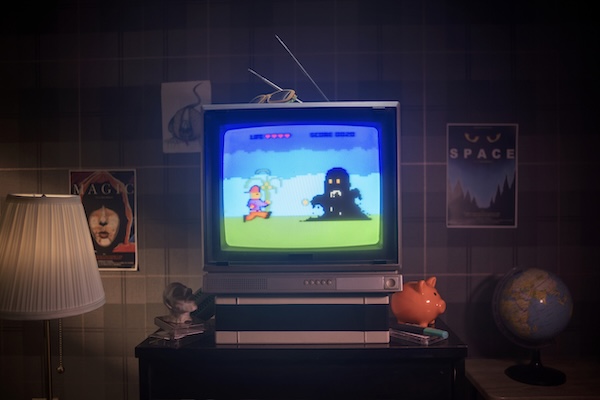
Not the shiny, aggressively fast, multiplayer ones played on phones today. Not the ones where strangers from three continents yell tactical instructions through headphones. No. I mean proper old-school DOS-based games. The kind that loaded slowly, beeped suspiciously, and came with graphics so pixelated your imagination had to do half the work.
Hello Digger. Hello Aladdin. Hello Prince of Persia with your impossible jumps and dramatic deaths.
And goodness, what a rabbit hole the internet turned out to be.
Google, in one of its rare moments of emotional intelligence, responded not merely with search results but with entire communities dedicated to preserving these ancient little treasures. Forums. Fan pages. Emulators. Archived floppy-disc memories carefully protected by people who clearly feel about these games the way others feel about family heirlooms.
I genuinely did not know nostalgia was so deeply entrenched in the lives of those born before AI assistants and WhatsApp forwards became a daily reality.
Within minutes, I was no longer merely searching for games. I was excavating memories.
There is something deeply intimate about old computer games. Unlike modern gaming, which feels polished, cinematic and almost overwhelming in its sophistication, DOS games belonged to a gentler era of patience. Everything took time. The machine took time to boot. The game took time to load. The player took time to understand the controls because there usually were no tutorials. You simply pressed keys until something worked.
And perhaps because of that, the games asked more from us. Not in terms of skill necessarily, but imagination.
A blue rectangle was water. Three jagged lines meant danger. Tiny musical notes represented an entire atmosphere. We filled in the gaps ourselves.
Playing them again after decades was almost emotional. Not because the games themselves were extraordinary by today’s standards, but because they quietly transported me back to versions of life that no longer exist.
Back to afternoons when summer holidays stretched endlessly ahead. When ceiling fans hummed lazily above us and mothers yelled from the kitchen asking whether we intended to spend the entire day in front of the computer. When computer time itself was rationed like dessert. When saving progress felt like a life skill.
Back to bulky monitors and noisy CPUs that heated up entire rooms.
Back to siblings waiting impatiently for “their turn”.
And oddly enough, back to a time when boredom existed.
Children today will probably never understand the relationship gen X / Y and older generations had with boredom. We did not immediately eliminate it with scrolling. We sat inside it. We wandered through it. Sometimes we discovered things because of it.
Including games.
There was also something wonderfully democratic about those early gaming years. You did not need expensive setups or elite reflexes. Half the games involved jumping over pits, collecting coins, or avoiding cartoon villains with surprisingly repetitive movement patterns. Yet somehow they felt magical.
Perhaps because they arrived at a time when technology itself still felt magical.
Today, we carry in our pockets more computing power than entire offices possessed in the nineties. We video call across continents while ordering dinner and complaining about buffering speeds. We are technologically spoiled in ways younger versions of ourselves could never have imagined.
Yet strangely, delight has become harder to access.
Which is what made revisiting those old DOS games so unexpectedly moving.
It got me thinking about whether we truly enjoy these games for novelty or nostalgia.
At first glance, the answer appears obvious. Nostalgia, surely. Nobody objectively believes old DOS graphics are superior to modern visuals. Nobody misses waiting fifteen minutes for a game to install from dubious CDs bought at local markets.
And yet, the emotional pull remains powerful.
Maybe because nostalgia is never really about the object itself. It is about who we were when the object first entered our lives.
That grainy version of Aladdin is not merely a game. It is an entire emotional landscape. It carries memories of cousins visiting during holidays. Of fighting over keyboards. Of learning cheat codes from neighbours who behaved like underground information brokers. Of computer classes where half the children secretly hoped the teacher would leave early so somebody could launch a game.
The games become emotional bookmarks.
And perhaps adulthood, with all its responsibilities and endless notifications, leaves us quietly yearning for those bookmarks more often than we admit.
There is also comfort in slowness.
Modern entertainment rarely allows silence. Everything today is optimised for engagement. Faster cuts. Louder sounds. Constant updates. Endless stimulation. Even games now arrive layered with missions, expansions, online purchases and social pressure.
DOS games did not care whether you were engaged every second.
They simply existed.
You could pause. Wander away. Return later. The game waited patiently. No streaks lost. No battle passes expiring. No strangers insulting your abilities online.
Just you and a tiny pixelated character trying to survive falling rocks or evil guards.
Perhaps that is what felt refreshing.
Not merely the nostalgia, but the simplicity.
The reminder that joy once came in uncomplicated forms.
A successful jump.
A hidden tunnel.
An extra life.
The satisfaction of finally crossing a level after failing twenty-three times.
Somewhere along the way, adulthood convinces us that happiness must become sophisticated too. That joy should look like productivity, curated travel photographs or expensive experiences. Yet an hour spent replaying a decades-old DOS game unexpectedly brought more calm than many carefully planned “wellness” activities ever have.
Maybe because it carried no expectations.
It asked nothing from me except presence.
And perhaps that is what nostalgia really offers us at its best. Not escapism necessarily, but temporary reunion. A meeting point between past and present selves.
For a brief while, the anxious adult disappears. In their place returns the child who believed afternoons lasted forever and who genuinely thought reaching the next game level counted as a major life achievement.
Truthfully, maybe it did.
Because those tiny victories taught us persistence before motivational podcasts existed. They taught us patience before instant downloads. And they taught us imagination before algorithms began supplying ready-made worlds.So yes, maybe we return to these games because of nostalgia.
But perhaps we stay because they remind us of a version of happiness we accidentally outgrew.
Simpler. Slower. Slightly pixelated.
But real all the same.
More From BasisPoint