.png)

Asia Equities Mixed as Softer US PPI, Strong Earnings Lift Sentiment
Here’s your quick read to start the day: a chatty, no-fuss look at overnight moves, the big story, what’s on the docket, and the tickers you need to watch.
July 16, 2026 at 2:13 AM IST
Global Mood: Cautiously Risk- On
Drivers: US-Iran Existential Escalation, Kyiv Missiles
Asia-Pacific markets were mixed on Thursday, with Japan's Nikkei 225 futures pointing to a lower start below its last close, while Hong Kong's Hang Seng futures edged above their previous close and Australia's ASX 200 futures pointed marginally lower.
Sentiment was nonetheless supported by a softer-than-expected US producer price index, adding to growing confidence that inflation is cooling and reinforcing expectations that the Federal Reserve will keep interest rates on hold. Strong earnings from major financial firms also reassured investors that growth remains intact, while lower Treasury yields boosted appetite for mega-cap technology stocks.
THE BIG STORY
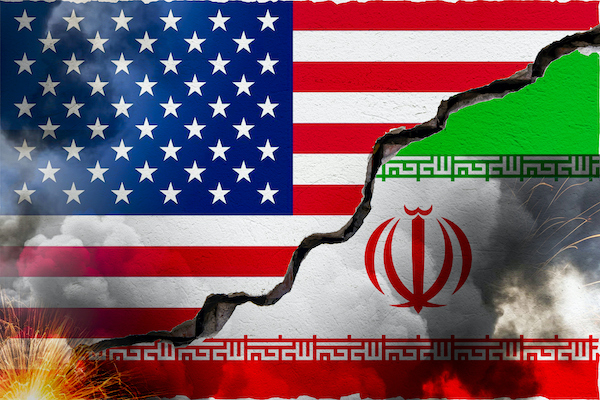
The US-Iran conflict moved into its most dangerous phase yet Wednesday as Iran declared itself in an "existential war with America" while the US carried out two separate waves of strikes on coastal defences, cruise missile storage sites, and launch facilities on Greater Tunb Island. US officials revealed the strikes serve a dual purpose — degrading Iranian military capabilities while simultaneously expanding Trump's options for more complex operations, suggesting Washington is methodically preparing the battlefield for potential further escalation. Trump meanwhile sent contradictory signals, claiming both that Iran wants to settle and that it would be defeated soon, while announcing the release of a detained US citizen by Tehran — a small gesture that analysts read as a possible back-channel signal amid the public hostilities. Critics warned that battlefield gains have not translated into Iranian concessions and have instead endangered Hormuz, with Iran threatening to shut off more regional energy exports.
Russia kept up its pressure on Ukraine overnight, striking at least two Kyiv districts and triggering fires on both banks of the Dnipro before an all-clear was declared. The dual-front escalation, an intensifying air war over Ukraine and a naval and missile confrontation in the Gulf, underscores a global security environment in which multiple major conflicts are simultaneously worsening. With Trump's ultimatum on Iranian power plants and bridges set to expire next week and no diplomatic contact publicly confirmed, the window for de-escalation is narrowing rapidly.
Data Spotlight
US producer prices fell 0.3% month-on-month in June, the first decline since August 2025, as a 12% slump in gasoline drove goods prices down 1.4%. Year-on-year PPI eased to 5.5% from 6%, while annual core PPI came in at 4.7%, both below forecasts.
The NY Fed Empire State Manufacturing Index jumped 10 points to 15.6 in July, with strong gains in new orders, shipments and employment, even as supply availability deteriorated and price pressures remained elevated.
The 30-year fixed mortgage rate rose to 6.65% in the week ending July 10th, matching a nine-month high, as Fed rate hike expectations pushed Treasury yields higher. Total mortgage applications fell 2.7% for a second consecutive week, with purchase applications dropping 7.3%.
Takeaway: Easing producer prices reinforce June's disinflationary CPI signal, reducing pipeline inflation pressures. However, surging mortgage rates and supply chain tightness point to persistent pockets of stress, keeping the Federal Reserve's policy path finely balanced.
WHAT HAPPENED OVERNIGHT
US stocks edge higher as soft PPI and strong bank earnings sustain buying mood
- The Dow rose 0.29%, S&P 500 gained 0.38%, and Nasdaq climbed 0.62%, with consumer and travel stocks outperforming despite semiconductor weakness.
- June PPI posted an unexpected monthly drop, following Tuesday's softer CPI, with the back-to-back data easing near-term pressure on the Fed to hike, though inflation remains elevated due to the West Asia conflict.
- Fed July hike odds fell to 10.2% from 31% a week ago, though the inflation data reflects June when ceasefire optimism was high, with renewed West Asia escalation flagged as a potential source of fresh price pressures.
- Fed Governor Lisa Cook said she is "prepared to act" if inflation does not soon begin to slow, keeping the risk of further tightening alive.
- PayPal surged 17.2% after Reuters reported Stripe and Advent International jointly offered to acquire it for $60.50/share, a 28% premium to Tuesday's close.
- BlackRock jumped 6.6% after beating Q2 profit expectations, while Morgan Stanley edged up 0.4% on a dealmaking-driven earnings beat.
- Communication services led S&P 500 sector gainers while utilities suffered the largest decline.
- Analysts expect S&P 500 Q2 earnings growth of 23.7% year-on-year, with early results pointing to another strong quarter.
US Treasury yields edge lower as surprise PPI drop adds to easing inflation narrative
- The 10-year yield dipped to 4.55% after June PPI fell an unexpected 0.3% month-on-month, with both headline and core annual measures also missing forecasts.
- The soft PPI followed Tuesday's below-consensus CPI, with NY Fed President Williams noting "encouraging reasons to expect that inflation has peaked."
- Warsh reaffirmed the Fed's commitment to price stability during his second day of congressional testimony but stopped short of signalling a more hawkish stance.
Dollar edges lower as surprise PPI drop reinforces easing inflation narrative
- The dollar index slipped to 100.7 after June PPI fell an unexpected 0.3%, with headline and core annual measures also missing forecasts, following Tuesday's softer CPI print.
- NY Fed President Williams said there are "encouraging reasons to expect that inflation has peaked," while Warsh reaffirmed the Fed's price stability commitment without signalling additional hawkishness.
- September Fed hike odds fell to 49% from 70% last week, though escalating West Asia hostilities and rising oil prices continue to pose upside risks to the inflation outlook.
Oil rises for a fourth straight day as fresh US strikes on Iran deepen supply disruption fears
- Brent climbed to $85.28 per barrel, up 0.4%, and WTI rose to $80.02, up 0.5%, hovering near one-month highs as the US struck Iran's coastal defences and missile sites.
- Iran threatened to shut off more regional energy exports, describing the conflict as an "existential war" with America, while signalling it may activate Houthi allies in Yemen to close the Bab el-Mandeb strait.
- The potential threat to both the Strait of Hormuz and the Bab el-Mandeb puts two of the world's most critical energy arteries at simultaneous risk.
- Goldman Sachs said Brent could exceed $110 in Q4 if Gulf export recovery continues to stall, but could fall to the $60s by year-end if tensions ease and production recovers faster than expected.
- US crude inventories fell 1.7 million barrels in the week to July 10, below the 2.6 million barrel draw expected by analysts.
Day’s Ledger*
Economic Data
- UK May GDP data
- UK May Trade Balance
- Euro Zone May Trade Balance
- US June Retail Sales
- US July Philadelphia Fed Manufacturing Index
- US Initial Jobless Claims
Corporate Actions
- Earnings:, Bharat Heavy Electricals, CEAT, ITC Hotels, Jio Financial Services, Piramal Finance, PNB Gilts, South Indian Bank, Tech Mahindra, Wipro
- PC Jeweller to consider fund raising options
- Jindal Photo to consider voluntary delisting
Policy
- Bank of Canada Interest Rate Decision
- Fed Logan Speaks
- Fed Schmid Speaks
Tickers to Watch
- HIMADRI SPECIALITY CHEMICAL reports highest-ever quarterly revenue for April-June; consolidated net profit up 26.3% YoY to 2.30 billion rupees from 1.82 billion rupees .
- MANGALORE REFINERY AND PETROCHEMICALS returns to profit in April-June, aided by sharp improvement in operating performance, stronger revenue and margins vs. year-ago period.
- HDFC LIFE INSURANCE April-June VNB and VNB margins beat estimates; premium growth broadly in line; value-focused product mix strengthens on robust protection business growth and improving distribution traction.
- HDB FINANCIAL SERVICES reports highest-ever quarterly PAT of 7.85 billion rupees for April-June 2026, up 38.3% YoY from 5.68 billion rupees.
- ANGEL ONE April-June net profit more than doubles YoY, driven by revenue growth and operating leverage.
- ICICI LOMBARD GENERAL INSURANCE April-June net profit falls 46% YoY to 4.03 billion rupees from 7.47 billion rupees, weighed down by exceptional items.
- GTPL HATHWAY April-June net profit falls 78.1% YoY to 230 million rupees from 1.05 billion rupees, despite revenue rising 12.2% to 10.199 billion rupees from 9.091 billion rupees.
- EXIDE INDUSTRIES invests 999.9 million rupees in wholly owned subsidiary Exide Energy Solutions via rights issue to support greenfield multi-gigawatt lithium-ion cell manufacturing facility in India.
- INDIA PESTICIDES receives Technical Equivalence (TEQ) approval in the EU for one of its fungicide products, expanding international market presence.
Must Read
- Inflation Targeting and the Contract of Trust
- The Market Is Pricing the RBI, Not Inflation
- India’s Next Banking Leap Lies Beyond What Customers Ever See
- Why India Shouldn't Lose Sleep Over the New US-Russia Sanctions Bill
- Top Court Underscores First Principles for MFs in Kotak Fiduciary Breach Case
- Anthropic moves closer to mega-IPO as bankers line up investor meetings
- Files relating to India’s largest nuclear power plant Kudankulam exposed in data breach
(*Compiled from various media sources)
See you tomorrow with another edition of The Morning Edge.
Have a great trading day
India Has the Building Blocks but Not an Economic Security Strategy
The Finance Ministry recently cleared ₹1.25 trillion for India Semiconductor Mission 2.0, more than doubling the ₹760 billion committed under the first phase. Twelve semiconductor projects worth ₹1.64 trillion are already approved across six states.
Alongside the Semiconductor Mission, the government approved the National Critical Mineral Mission to accelerate exploration and production. PM Gati Shakti, the National Logistics Policy and the Foreign Trade Policy 2023 aim to strengthen infrastructure, logistics and trade competitiveness. Defence manufacturing adds a fifth track. Collectively, these programmes pursue a common objective: reducing India's vulnerability to external supply shocks while expanding domestic manufacturing capacity. They simply operate through separate ministries with separate priorities.
Read the full article on how India’s ambitions resemble those of major economies, but its policymaking remains fragmented, by Sagari G.: India Has the Building Blocks but Not an Economic Security Strategy on BasisPoint Insight.
More From BasisPoint