.png)

AI Rally Lifts Asia, but Geopolitical Risks Keep Sentiment Fragile
Here’s your quick read to start the day: a chatty, no-fuss look at overnight moves, the big story, what’s on the docket, and the tickers you need to watch.

July 22, 2026 at 2:12 AM IST
Global Mood: Cautiously Risk-on
Drivers: Houthis Disrupt Red Sea, US War Costs Mount, Korea chip rotation
Asia-Pacific markets traded higher on Wednesday as investors adopted a cautiously risk-on stance, encouraged by a strong rebound in US technology stocks and robust corporate earnings, although escalating geopolitical tensions and trade risks continued to temper optimism. Gains were led by South Korea's technology-heavy market as investors rotated back into semiconductor and AI-related shares following a sharp rally on Wall Street. Strong earnings from major US companies and renewed confidence in AI spending supported sentiment despite elevated valuations in the sector.
However, the broader macro backdrop remained challenging. The West Asia conflict intensified as Houthi threats disrupted shipping in the Red Sea, adding to ongoing disruptions in the Strait of Hormuz and raising concerns over global energy supplies. Continued US military strikes on Iran and retaliatory attacks kept oil market risks elevated. Adding to uncertainty, US President Donald Trump announced 50% tariffs on selected Canadian imports, reviving trade tensions and raising concerns over inflation. While technology optimism supported equities, investors remained alert to geopolitical and policy risks that could quickly reverse market sentiment.
The energy shipping crisis deepened Tuesday as two tankers carrying Saudi crude to Asia turned back in the Red Sea following Houthi threats, effectively closing a second major chokepoint alongside the Strait of Hormuz and cutting off a critical oil export route for Saudi Arabia's Asian customers. US forces carried out an eleventh consecutive night of strikes across Iran, with explosions reported in Tehran, Chabahar, Konarak, and near the Bushehr nuclear plant, as Iran simultaneously targeted US military sites in Bahrain, Kuwait, and Jordan and claimed to have struck Amazon's data centre infrastructure in Bahrain. The Pentagon meanwhile told Congress the war has cost $37.5 billion so far and is seeking additional funding, a politically toxic ask with midterm elections six months away and Democrats hammering Republicans on the war's affordability and popularity.
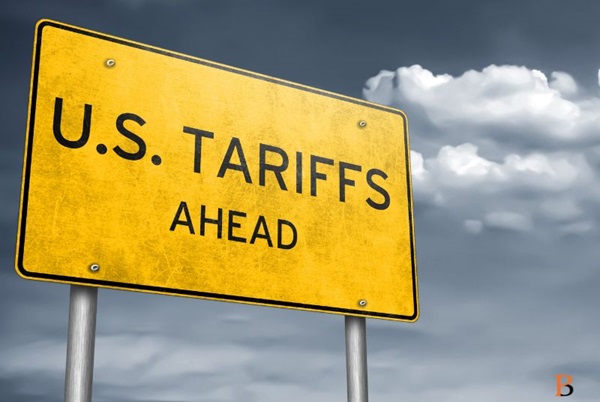
On the trade front, Trump unveiled 50% tariffs on $20 billion worth of Canadian goods, invoking a 1930s trade law in its first known use in nearly a century, targeting products from wine and dairy to cement and hockey sticks, with the measures due to take effect August 19. The move threatens a new front in an already fraught global trade environment, piling additional inflationary pressure on an economy already grappling with energy supply disruption and elevated war costs. With Hormuz largely closed, Bab al-Mandeb now threatened, the Iran war bleeding politically and financially, and a fresh trade dispute with Canada opening up, the macro headwinds facing markets are broadening on multiple fronts simultaneously.
South Korea's producer prices rose 8.6% year-on-year in June, holding at May's highest level since July 2022, as coal and petroleum products surged 65.8% and computer and electronic equipment prices climbed 24.6%. Service prices rose 4.9%, driven by a 35.2% jump in financial and insurance activities, while the monthly PPI was unchanged after a 1.0% gain in May.
Germany's ZEW Investor Sentiment Index rose 15.8 points to 26.3 in July, a five-month high and above expectations of 18, as Germany's reform package bolstered confidence in export-oriented industries and domestic demand. The automotive sector bucked the trend, falling 11.3 points to -46.6, while chemicals, pharmaceuticals and metals remained in negative territory despite modest improvement.
Takeaway: Japan's record import surge and South Korea's elevated producer prices underscore how West Asia supply disruptions and AI-driven demand are reshaping trade and cost dynamics across Asia. Germany's improving investor sentiment offers a tentative bright spot for Europe, though the automotive sector's sharp deterioration and persistent energy risks temper the outlook.
WHAT HAPPENED OVERNIGHT
US stocks rally as chip rebound drives gains ahead of major tech earnings
- The Dow rose 0.74%, S&P 500 gained 0.89%, and Nasdaq climbed 1.29%, with the Philadelphia Semiconductor Index surging 5.2% for a second straight session of gains.
- SanDisk, Western Digital, and Micron led the charge, rising 14.3%, 12.5%, and 12.2% respectively, as FOMO buying ahead of earnings drove the rebound in recently battered chip stocks.
- Nine of 11 S&P 500 sectors advanced, with information technology leading at up 2.35%, while consumer staples fell 1% and communication services lost 0.85%.
- Investors shrugged off Trump's announcement of 50% tariffs on Canadian imports and looked past rising oil prices as two Saudi crude tankers reversed course in the Red Sea after Houthi blockade threats.
US Treasury yields rise to highest since mid-May as oil surge fans inflation concerns
- The 10-year yield climbed to 4.63% for a second straight session of gains, driven by renewed West Asia escalation and a fresh surge in oil prices.
- The US and Iran exchanged strikes for a tenth consecutive day, keeping energy supply risks elevated and inflation concerns firmly in focus.
- Warsh and other Fed officials have repeatedly flagged inflation as a key concern, with policymakers now in the blackout period ahead of next week's widely expected hold.
- September Fed hike odds stand at 68%, keeping tightening expectations elevated beyond the July meeting.
Dollar strengthens to one-week high as West Asia escalation revives inflation fears
- The dollar index rose to 101.1, its strongest in about a week, as a tenth straight day of US-Iran strikes and surging oil prices kept inflation concerns elevated.
- Two Saudi crude tankers reversed course in the Red Sea after Houthi blockade threats, while Tehran struck US sites in Bahrain, Kuwait, and Jordan, widening the conflict's impact on energy trade routes.
- The Houthi naval blockade on Saudi Arabia raised the risk of simultaneous disruption to both the Strait of Hormuz and Red Sea shipping lanes, amplifying safe-haven dollar demand.
- With the Fed in blackout ahead of next week's widely expected hold, the 68% probability of a September hike remained the key driver of dollar support.
- The dollar strengthened broadly against major peers, with risk-sensitive currencies bearing the brunt of the move.
Oil climbs 2% to five-week high as Houthi blockade threat and West Asia strikes deepen supply fears
- Brent settled at $91.01/bbl, up 2.0%, and WTI at $84.91, up 2.0%, with Brent at its highest since June 10 and in technically overbought territory for a seventh straight day.
- Two Saudi crude tankers bound for China and India reversed course in the Red Sea after Houthi threats, though Saudi Arabia's Yanbu port was reported to be operating normally.
- Tehran struck US sites in Bahrain, Kuwait, and Jordan as the conflict widened, while at least one tanker was hit in the Strait of Hormuz.
- Saudi crude exports fell for a third straight month in May to a record low, according to JODI data, underlining the deepening supply disruption from the war.
- The Caspian Pipeline Consortium halted Kazakh oil receipts after suspending loadings at its Black Sea terminal following attacks on tankers, adding another supply disruption front.
- Analysts estimated US crude stocks fell just 0.5 million barrels last week, well below the five-year average draw of 1.2 million barrels, with the EIA report due Wednesday.
Day’s Ledger*
Economic Data
- UK June CPI
- US Crude Oil Inventories
Corporate Actions
- Earnings: Adani Power, Adani Green Energy, Bharat Petroleum Corporation, Dr. Reddy's Laboratories, ETERNAL, Hindustan Petroleum Corporation, IndusInd Bank, JSW Energy, Nestle India, NTPC Green Energy, Tata Communications, UCO Bank, United Spirits,
Tickers to Watch
- ADITYA BIRLA CAPITAL invests 123.89 million rupees on a rights basis in associate Aditya Birla Health Insurance; shareholding percentage remains unchanged.
- AUROBINDO PHARMA subsidiary CuraTeQ Biologics receives ANVISA (Brazil) approval for its biosimilars manufacturing facility in Hyderabad.
- BANDHAN BANK April-June net profit up 34.8% YoY to 5.016 billion rupees from 3.72 billion rupees.
- CYIENT DLM April-June PAT more than doubles YoY (118.2%) to 163 million rupees from 74 million rupees.
- HATSUN AGRO PRODUCT April-June net profit falls 1.1% YoY, even as the company posts its highest-ever quarterly revenue.
- INDIAMART INTERMESH April-June consolidated net profit up 12.18% YoY and 243.03% QoQ to 1.722 billion rupees from 1.535 billion rupees.
- JSW INFRASTRUCTURE April-June consolidated net profit falls 8.2% YoY to 3.576 billion rupees, despite double-digit revenue and operating earnings growth.
- MARUTI SUZUKI INDIA: to hike model prices across portfolio by up to 30,000 rupees from August 2026, citing continuous rise in input costs.
- TVS HOLDINGS April-June net profit up 73.8% YoY to 11.735 billion rupees from 6.753 billion rupees.
Must Read
- Market Depth Can Turn Rainfall Shocks into Smaller Price Spikes
- India’s Financial Reforms Risk Becoming Policy Vapourware Again
- Financial Inclusion 2.0 Must Move from Access to Usage
- RBI’s Technology Maker-Checker Conundrum
- Climate Policy Needs Carbon Pricing, Not Just Green Subsidies
- Indian refiners turn to Russia, LatAm oil in June quarter, data shows
- RBI proposes easier FDI compliance regime, seeks public comments
(*Compiled from various media sources)
See you tomorrow with another edition of The Morning Edge.
Have a great trading day
Financial Inclusion 2.0 Must Move from Access to Usage
India has succeeded in bringing millions into the formal banking system. The bigger challenge now is ensuring those accounts are actually used.
Kembai Srinivasa Rao writes, with financial inclusion entering its next phase, the focus is shifting from opening bank accounts to encouraging meaningful usage. The article examines why dormant accounts, limited financial literacy and weak customer engagement have become the biggest obstacles to Financial Inclusion 2.0—and why deeper relationships, not just wider access, will determine its success.
More From BasisPoint