.png)

US Keeps India on IP Watch List, Presses for Dilution of Patent Rules
India should avoid diluting key patent law provisions such as Section 3(d) and compulsory licensing under external pressure, and must also ensure that its IPR framework is not weakened through commitments in future free trade agreements.


Ajay Srivastava, founder of Global Trade Research Initiative, is an ex-Indian Trade Service officer with expertise in WTO and FTA negotiations.
May 1, 2026 at 9:27 AM IST
India has again been placed on the Priority Watch List in the 2026 Special 301 Report released on April 30 by the Office of the United States Trade Representative, reflecting continued US pressure over pharmaceutical-related intellectual property protection and enforcement in India.
The Special 301 process is not legally binding; it is an administrative review used by the US as a pressure tool. It does not impose immediate penalties but can lead to negotiations, investigations, and sometimes trade action if issues escalate.
For India, the report has no direct legal impact but signals continued US push on IP issues. The USTR plans to engage more closely with Priority Watch List countries, and such listings often shape future trade demands and negotiations.
The new report reviews 25 countries based on their IP regimes. Vietnam has been named a Priority Foreign Country, which can trigger a Section 301 investigation within 30 days, while countries like India face closer bilateral engagement.
The other countries on the list alongside India are Chile, China, Indonesia, Russia and Venezuela.
India was also on the Priority Watch List in 2025 and 2024, showing this is an ongoing status, not a one-time action. In fact, it has remained on the USTR’s Priority Watch List since 1990s, reflecting long-standing differences with the US over intellectual property policy, especially in pharmaceuticals.
Key Issues
The report raises several concerns about India’s IP framework, especially in pharmaceuticals.
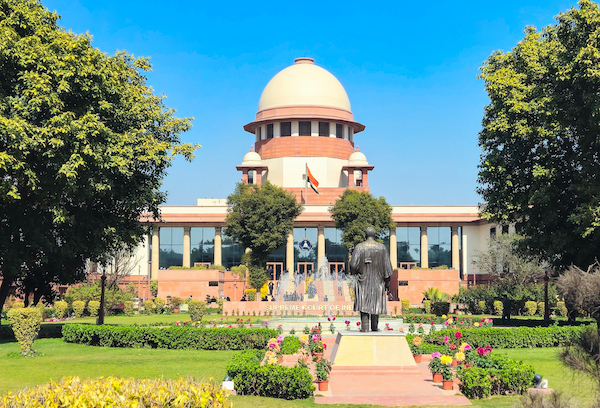
A key issue is Section 3(d) of the patent law, which denies patents to new forms of known drugs unless they show improved therapeutic effect. This is meant to stop “evergreening”—minor changes made to extend patents without real benefit. India’s position is that this rule is fully WTO-compliant and has been upheld in cases like Novartis v. Union of India, targeting misuse rather than genuine innovation.
The US also questions India’s compulsory licensing rules, saying they create uncertainty. Compulsory licensing allows the government to permit a third party to produce a patented product without the consent of the patent holder under specific public interest conditions. India’s position is that its use has been extremely limited—only once in Bayer Corporation v. Natco Pharma Ltd.—which reflects restraint rather than misuse.
Another concern is the lack of data exclusivity for pharmaceuticals, as it allows generic manufacturers to rely on originator data. Data exclusivity protects clinical trial data for a fixed period even if the product is not under patent. India currently provides no statutory exclusivity, whereas the US typically seeks at least 5 years (and up to 12 years for biologics). India’s position is that TRIPS does not mandate such exclusivity, and introducing it would delay generics and significantly raise drug costs.
The report further highlights enforcement gaps like piracy, counterfeiting and slow courts. India’s position is that these are operational challenges rather than systemic weaknesses, and that enforcement capacity has improved.
Other concerns include the absence of a separate trade secrets law, drug price controls, and delays in patent processing. India’s position is that trade secrets are protected through contracts and common law, price controls are necessary for affordability, and patent systems are being streamlined.
Overall, while the US cites weak IP protection, India’s position is that it is fully WTO-compliant and that the real difference lies in its refusal to adopt stricter, TRIPS-plus standards.
Case studies: Novartis and Bayer
In Novartis v. Union of India, the Supreme Court rejected a patent for a modified cancer drug that failed to show enhanced therapeutic efficacy. The ruling enabled generic competition, reducing prices from about ₹120,000 per month to roughly ₹8,000 and setting a global precedent against incremental patent extensions.
In Bayer Corporation v. Natco Pharma Ltd., India granted its first compulsory licence for a life-saving cancer drug. The price dropped from around ₹280,000 to ₹8,800 per month, while the patent holder received a royalty. The decision demonstrated that compulsory licensing can be used as a targeted tool to address affordability and access.
Logic vs Expectations
India supplies nearly 20% of the world’s generic medicines, and generics typically reduce drug prices by 80–90%. Provisions like Section 3(d) and compulsory licensing are therefore essential, and evidence shows India has balanced innovation with access. India should continue to defend these principles to protect affordable healthcare and policy sovereignty.
US pressure on India’s pharma IP regime dates back to the 1990s, driven by strong industry lobbying for stricter protections. This continues even though India exported $9.7 billion worth of medicines to the US in 2025, mostly low-cost generics that help reduce healthcare costs. Accepting US demands would weaken India’s generics industry—often called the “pharmacy of the world”—and harm patients globally, including in the US.
India should avoid diluting key patent law provisions such as Section 3(d) and compulsory licensing under external pressure, and must also ensure that its IPR framework is not weakened through commitments in future free trade agreements.
India-Specific Issues in 2026 Report
|
USTR Report observations |
India’s Possible Rebuttal |
|
India remains on Priority Watch List due to inadequate IP protection |
India is fully TRIPS-compliant. The issue is refusal to adopt TRIPS-plus standards, not weak protection. |
|
Section 3(d) restricts patentability |
Section 3(d) prevents evergreening, not innovation. Upheld in Novartis v. Union of India. Retain anti-evergreening safeguards |
|
Compulsory licensing creates uncertainty |
Used only once in Bayer Corporation v. Natco Pharma Ltd.—shows restraint, not misuse. |
|
No data exclusivity for pharma |
TRIPS does not mandate exclusivity. Introducing it would delay generics and raise costs. |
|
Weak enforcement (piracy, counterfeiting) |
Challenges are procedural, not systemic. Enforcement capacity has improved. |
|
No dedicated trade secrets law |
Protected via contract and common law; absence of statute is not absence of protection. |
|
Price controls distort market access |
Regulation by National Pharmaceutical Pricing Authority ensures affordability in a low-income market. |
|
Delays in IP processes |
India has reduced timelines and expanded examination capacity; reforms ongoing. |
More From BasisPoint