.png)

The Machines Know What We Want. Shame They Don’t Know What We Mean.
Something strange is happening in the way we live with technology. We barely notice it anymore; but perhaps we should.
Kalyani Srinath, a food curator at www.sizzlingtastebuds.com, is a curious learner and a keen observer of life.
September 5, 2026 at 5:00 AM IST
You mutter to no one in particular that your kid likes choley. Not a search, not a post, not even a WhatsApp message to your sister in law, who would immediately have twelve opinions about how you make it. You simply say it. Somewhere nearby sits your mobile phone, that marvellous little rectangle we voluntarily carry around like a mildly intrusive relative.
A few minutes later, Google has a question: how does your kid like choley? Spicy? Tangy? Amritsari? And most interestingly, “how many people do you need a recipe for ? I can guide you to the best quick commerce app to get you started.”
You look at the screen and experience the modern equivalent of seeing a stranger sitting in your living room.
Surely it is a coincidence.The phone could not possibly have been listening. That would be outrageous. It would also be entirely contrary to the reassuring little privacy notices we routinely accept without reading, because life is short and nobody has the time to discover what they are agreeing to before clicking “Accept all”.
Then you Google “post-viral cough”, because you have coughed for three consecutive days and have reached that dangerous stage of self-diagnosis where WebMD is no longer enough and you are considering a medical degree.
Within hours, your social-media feed has transformed into the digital equivalent of a hypochondriac’s shopping list. Cough syrup. Flu vaccines. Seasonal flu advice. Something against tomatoes, presumably because the algorithm has taken a creative turn, to accommodate “grandma’s advice” for modern times. Then, just when you think it has finished worrying on your behalf, an insurance company arrives offering flu-specific cover. For a premium, naturally.
You cough.
The internet says, “Would you like comprehensive financial protection against that?”
This is the genius of the new economy. Previously, you had to discover that you were ill, worry about being ill, visit a doctor and then worry about the bill. Now technology can eliminate several of those tiresome steps. It can notice that you are ill, remind you that you are ill and sell you something against being ill, all before you have decided whether you are actually ill.
The algorithm is not psychic. It is simply very nosy, very well funded and in possession of more information about you than most members of your family.
Which brings us to customer service, another area where technology has promised liberation and delivered a sophisticated new form of punishment.
Your parcel is late. You contact the company. Once upon a time, this meant speaking to a person who might actually know where the parcel was. Today, you are more likely to meet a chatbot.
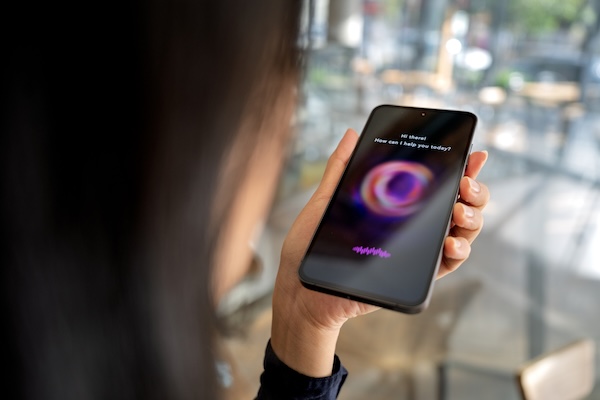
“Hi! How can I help you today?”
You explain the problem.
“I’m sorry, I didn’t quite get that. Please choose from the following options.”
None of the options describes your problem.
You select “Other”.
You are returned to the beginning.
Eventually you type, “I WANT TO SPEAK TO A HUMAN.”
The bot replies, “I completely understand your frustration.”
This is an extraordinary moment in the history of civilisation. We have created a machine that can imitate empathy without possessing even the faintest possibility of experiencing it. It cannot locate your parcel, but it can assure you that your emotional response to the missing parcel is completely valid.
For decades, companies trained humans to speak like robots. Call-centre employees learnt scripts, approved phrases and the precise vocal gymnastics required to sound sympathetic without accidentally sounding as though they cared too much. Now the robots are being trained to sound like those humans. The human has been converted into a bot and the bot is being taught to impersonate the human.
Somewhere, a management consultant is calling this “enhanced customer engagement”.
The customer is calling it something else.
And yet, while we are increasingly irritated by machines pretending to be people, we are becoming surprisingly fond of people who are machines.
Look at the family WhatsApp group. The remarkable thing about modern technology is that it has solved the ancient problem of being unable to communicate with people who live hundreds of miles away, and then immediately created the new problem of not communicating with people who live in the next room.
Families now converse through WhatsApp while sharing the same house. A mother sends a video as a reply to another video. A wife sends her husband a photograph of something in the fridge that he had spilled 2 days ago. Someone responds to a perfectly ordinary question with a GIF. Another person replies to this GIF with an emoji. Nobody actually says anything.
The conversation continues for three days.It is apparently going very well.And then, with astonishing confidence, we turn to artificial intelligence for companionship.
People chat with AI for hours. They ask for advice, discuss relationships, complain about colleagues, confess insecurities and occasionally develop what can only be described as an emotional attachment to a collection of algorithms running somewhere in a data centre.
Some even call it a friendship. A real friendship.
This is rather sweet until you remember that your new friend has no childhood, no favourite uncle, no terrible ex, no embarrassing school photograph and no possibility of remembering the evening you both got drunk and missed the last train home. It has never had a bad day. It has never fallen in love. It has never been betrayed. It has never had to apologise for saying something stupid at dinner.
It is nevertheless extremely good at saying, “That sounds really difficult. I’m here for you. Humans, who are notoriously unreliable at listening, find this intoxicating.
The machine does not interrupt. It does not wander off mentally while you are talking. It does not respond to your confession by saying, “Oh God, that reminds me of what happened to me last week.” It gives you something increasingly scarce in modern life: undivided attention.
Or, at least, the convincing simulation of it.
That may be the genuinely interesting part of the AI revolution. The biggest change may not be that machines are becoming human. It may be that we are becoming perfectly comfortable with machines being almost human, provided they are available, agreeable and sufficiently flattering.
We want technology to anticipate our needs, but not spy on us. We want customer service without having to speak to anyone. We want companionship without inconvenience. We want advice without judgement. We want someone to listen without having to listen back.
It is an excellent business model because the customer is us.
Perhaps that is why the choley incident is more revealing than it first appears. The machine may or may not have heard you. The cough advertisements may or may not be connected to that one frantic search. Your chatbot may or may not eventually put you through to a human being.
But there is something rather delicious about living in an age when the artificial intelligence knows your cravings, your browsing habits, your shopping history and your minor health anxieties, while the people you live with may still have no idea what you had for lunch.
We used to worry that technology would make machines more like us.It turns out the more interesting possibility is that it will make us increasingly happy to treat them like people.
Just don't expect the algorithm to make decent choley.
It will probably ask you to rate the experience first.
More From BasisPoint