.png)

Risk Appetite Returns as Trump Signals Possible US Exit From War
Here’s your quick read to start the day: a chatty, no-fuss look at overnight moves, the big story, what’s on the docket, and the tickers you need to watch.

April 1, 2026 at 1:46 AM IST
GLOBAL MOOD: Cautious Risk-On
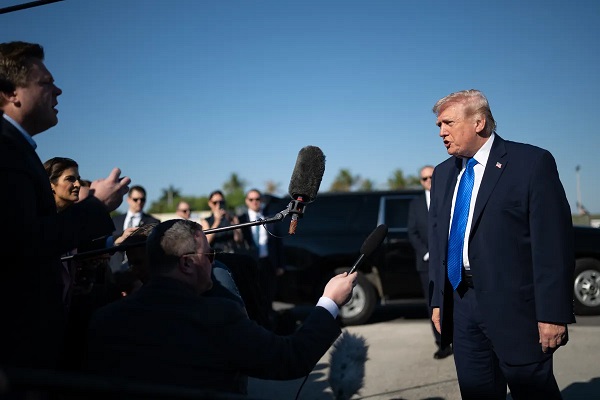
Asia-Pacific markets reflected a strong risk-on mood on Wednesday as hopes of a de-escalation in the Iran war lifted global sentiment. Gains in the Kospi, Nikkei 225 and Topix tracked a sharp rebound on Wall Street after US President Donald Trump signalled the US could withdraw from the conflict within weeks.
Reports that Washington was willing to end hostilities even if the Strait of Hormuz remained disrupted further improved sentiment. Optimism was also supported by unconfirmed signals from Iran’s leadership about a possible settlement, while investors awaited a White House address for clarity.
TODAY’S WATCHLIST
- US Retail Sales Data
- US Fed Barr Speech
THE BIG STORY
The diplomatic backdrop remains fraught. France and Italy have pushed back against some US-Israeli military operations, adding to the growing list of NATO allies distancing themselves from the campaign. Trump, who earlier this month called European allies "cowards" for their lack of support, again slammed non-participating countries on Tuesday even as Washington increasingly signals it is moving toward a unilateral exit regardless of allied support or Iranian concessions. The combination of Trump's two-to-three week exit timeline, his removal of the deal prerequisite, and Wednesday's prime-time address has created the most significant de-escalation moment of the five-week conflict but with Iran still demanding guarantees, Hormuz still disrupted, and NATO unity fraying, the path from ceasefire signal to actual peace remains deeply uncertain.
Data Spotlight
US job openings fell 358,000 to 6.882 million in February below the 6.92 million forecasts with broad-based regional declines and a notable 211,000 drop in accommodation and food services. Hires slipped to 4.8 million while separations held steady at 5.0 million, with quits and layoffs both unchanged, painting a picture of a labour market that is quietly cooling rather than collapsing.
US crude inventories surged 10.263 million barrels in the week ended March 27th, the largest build in many weeks and sharply above the 1.3-million-barrel draw expected, while gasoline stocks fell 3.209 million barrels and distillates declined 1.04 million barrels, suggesting demand at the pump is holding even as crude accumulates. The pump price data tells the most visceral story of the conflict's economic impact the national average hit $4.02 per gallon by month-end, topping $4 for the first time since 2022, with prices jumping $1 per gallon in a single month. The 34.7% monthly surge exceeds the spikes seen after Hurricane Katrina and Russia's 2022 Ukraine invasion, making it the sharpest rise in decades.
Takeaway:
WHAT HAPPENED OVERNIGHT
- US stocks surges as Trump war-exit reports trigger biggest single-day rally in weeks
- The S&P 500 jumped 2.91%, Nasdaq rallied 3.83%, and the Dow rose 2.49%, the strongest single-session gains since the conflict began.
- The WSJ report that Trump told aides he was willing to end the military campaign even if Hormuz remained largely closed was the primary catalyst.
- CoreWeave surged 12% after securing an $8.5 billion loan to expand AI infrastructure.
- Marvell Technology jumped 12% after Nvidia invested $2 billion in the firm a major vote of confidence in the AI supply chain.
- The rally provided significant relief for tech stocks that have been battered throughout 2026 on concerns that Microsoft, Alphabet, and Amazon are taking too long to monetise massive AI spending.
- Caution remains warranted as Iran's guarantees demand and ongoing troop deployments mean the WSJ report has not yet translated into a formal ceasefire framework.
- The S&P 500 jumped 2.91%, Nasdaq rallied 3.83%, and the Dow rose 2.49%, the strongest single-session gains since the conflict began.
- US Treasury yield retreats to 4.3% as growth fears temper inflation premium
- The 10-year yield fell to 4.3%, extending its pullback from the eight-month high of 4.44% hit two sessions prior.
- The retreat reflects a market beginning to weigh growth destruction fears against inflation risk with the West Asia conflict now threatening both simultaneously.
- Iranian tanker attacks in the Gulf extended supply shock fears but simultaneously raised recession concerns, limiting the net inflationary impact on yields.
- Fed Chair Powell noted that inflation expectations remain grounded, reducing urgency for a policy response and acknowledging the central bank's limited tools against supply-driven price shocks.
- The yield retreat alongside Tuesday's sharp equity rally signals a classic risk-on rotation money moving from safe-haven Treasuries back into equities on ceasefire optimism.
- The 10-year yield fell to 4.3%, extending its pullback from the eight-month high of 4.44% hit two sessions prior.
- US Dollar dips on ceasefire hopes but holds near 100 on track for best quarter since Q3 2024
- The US dollar index fell 0.59% to 99.96 as hopes of a shorter-than-feared conflict reduced immediate safe-haven demand.
- Despite the dip, the dollar gained 2.35% monthly, its best since July and a 1.7% quarterly return, the strongest since Q3 2024.
- Lingering uncertainty over the conflict's duration and ongoing US troop deployments are keeping the dollar's floor firmly intact despite the day's losses.
- Holding just below 100, the dollar remains in technically significant territory, a sustained break lower would signal genuine market conviction that the conflict is nearing resolution.
- The US dollar index fell 0.59% to 99.96 as hopes of a shorter-than-feared conflict reduced immediate safe-haven demand.
- Crude oil retreats to $104 on ceasefire hopes but posts record 60% monthly gain
- Brent slipped to around $104.10/barrel and WTI eased to $101.70/barrel, extending losses from the prior session as de-escalation hopes provided modest relief.
- The Wall Street Journal reported Trump may end US operations before the Strait of Hormuz fully reopens a significant shift that would remove the key military escalation risk.
- Iran's president signalled willingness to halt hostilities if guarantees are secured and the most conciliatory public statement from Tehran since the war began.
- Despite the pullback, Brent surged over 60% in March, its biggest monthly gain since records began in 1988, driven by supply disruptions and damaged infrastructure across key OPEC producers.
- Scepticism remains warranted Iran's past firm demands and ongoing US troop deployments keep the risk of renewed escalation very much alive.
- Both contracts remain well above pre-conflict levels, with the structural supply damage to Ras Laffan, Saudi Red Sea ports, and Iraqi oilfields likely to keep a floor under prices regardless of ceasefire outcome.
- Brent slipped to around $104.10/barrel and WTI eased to $101.70/barrel, extending losses from the prior session as de-escalation hopes provided modest relief.
Day’s Ledger*
Economic Data
- Euro Global Manufacturing PMI
- Euro Unemployment Data
- US Retail Sales Data
Corporate Actions
- Supra Pacific board to consider fund raising
- Gravity India board to consider various matters on rights share issue
Policy
- US Fed Barr Speech
- ECB Cipollone Speech
Tickers to Watch
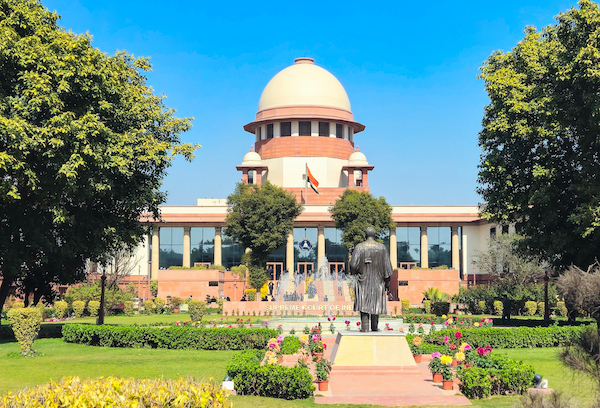
- Vedanta tells SC its revised bid for bankrupt JAL tops Adani Group's offer
- IndiGo appoints William Walsh CEO to steer growth, stabilise operations
- Signature Global, RMZ complete ₹12.93 billion deal to fund Gurugram project
- Lupin gets tentative nod from USFDA for generic Sugammadex injection
- Samman Capital to diversify, targets top 3 NBFC rank by FY29
- Unilever imposes global hiring freeze citing West Asia conflict impact
- Bharti Airtel, Carlyle, Alpha Wave to invest $1 billion in Nxtra Data
Must Read
- India strengthening its role as reliable chip supplier in global market: PM
- India's bioeconomy to hit $300 bn by 2033 on innovation demand: Report
- States spend just 55% of annual capex target by February: CAG data
- Govt extends PNG Drive 2.0 by 3 months to sustain expansion momentum
- RBI extends export credit window till June 30 amid West Asia disruptions
- Indian business delegation visits China, explores ties after 5 year hiatus
See you tomorrow with another edition of The Morning Edge.
Have a great trading day
𝐒𝐚𝐟𝐞𝐠𝐮𝐚𝐫𝐝𝐢𝐧𝐠 𝐅𝐢𝐧𝐚𝐧𝐜𝐢𝐚𝐥 𝐒𝐭𝐚𝐛𝐢𝐥𝐢𝐭𝐲 𝐚𝐦𝐢𝐝𝐬𝐭 𝐭𝐡𝐞 𝐖𝐞𝐬𝐭 𝐀𝐬𝐢𝐚 𝐂𝐫𝐢𝐬𝐢𝐬
The West Asia conflict is not a distant geopolitical event for India’s financial system. It is a multi-channel stress test, where oil prices, currency volatility, liquidity conditions and operational risks are interacting simultaneously. The challenge is no longer about managing individual shocks, but about understanding how they reinforce each other across balance sheets, markets and institutions.
Anupam Sonal writes, the real question is whether the system is prepared for correlated stress. Can liquidity support, supervision and internal risk discipline work together without distorting markets? And in a world of intertwined risks, is stability about reacting to shocks, or anticipating how they propagate?
(*Compiled from various media sources)
More From BasisPoint