.png)

Batabyal is a Distinguished Professor of economics and the Head of the Sustainability Department at the Rochester Institute of Technology, NY. His research interests span environmental, trade, and development economics.
February 4, 2026 at 12:44 PM IST
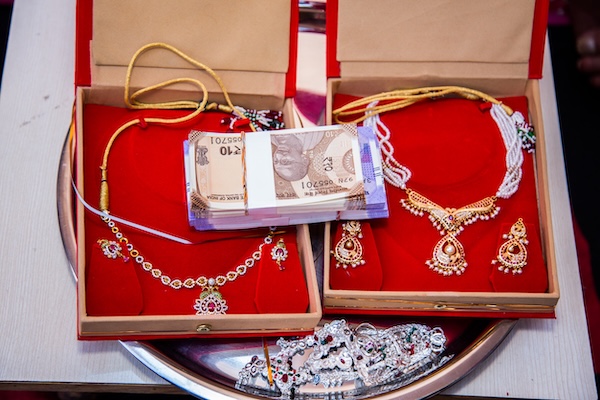
Dowries have been analysed exhaustively, almost always as a social ill. New research, however, advances a counter-intuitive economic rationale. It asks whether dowry payments help facilitate male migration by functioning as liquidity and old-age security for parents. The claim is not that dowries are benign, but that they may inadvertently support economic development by enabling young men to migrate when migration would otherwise disrupt expectations of intergenerational support.
Core Argument
In India, sons are expected to support parents in old age and typically co-reside with them. Migration disrupts this arrangement in two ways. Co-residence falls, making it harder for sons to share income or directly care for parents. Second, there is incomplete insurance and contract enforcement, which means that parents may fear losing access to a son’s income if he lives far away.
Enter the dowry. Paid at marriage, precisely when men are most likely to migrate, it creates a rare moment of liquidity. Part of the dowry can be retained by parents, compensating for the risk of losing a son’s physical presence and regular income. In effect, the dowry becomes a front-loaded pension that eases frictions in intergenerational income sharing.
Model Mechanics
The authors develop a model in which parents and sons collectively choose migration and then decide how to allocate resources. Migration yields higher income for sons but introduces frictions that prevent parents from receiving transfers. This model generates six fascinating predictions.
First, parents may either give or take net resources from the dowry, depending on relative incomes and bargaining power. Second, parents take more when sons migrate, and third, more still when migrant sons earn higher incomes. Fourth, parents who receive remittances are more likely to have taken from the dowry, reflecting complementarities between dowry-based and remittance-based transfers. Fifth, male migration rates are higher in areas with traditional dowry practices. Finally, when migration costs fall, migration rises more sharply in dowry-practising areas, especially among men close to marriage age.
The predictions are tested using multiple datasets. A destination survey in Gurugram covers 557 men—mostly migrants—and records dowry items and property rights to identify who controls marriage gifts. An origin survey telephonically contacts 2,541 households across six northern states to ascertain retrospective information on dowry allocation between parents and sons. Finally, district-level data on the Golden Quadrilateral and North–South/East–West highway expansions provide quasi-experimental variation in migration costs.
The analysis finds consistent support for the predictions of the theoretical model. Between 29% and 45% of grooms’ parents take a part of the dowry. Second, parents take significantly more when sons are migrants, even after accounting for co-residence. Third, among migrant sons, higher occupational scores (a proxy for higher income) correlate with increased parental dowry retention. Fourth, parents’ bargaining power (measured by sons’ reports of parental veto over marriage) predicts more dowry taking. Finally, parents who receive remittances are also markedly more likely to have retained dowries.
At the district level, areas with historically stronger dowry traditions show both higher male migration rates and higher dowry payments today.
Road Effect
Highway expansion lowers the cost of migration, making it a useful natural experiment. Young men from districts with a tradition of dowries show large increases in migration following highway construction. Interestingly, no such effect appears for older men, who are beyond marriage age and thus beyond the dowry transfer window. Further, the increases are concentrated in inter-district migration for employment, the form of migration most prone to income-sharing frictions.
This research offers the first evidence that dowries—despite their well-documented harms—also function as an intergenerational financial mechanism that makes long-distance migration more feasible. As India modernises and patrilocal norms weaken, dowries may persist in part because they help households manage old-age security when sons migrate. More broadly, the results illuminate how traditional institutions adapt to modern economic realities, smoothing structural transformations in unexpected ways.
Batabyal is a Distinguished Professor, the Arthur J. Gosnell professor of economics, and the Head of the Sustainability Department in the Rochester Institute of Technology but these views are his own.
More From BasisPoint