.png)

May 22, 2026 at 8:31 AM IST
India’s money market rates have risen sharply over the past week as global inflation concerns, tensions in West Asia and sustained weakness in the rupee prompted dealers to reassess the Reserve Bank of India’s monetary policy trajectory.
The repricing in short-term rates suggests markets are increasingly factoring in the possibility that the RBI may have limited room to maintain its current policy stance if crude oil prices remain elevated and pressure on the rupee intensifies.
The shift in sentiment gathered pace despite recent remarks by RBI Governor Sanjay Malhotra indicating that the central bank was in no hurry to alter policy in response to the latest energy shock.
The one-year certificate of deposit yield rose 55 basis points over the past week to 7.85%, its highest level since February 2024. Treasury bill cut-off yields also hardened sharply across maturities. The 91-day Treasury bill cut-off yield rose to 5.52% from 5.34%, while the 182-day and 364-day cut-off yields climbed to 5.75% and 5.98%, respectively.
The trend in longer-tenor money market rates indicates that dealers are reacting not merely to liquidity conditions, but to expectations around the future policy path.
Under normal conditions, liquidity surplus or deficit in the banking system acts as the primary anchor for short-term rates. Yet when expectations of tighter monetary policy start building, instruments such as one-year certificates of deposit and longer-tenor Treasury bills begin reflecting anticipated repo rate movements rather than prevailing liquidity conditions.
This dynamic appears to be driving the current repricing.
The escalation in West Asia has revived concerns over imported inflation as crude oil prices rise. For India, higher oil prices complicate the macroeconomic outlook by simultaneously increasing inflationary pressures and widening the current account deficit.
The impact on the rupee has become a key part of the market narrative.
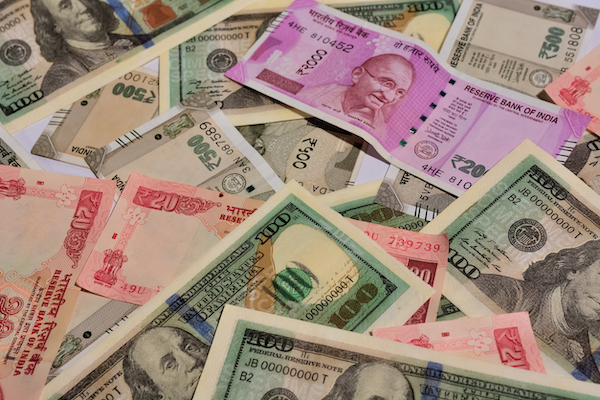
The rupee weakened to near 97 per dollar this week amid sustained foreign portfolio outflows and increased dollar demand from importers. Persistent depreciation pressure has also led to RBI intervention in the foreign exchange market through spot dollar sales.
Such intervention absorbs rupee liquidity from the banking system.
The banking system liquidity surplus has consequently narrowed to around ₹1.28 trillion from ₹2.28 trillion a week earlier.
Still, the extent of the rise in money market rates suggests liquidity withdrawal alone is not driving the move.
RBI’s recent variable-rate repo auctions have reportedly seen subscriptions of only 10–20% of the notified amount, indicating that banks are not facing immediate funding stress despite the decline in liquidity surplus.
The central bank has also announced a $5 billion dollar-rupee buy-sell swap auction that is expected to inject around ₹480 billion in durable liquidity into the banking system.
Even so, one-year rates continue to harden as markets increasingly price the possibility that prolonged crude-driven inflation and sustained rupee weakness could eventually constrain the RBI’s policy flexibility.
The sharp rise in money market rates effectively tightens financial conditions even without an increase in the repo rate. Higher certificate of deposit yields raise banks’ marginal funding costs, while elevated Treasury bill yields increase short-term borrowing costs across the broader financial system.
This raises the risk of monetary tightening through market channels ahead of any actual policy action by the central bank.
The recent move in money market instruments therefore reflects a broader transition from liquidity-driven pricing to expectation-driven pricing, with inflation risks, rupee stability and external-sector pressures emerging as the dominant variables shaping rate expectations.
More From BasisPoint