.png)

Markets Turn Cautious on Year-End as Fed Debate and Ukraine Tensions Dominate
Here’s your quick read to start the day: a chatty, no-fuss look at overnight moves, the big story, what’s on the docket, and the tickers you need to watch.
Richard is an independent financial journalist who tracks financial markets and macroeconomic developments
December 31, 2025 at 1:48 AM IST
GLOBAL MOOD: Risk-Off
Asia-Pacific markets are in a risk-off mode on year-end as Wall Street weakness, year-end positioning and lingering uncertainty from divided Federal Reserve signals weighed on sentiment. Gold firmed as a defensive hedge, while geopolitical tensions around Ukraine and Russia capped risk appetite despite expectations of Fed rate cuts in 2026.
TODAY’S WATCHLIST
Ukraine signalled a potential shift in its security framework as President Volodymyr Zelenskiy said Kyiv is discussing the possible presence of US troops in Ukraine as part of future security guarantees, even as peace talks with Russia continue. Zelenskiy said he remains open to meeting Russian President Vladimir Putin “in any format” to end the war, while dismissing Moscow’s claim that Ukraine attacked Putin’s residence as fabricated. US Ambassador to NATO Matthew Whitaker also cast doubt on Russia’s allegation, calling it implausible at a sensitive moment when negotiations appear closer to a breakthrough.
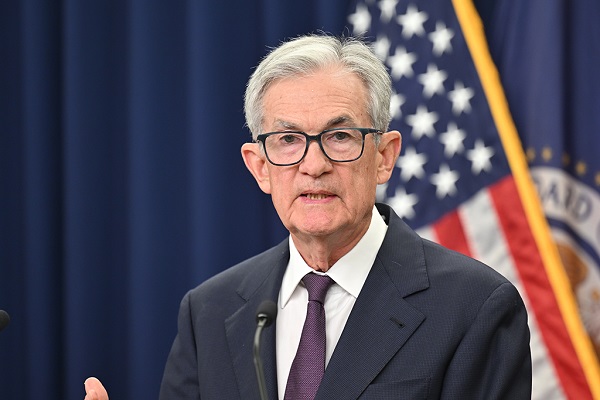
Meanwhile, attention in global markets turned to the Federal Reserve’s December meeting minutes, which showed policymakers broadly expect rate cuts next year if inflation continues to ease, though divisions remain sharp. While some officials worry inflation could become entrenched, others favour deeper cuts to counter a softening labour market. The Fed’s 25 basis point cut to a 3.5%–3.75% range was accompanied by two dissents, highlighting internal debate. Updated projections reflected greater optimism on economic growth, suggesting tariffs may have a smaller-than-feared impact.
Data Spotlight
In contrast, near-term business sentiment in the Midwest showed some improvement, though conditions remain weak. The Chicago Business Barometer climbed to 43.5 in December from 36.3, beating expectations but still marking the 25th straight month below 50, a level consistent with contraction.
Takeaway:
WHAT HAPPENED OVERNIGHT
- US stocks fall as sector rotation caps gains
- The S&P 500 and Nasdaq finished marginally lower, while the Dow was weighed down by losses in financial stocks.
- Communication sector led gains after Meta Platforms rose 1.1%, following its announcement to acquire Chinese-founded AI startup Manus, boosting optimism around deeper AI integration across Facebook and Instagram.
- Information technology stocks slipped overall, with Apple down 0.3% and Nvidia lower by 0.4%, while Microsoft edged slightly higher.
- The S&P 500 and Nasdaq finished marginally lower, while the Dow was weighed down by losses in financial stocks.
- US Treasury yields steady as Fed minutes reinforce easing outlook
- US Treasury yields eased to around 4.12–4.13%, paring earlier gains and hovering close to its lowest level in over three weeks.
- December FOMC minutes showed most policymakers expect interest rate cuts next year if inflation continues to ease.
- Some officials warned inflation risks could become entrenched, arguing for caution, while others favoured deeper cuts to support a softening labour market.
- Investors are also monitoring the appointment of the next Fed Chair, alongside evolving growth and inflation signals.
- US Treasury yields eased to around 4.12–4.13%, paring earlier gains and hovering close to its lowest level in over three weeks.
- US Dollar hovers near multi-month lows as Fed minutes reinforce easing bias
- The dollar index edged marginally up to around 98.2 yet remained close to its lowest level since early October.
- December FOMC minutes showed most officials are open to further rate cuts in 2026 if inflation continues to cool, cementing expectations of a looser policy stance.
- The minutes highlighted deep internal divisions at the Fed, underscoring how finely balanced the decision was to cut rates by 25 bps earlier this month.
- The dollar index edged marginally up to around 98.2 yet remained close to its lowest level since early October.
- Crude oil prices steady as geopolitics offset peace deal optimism
- Brent crude price ended marginally lower at $61.92/barrel, while WTI settled at $57.95/barrel, following a choppy trading session.
- Markets reassessed expectations of a Russia–Ukraine peace deal, with reduced optimism limiting downside pressure on prices.
- Rising geopolitical risks around Yemen helped underpin crude, offsetting concerns over demand and keeping prices broadly stable.
- Brent crude price ended marginally lower at $61.92/barrel, while WTI settled at $57.95/barrel, following a choppy trading session.
Day’s Ledger
Economic Data
- India Fiscal Deficit Data
- India External Debt
- US Initial Jobless Claims
Corporate Actions
- Jindal Poly Jul-Sep Earnings
- NACL Industries to consider fund raising
- Sigachi Industries to consider fund raising
Tickers to Watch
- CESL to float ₹90-100 billion tenders for 6,000 e-buses next week
- Gujarat Kidney ends debut session at 8% discount after listing at a premium
- Aviation ministry reviews probe panel report on IndiGo crisis: Minister
- Hyundai enters commercial mobility with Prime taxi range amid competition
- Shriram Finance expects 30-40 bps lower NCD rates after rating upgrade
- Tata Power commissions SJVN's 1 GW DCR solar project in Rajasthan
- Eicher Motors subsidiary VE Commercial Vehicles gets ₹1.92 billion GST notice
- FMCG distributors' body urges SEBI to halt loss-making quick commerce IPOs
- India's economy in 2025: Low inflation, FTAs and GDP growth amid US tariffs
- Housing leads NPS partial withdrawals in FY25: PFRDA annual report
- Corporate lending to rebound as loan-bond rate gap narrows, RBI eases norms
- India's Russian oil imports fall in December, but demand stays structural
- India’s rare earth magnet push draws mixed views on speed and scale
- Loan growth, margins seen improving for banks in Q3 as credit costs ease
See you tomorrow with another edition of The Morning Edge.
Have a great trading day
Regulation for a No-Pause Financial System in a Fast-Moving Economy
India’s financial system can no longer be governed by rear-view regulation. As risks become faster, non-linear and deeply interconnected, the RBI’s task is shifting from rule-making to system design—balancing stability, innovation and trust in a no-pause economy.
Anupam Sonal writes, recent moves toward outcomes-based regulation, forward-looking risk frameworks and calibrated liberalisation suggest a deeper redesign is underway. The challenge now is ensuring governance, data quality and supervisory technology keep pace—because in modern finance, resilience is built not just by rules, but by how the system itself is designed.
More From BasisPoint