.png)


Michael Patra is an economist, a career central banker, and a former RBI Deputy Governor who led monetary policy and helped shape India’s inflation targeting framework.
October 30, 2026 at 3:24 AM IST
In its October 2026 World Economic Outlook, the International Monetary Fund (IMF) estimated that global inflation will rise from 4.1% in 2025 to 4.7% in 2026 – from 2.5% to 3.1% in advanced economies, and from 5.2% to 5.7% in emerging market and developing economies. The one question here is, how much of this increase in inflation is due to AI?
Why AI Can Be Inflationary
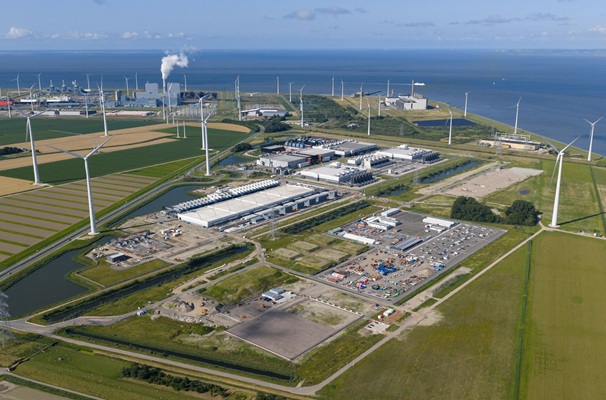
A substantial part is obviously due to rising energy costs, but energy is also needed to power chatbots, and personal chatbots cost money. Surging prices of chips are showing up in producer prices in countries where they are measured. Apart from adding substantially to energy costs, the investment boom in data centres, semiconductor manufacturing, cloud infrastructure and hardware is giving a boost to global aggregate demand, including by encouraging consumer spending due to the wealth effects on account of rising prices of tech stocks. All this could be inflationary in the short run if production doesn’t catch up quickly enough. The big increase in exports with high AI content is certainly because prices of these goods have risen significantly.
On the other hand, AI has been credited with productivity gains that could deliver lower prices eventually. Studies, however, show that inflation tends to rise in the run-up phase of a productivity boom, before falling thereafter. The question is: will AI actually deliver on productivity gains? Or will it fuel a productivity expectation-driven increase in spending, including on investment, and cause inflation to go up without the productivity benefits ever being sighted?
Some Estimates
In October 2026, economists at Goldman Sachs attempted to quantify the direct and indirect effects of AI on core inflation in the US. According to their estimates, AI-related price pressures contribute around 45 basis points to core inflation, which will peak at 50 basis points by the end of 2026. Their breakdown of this 45-50 basis points is 20 basis points due to measurement bias in how price adjustments are recorded, 15 basis points due to hardware demand and chip price spikes, 5-10 basis points due to the direct effect of surging energy consumption by AI data centres, and 5 basis points due to raw material demand (for instance, copper and other infrastructure metals) from data centres. As chip prices and memory costs moderate, electricity supply stabilises, and data centre buildouts achieve scale, AI’s contribution to core inflation is projected to decline to about 10 basis points by late 2027.
The Long and the Short of It
Moving away from numbers, the ways in which AI affects inflation can be visualised by separating the near-term effects from long-term structural shifts. Upfront capital expenditure in server infrastructure, specialised chips (GPUs), and energy grids inject significant capital into the economy. This acts as a short-term demand-side stimulus while keeping corporate borrowing costs high and local utility/power prices elevated, creating localised inflationary pressures.
Over time, generative AI can be a fundamentally disinflationary force. As corporate workflows integrate AI, labour cost savings and unit productivity gains will allow companies to produce goods and services at lower marginal costs, thus mitigating wage-price pressures. Goldman Sachs projects that generative AI could eventually increase annual global GDP by 7% (or roughly $7 trillion) over a decade-long adoption cycle. AI could accelerate baseline labour productivity growth by 1.5 percentage points annually in developed markets like the US. A 15% productivity gain driven by AI could temporarily displace up to 9% of US workers (around 15 million workers) over a 10-year transition window. If this transition is a normal one, labour market disruptions can be absorbed through internal reallocations and new skill demands; however, if there is a slowdown during this transition, AI-driven displacement will act as a potential cyclical drag on broader demand.
What do Central Banks Think?
The intersection of AI and inflation is one of the most critical economic dynamics being tracked by global central banks. Early research points to lower labour and operational costs, but after the short-term inflation effect. As businesses produce more goods and services with fewer hours and fewer resources, unit labour costs decline. Companies can maintain profit margins without needing to continually hike prices for consumers. AI-driven tools enable hyper-efficient market clearing, dynamic pricing, and streamlined corporate operations, which can lower barriers to entry, increase market competition, and curb price gouging. While tech-heavy and service sectors may see sharp drops in internal operational costs, sectors heavily burdened by physical constraints or energy dependencies may experience mixed inflationary outcomes.
Acutely conscious of their mandates, central banks have accordingly moved from theoretical projections to empirically measuring how AI affects inflation in the short run. These measurements generally focus on three key channels: direct GDP/demand contribution; energy and hardware pricing; and algorithmic pricing dynamics.
Analysis by the St. Louis Fed in the US indicates that AI-related infrastructure investments contributed roughly 0.97 percentage points to real GDP growth over the first three quarters of 2025 alone. The US output gap or the difference between actual GDP and its potential—a key metric central banks use to gauge inflationary pressure—expanded by 0.8 percentage points in 2025. A 1.3 percentage-point increase is projected for 2026. Apart from localised inflationary spikes driven by AI in consumer and producer prices, the surge in data center power demand has led directly to local utility rate hikes across North America and Europe, with localised commercial electricity price increases of 10%-25% in areas with high data center density.
The Bank for International Settlements (BIS) has highlighted a phenomenon known as "algorithmic inflation." Unlike traditional human pricing managers who adjust catalogue prices periodically (creating price "stickiness"), AI-driven pricing algorithms monitor demand, inventory, and competitor pricing in real time. Empirical analysis suggests that sectors using dynamic AI pricing adjust prices up to 3x to 5x faster when input costs (like shipping or energy) rise, resulting in sharper, more immediate bursts of consumer price increases.
Central banks like the Federal Reserve and the ECB are also closely evaluating how structural shifts from AI affect the "natural rate of interest", which is the interest rate that neither stimulates the economy nor restricts it. If AI permanently raises structural productivity, the natural rate of interest will also go up. Economies can grow faster without overheating, allowing for higher sustainable wage growth without triggering wage-price spirals.
The broad consensus seems to be that the global economy is currently experiencing Phase 1 of the AI cycle: an upfront, inflationary "demand shock" driven by build-out costs and fast-adjusting pricing algorithms. The disinflationary Phase 2, where productivity gains from AI bring unit labour and operational costs down, is generally expected to take effect gradually over the coming years as adoption broadens across non-tech sectors.
Hence, central banks are on alert, watching out for short-run inflation sunbursts before the longer-run productivity gains allow them to let their guard down.
More From BasisPoint