.png)


Chandrika Soyantar is an investment banker and founder Director at Amarisa Capital Advisor.
May 11, 2026 at 8:00 AM IST
GIFT City's first IPO withdrawal is almost dismissible as a news event. But the reason for it is not an accident. It is a structural signal.
The issuer did not leave because GIFT is broken. The issuer left because demand was never reliably there. IPO markets are not built on access to capital. They are built on the aggregation of it. That distinction is the tell.
India has spent the better part of a decade making GIFT City attractive through tax holidays, STT and CTT exemptions, stamp-duty advantages, regulatory carve-outs, and operational flexibility. The problem is that making a jurisdiction cheap to be in is not the same as making it worth being in. A brass nameplate can host an address. A market must host participation. The real test of a financial centre is not how many entities register there. It is whether capital chooses to remain there across cycles.
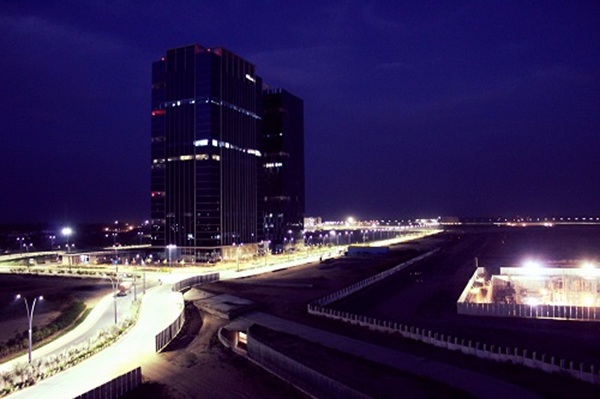
GIFT already possesses all the physical and clearing infrastructure, regulation, exchanges, and a dedicated regulator in IFSCA. What remains is whether it accumulates into a self-sustaining ecosystem with sufficient depth and continuity of participation.
Built, Not Populated
India's mainland markets provide a useful contrast. Retail participation gives India's IPO market breadth. Institutional aggregation gives it depth. Retail savings flow into SIPs, then mutual funds, then equity markets and IPOs. Insurance and pension pools reinforce this. The result is a standing pool of capital capable of absorbing supply and supporting price discovery.
GIFT lacks that architecture. FPIs are episodic. Pension funds are generally absent from IFSC-listed paper. LRS equity flows are minuscule and atomised — interesting as data, irrelevant as demand infrastructure. Mutual fund mandates keep domestic flows anchored onshore. GIFT is not capital-starved. It is capital-ignored. That is a harder, more uncomfortable problem — one that requires deliberate demand identification, mobilisation, channelisation, and construction, not merely more incentives.
The harder question is not whether GIFT has the infrastructure. It is why global capital should choose it over markets that already have depth.
NSE has captive, aggregated, domestic capital. Singapore has mobile but institutionalised global capital — sovereign funds, deep secondary market infrastructure, and stickiness built over decades. GIFT's capital base is not domestic and aggregated. It is global and mobile, comprised of FPIs and offshore investors. Such capital is inherently optional. It does not arrive by default. It must be attracted, convinced, and coordinated each time.
That leaves GIFT neither here nor there — in an untenable position, attempting to function as a global market without a global capital system, and as a domestic market without domestic capital.
GIFT built the harbour before finding the sea. Singapore, Hong Kong, Dubai, New York, and London evolved around entrepôts — ports, maritime trade, and merchant communities that concentrated people, capital, and commerce organically. Exchanges and clearing houses arrived later to formalise what was already there. GIFT reverses that sequence. Infrastructure and regulation came first. The ecosystem is expected to follow.
GIFT has been sold almost entirely on tax certainty. The real pitch for any financial centre is ecosystem depth, talent density, product breadth, and the credibility of its markets. GIFT has the regulatory architecture. It has not yet demonstrated the liquidity, or the ability to attract and retain the talent needed to compete on those dimensions. A 20-year tax holiday does not fix a brand awareness deficit. Even planned financial districts such as Canary Wharf succeeded because they extended an already existing ecosystem. London's market gravity predated Canary Wharf by centuries — through trading networks, underwriting and insurance, merchant capital, banks, law firms, and accumulated financial culture. GIFT is attempting something harder. It is trying to build the ecosystem itself.
The more credible pathway for GIFT lies not in replicating mainland IPO dynamics, but in becoming a specialised institutional financing layer for India-linked global capital — through offshore debt, structured finance, aircraft leasing, fund domiciliation, treasury operations, and cross-border institutional financing. Ecosystem depth accumulates through transactions. It does not arrive through declaration.
India lacks capital mobility toward GIFT and a credible proposition to draw institutionalised global capital in. The fix is not more incentives. It is deliberate demand construction and a repositioning of what GIFT is actually for.
GIFT has built a centre. It has not yet built a market. Those are not the same thing, and no tax holiday bridges the distance between them.
More From BasisPoint