.png)


Kalyan Ram, a financial journalist, co-founded Cogencis and now leads BasisPoint Insight.
May 12, 2026 at 2:56 PM IST
For months, economists and market participants have privately worried that India’s external-sector risks were beginning to intensify again. Rising crude oil prices, elevated freight costs, pressure on the rupee, uncertainty around capital flows and the growing vulnerability of remittance corridors have all started to re-enter macroeconomic conversations with unusual force.
Publicly, however, official commentary has often remained carefully optimistic. Just earlier this month, Reserve Bank of India Deputy Governor Poonam Gupta said she was not worried about the impact of the war on the flow of remittances into India. More recently, Ram Singh, one of the three external members on the MPC, said he doesn’t share the sense of alarm on rupee and forex and there is no need to mobilise deposits from abroad through special schemes.
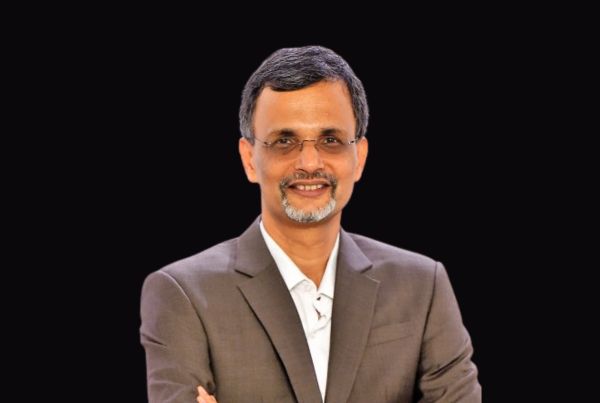
That is why chief economic adviser V. Anantha Nageswaran’s speech this week stood out. It acknowledged, with unusual candour for a serving policymaker, that India’s balance-of-payments vulnerabilities are no longer merely cyclical pressures linked to oil prices or temporary geopolitical disruptions. They are increasingly tied to structural shifts now hard to ignore in the global economy.
The speech’s most consequential line was also its most plainly stated: that managing the current account credibly, financing it, and preventing further currency depreciation are the central macroeconomic imperatives of 2026-27.
For a serving CEA, that is not routine framing. It is a public admission that the pressure is real.
Indian macroeconomic discourse has historically preferred to present the external sector as manageable or even “favourable”. The remarks quietly broke from that tradition. They acknowledged that the global environment itself is becoming structurally more inflationary, fragmented and politically uncertain.
The speech identified four major shifts driving this transition: geoeconomic fragmentation, technology bifurcation, the uneven costs of the energy transition, and the permanent repricing of geopolitical risk.
Each of these has direct consequences for India’s balance of payments.
Also read: Economic Review Flags Supply Risks as India Faces a Harder Inflation Test
India imports nearly 87% of its crude oil requirements. Much of that trade remains exposed to the Strait of Hormuz and the Gulf region. LPG imports remain heavily dependent on West Asia. Freight costs and fertiliser prices feed directly into inflation, subsidies and the current account deficit. Remittance flows from the Gulf continue to play a stabilising role in India’s external financing position.
Live Stress Test
The speech’s framing of the West Asia conflict as a “live balance of payments stress test” was therefore particularly significant. That phrase is unusual in official discourse. It names a risk rather than managing it. Markets, however, often respond more positively to realism than to excessive reassurance.
The speech also recognised something that Indian policy commentary has sometimes underplayed in recent years: that geopolitical fragmentation has become a macroeconomic variable.
Trade routes, technology access, energy security, capital flows and even financial settlement systems are increasingly being shaped by strategic alignments rather than purely economic logic. For an import-dependent economy that still requires large and durable external financing flows, that has direct consequences.
The remarks on global power structures were equally noteworthy.
The CEA observed that incumbent powers may calibrate market access, technology and institutional arrangements in ways that protect their own strategic interests. This was not presented as conspiracy or grievance politics. It was framed as geopolitical realism.
The speech stopped well short of advocating protectionism or economic nationalism, arguing instead for strategic clarity and diversification.
The emphasis on trade agreements with the UK, European Union, EFTA countries, Australia and others reflected this thinking. The argument was not that India should retreat from globalisation, but that it must navigate a world where globalisation itself is becoming more conditional and politically mediated.
For much of the post-1991 period, India’s economic strategy rested on the assumption that deeper integration into the global system would steadily reduce external vulnerabilities over time. The speech did not say that assumption was wrong. It implied it may no longer be sufficient.
If geopolitical risk is becoming permanent rather than episodic, India may need to think differently about energy security, export diversification, manufacturing resilience and the quality of capital inflows financing the current account deficit. If global technology ecosystems are fragmenting, industrial policy choices may increasingly become strategic choices as well.
The speech did not offer solutions, and it did not need to. Its significance lay in something simpler.
For the first time in a while, a senior Indian policymaker openly acknowledged that the external environment is more difficult than official commentary has been willing to admit.
That honesty alone made it worth listening to.
More From BasisPoint