.png)

If India Has Changed, Why Does Its External-Sector Playbook Look So Familiar?
Delhi’s calls to curb gold buying and foreign travel suggest policymakers remain uneasy about India’s external financing despite years of macroeconomic reform.

Dhananjay Sinha, CEO and Co-Head of Institutional Equities at Systematix Group, has over 25 years of experience in macroeconomics, strategy, and equity research. A prolific writer, Dhananjay is known for his data-driven views on markets, sectors, and cycles.
May 11, 2026 at 2:50 AM IST
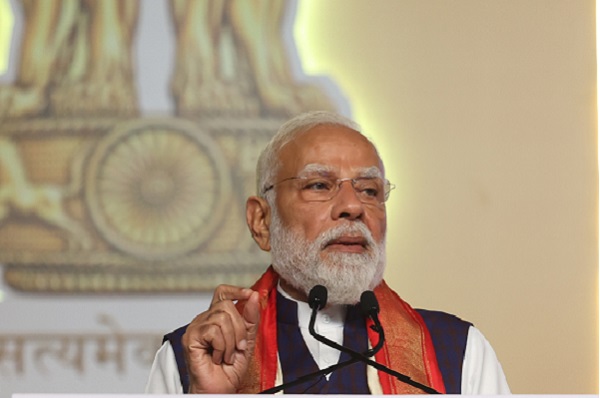
Prime Minister Narendra Modi’s recent appeal urging Indians to postpone gold purchases, conserve fuel and defer discretionary foreign travel has revived memories of another period of external-sector anxiety. In 2013, as crude oil prices surged and the rupee came under pressure during the “Fragile Five” episode, the government imposed restrictions on gold imports and mobilised billions of dollars through NRI deposits to stabilise the external account.
More than a decade later, the policy instinct appears strikingly familiar.
There are indications that policymakers are, as per media reports, once again examining instruments aimed at attracting NRI dollar inflows. The comparison with 2013 is uncomfortable because India today projects itself very differently from the economy that confronted those earlier stresses. Policymakers now point to stronger FX reserves, inflation targeting, deeper capital markets and a rising services surplus as evidence of a structurally stronger economy.
That raises an obvious question: If India’s macroeconomic foundations have fundamentally improved, why are policymakers reverting to measures associated with the Fragile Five era?
External Financing
This is not 2013.
India’s external position is unquestionably stronger than it was then. Crude oil prices in real rupee terms remain below the levels prevailing during the earlier crisis period. Services exports have expanded sharply, domestic financial markets are deeper, and the country’s geopolitical positioning has improved considerably.
Yet the recent policy response suggests that authorities remain uneasy about the durability of external financing conditions.
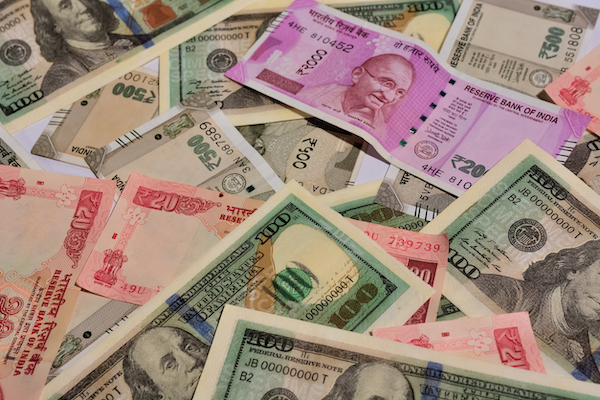
That unease is increasingly visible in the currency market as over the past year, the rupee has weakened far more sharply than markets had become accustomed to during the previous decade. In December, this column argued that the dollar/rupee pair could eventually test the 100 level if oil prices remained elevated, capital inflows weakened further, and the balance of payments slipped into a third successive annual deficit.
Read:
India’s Currency Conundrum: Why the Rupee’s Path to 100 Looks Unavoidable
That scenario no longer appears implausible.
Weakness not Failure
Emerging market currencies often depreciate gradually over time because of inflation differentials and shifting global capital allocation cycles. A controlled currency adjustment can even help absorb external shocks.
What matters is whether policymakers are prepared to allow market-driven adjustment or whether they increasingly feel compelled to suppress domestic demand to defend external stability.
Recent policy signalling suggests the latter instinct may be resurfacing. The RBI’s tighter restrictions on banks’ currency market exposures reinforced concerns about dollar liquidity conditions, while public appeals to restrain gold purchases and overseas spending indicate growing official sensitivity to the external account.
That sits awkwardly alongside the broader narrative of macroeconomic transformation.
India adopted inflation targeting in 2016 partly to strengthen policy credibility and attract more stable foreign capital. Policymakers frequently argue that India is now structurally more resilient than during previous external-sector stress cycles.
Yet sustained capital inflows have remained less robust than those claims would ordinarily imply. Net foreign direct investment has moderated, portfolio flows remain volatile and private capital formation has yet to deliver the broad-based acceleration expected from a fast-growing emerging economy.
The contradiction is increasingly difficult to ignore, and a country widely presented as the world’s fastest-growing major economy is again relying on behavioural restraint measures associated with a period when India was grouped among the most externally vulnerable emerging markets.
That does not mean India faces an imminent crisis.
It does suggest that policymakers themselves may recognise that the country’s external-sector adjustment remains incomplete.
The real challenge today is not simply managing the current account deficit but persuading global capital that India can simultaneously deliver growth, currency stability, policy predictability and durable returns in an increasingly fragmented global economy.
The return of Fragile Five-era policy instincts suggests that confidence on that front may not yet be as secure as the official narrative implies.
More From BasisPoint