.png)


Ajay Srivastava, founder of Global Trade Research Initiative, is an ex-Indian Trade Service officer with expertise in WTO and FTA negotiations.
July 29, 2026 at 1:32 PM IST
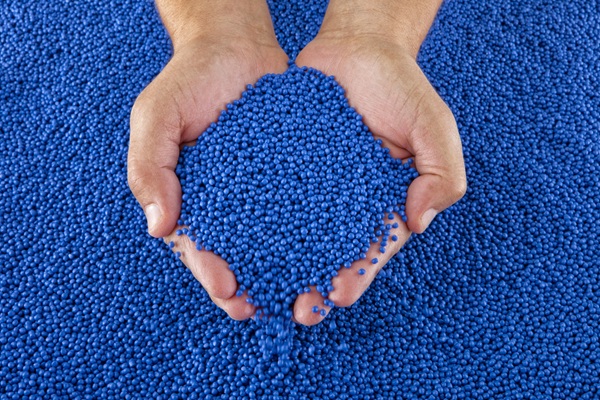
The Directorate General of Foreign Trade has imposed a minimum import price on Suspension Grade Polyvinyl Chloride Resin, a key raw material used to make pipes, fittings, cables and many other plastic products. The move is expected to increase domestic PVC resin prices but is unlikely to reduce India's heavy dependence on imports.
Through a notification DGFT has changed the import policy for S-PVC Resin from "Free" to "Restricted" for imports with a value of $0.766 per kg or less. In effect, the notification introduces a minimum import price of above $0.766 per kg.
Imports priced above this level will continue to be freely importable after payment of applicable customs duties. Imports priced at $0.766 per kg or below will now require a DGFT import licence in addition to payment of import duties. The measure will remain in force for six months.
Imports by 100% Export Oriented Units, Special Economic Zones and under the Advance Authorisation Scheme remain exempt, provided the imported material is used for export production.
Interpretational Ambiguity
The notification creates an interpretational ambiguity about what happens after six months.
The operative provision changes the import policy for all S-PVC from "Free" to "Restricted", but provides an exception that imports with a CIF value above $0.766 per kg will remain "Free" for six months. This suggests that the exemption for higher-priced imports lasts only six months. If no fresh notification is issued, all S-PVC imports could become "Restricted" after that period.
However, the "Effect of this Notification" section states only that imports priced at $0.766 per kg or below are restricted for six months, implying that higher-priced imports remain permanently "Free". This suggests that the government's intention was simply to impose a six-month minimum import price, restricting only lower-priced imports during that period.
These two provisions can be interpreted differently. As the operative text of a notification generally prevails over its explanatory note, DGFT may need to clarify the position to remove uncertainty about the import policy after the six-month period.
Suppliers Affected
China was the largest supplier with exports worth $735.4 million, followed by Japan, Taiwan, South Korea. The average import price from these countries ranged between $0.65 and $0.75 per kg.
Since every major supplier ships below the DGFT threshold of $0.766 per kg, almost the entire existing import trade now falls within the restricted category unless suppliers increase their declared prices.
Some overseas suppliers may respond by declaring invoice prices marginally above the prescribed threshold while settling the difference through separate commercial arrangements. Such practices, if they occur, could pose enforcement challenges for customs authorities.
Domestic Prices
Since domestic PVC resin prices are largely determined by import parity, the higher landed cost effectively raises the benchmark price across the Indian market. Domestic S-PVC resin currently trades at around $0.85-0.88 per kg for standard K-67 grades and $0.90-0.95 per kg for specialty grades, giving domestic producers room to increase prices.
Despite the higher import cost, imports are unlikely to decline significantly because India imports about 64% of its S-PVC resin requirement. Annual PVC resin consumption is around 4.7 million metric tonnes, of which S-PVC accounts for about 4.5 MMT (96%). Domestic production capacity is only 1.7 MMT, led by Reliance Industries, Chemplast Sanmar and DCM Shriram, meeting just 36% of domestic demand. As a result, India imports about 3.0 MMT of S-PVC resin every year, so the DGFT notification is unlikely to significantly reduce imports despite increasing their cost.
The DGFT measure creates clear winners and losers across the PVC value chain. Domestic resin manufacturers are expected to benefit from stronger pricing power and improved margins as higher import costs raise the import parity price.
However, downstream manufacturers—particularly thousands of MSMEs producing PVC pipes, fittings, cables, conduits, films, footwear and medical products—are likely to face higher raw material costs. They will have to either absorb lower margins or pass on the increase to customers.
The impact will ultimately be felt by farmers, homebuyers and public infrastructure projects. The pipes and fittings sector consumes 72-80% of India's S-PVC resin, driven by agricultural irrigation, the Jal Jeevan Mission, real estate plumbing and urban infrastructure. Around 7% is used in electrical wires and cables, while the remainder goes into window profiles, conduits, packaging films, footwear and medical products. Higher resin prices are therefore expected to raise costs across agriculture, housing and public infrastructure.
Why MIP?
The DGFT notification follows an earlier anti-dumping investigation. On August 14, 2025, the Directorate General of Trade Remedies recommended anti-dumping duties ranging from $22 to $284 per tonne on imports from China, Japan, Taiwan, South Korea, Thailand, Indonesia and the United States. However, the Ministry of Finance chose not to impose the duties because of concerns that they would significantly increase input costs for downstream MSMEs and pipe manufacturers. The MIP therefore represents an alternative mechanism to support domestic resin producers while avoiding formal anti-dumping duties.
India's import dependence is expected to decline over the next few years as major domestic capacity additions come on stream. Reliance Industries will continue expanding production through the conventional ethylene route, while Adani Group is constructing a 2.0 MMT integrated PVC complex at Mundra using the coal-to-chemical (calcium carbide-acetylene) route, with the first 1.0 MMT phase expected to commence production in FY2027-28.
PVC resin could become the first major petrochemical product in which Reliance and Adani compete directly in the Indian market.
Import Trend
India's imports of S-PVC resin have declined sharply over the past three years. Imports fell from $5.74 billion in 2023-24 to $2.1 billion in 2024-25, and declined further to $1.6 billion in 2025-26. The decline in import value likely reflects lower international PVC prices rather than a significant reduction in India's import dependence.
The DGFT notification could increase India's annual import bill by about $200 million. This estimate assumes that imports continue at current volumes but suppliers raise their prices to meet the new minimum import price of $0.766 per kg. Since India imports 64% of its S-PVC requirement due to insufficient domestic production, imports are unlikely to fall significantly. As a result, the policy could increase India's foreign exchange outgo without materially reducing import dependence. In effect, the MIP transfers income from downstream users to domestic PVC resin producers while increasing the country's import bill.
More From BasisPoint