For more than thirty years, India's growth strategy rested on a simple proposition: investment would create jobs, rising incomes would generate demand, and growth would sustain itself. The approach delivered substantial gains, transforming India into one of the world's fastest-growing economies, and lifting millions out of poverty.
Yet, the economic landscape today is markedly different. Private investment has yet to regain the broad-based momentum of the mid-2000s, exports face growing headwinds from a fragmented global economy, and consumption remains uneven. At the same time, large sections of the workforce remain concentrated in low-productivity and insecure employment.
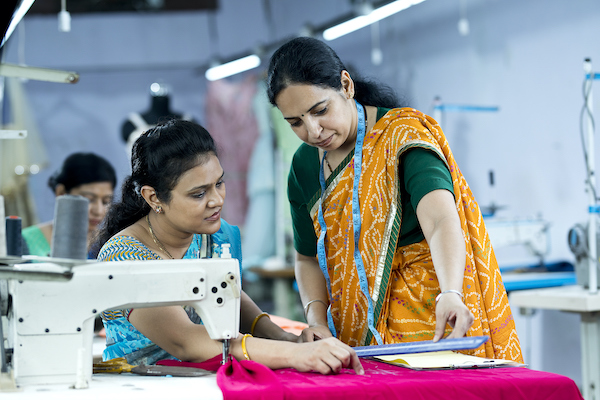
It is against this backdrop that Karnataka's decision to raise minimum wages by an average of nearly 60%, affecting close to 10 million workers, assumes significance. The measure is not merely a labour market intervention. It reflects a growing recognition that the next phase of India's development may require a broader social base of growth, one in which rising purchasing power, investment and productivity reinforce one another.
Growth and Inclusion: An Uneasy Relationship
The reforms initiated in 1991 transformed India's economic trajectory. Liberalisation expanded opportunities, encouraged entrepreneurship and integrated India more closely with global markets. Between 2003 and 2008, investment rates approached 38% of GDP, growth accelerated sharply, and poverty declined significantly.
Yet, the gains from growth were distributed unevenly. More than four-fifths of Indian workers continue to be employed in the informal economy, often without social protection or income security. According to estimates from the World Inequality Database, the top 10% of Indians account for nearly 57% of national income, while the bottom half receives only around 15%.
This imbalance has important economic consequences. Private consumption expenditure accounts for close to 60% of India's GDP. Sustained growth, therefore, depends not only on productive capacity but also on the purchasing power of households. An economy cannot indefinitely rely on demand generated by a relatively narrow segment of the population.
Recognition of these imbalances formed policy initiatives such as MGNREGA during the first UPA government. By increasing purchasing power among lower-income households, the programme highlighted an important reality: sustainable growth depends on the interaction between productive capacity and effective demand. The experience that followed also demonstrated that neither demand-side interventions nor supply-side reforms can by themselves sustain long-term growth.
Why Karnataka Matters
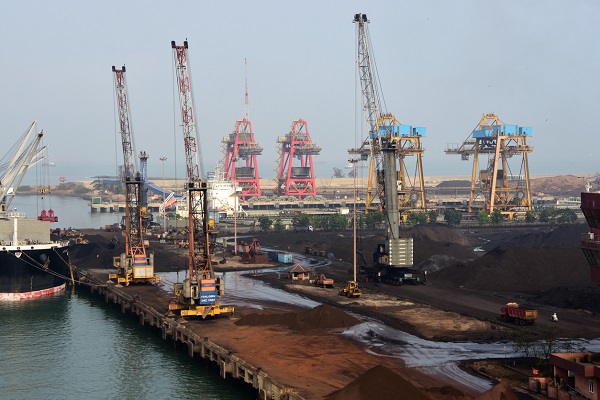
India's current economic challenge differs from that of the early 2000s. At that time, investment, exports and domestic demand reinforced one another. Today, each of these drivers faces varying degrees of constraint. Private investment has recovered only selectively, export growth confronts a less supportive global environment, and consumption remains uneven across income groups.
The result is that the quality and distribution of growth have become almost as important as its rate.
Against this backdrop, Karnataka's wage revision can be understood as an attempt to strengthen purchasing power among workers who have benefited less from economic growth than the organised sectors of the economy.
The scale of the intervention is noteworthy. The revised wage structure covers more than 80 scheduled employments and is expected to affect nearly 10 million workers. For many workers at the lower end of the wage distribution, monthly earnings could rise by ₹6,000–₹7,000.
The underlying premise is straightforward. A broader distribution of income can also strengthen demand, particularly at a time when other drivers of growth face increasing uncertainty. By attempting to raise purchasing power among a large segment of the workforce, Karnataka has reopened an important policy question: can economic growth remain durable if its benefits do not reach a much larger share of the population?
The Missing Half of the Equation
The long-term success of such an approach, however, depends on what follows next.
The debate over minimum wages often focuses on labour costs. Far less attention is paid to the costs imposed by regulatory complexity, procedural delays and administrative uncertainty. If workers are expected to receive a larger share of economic gains through higher wages, investors and entrepreneurs must simultaneously be enabled to expand productive capacity.
This is where the Rajasthan Micro, Small and Medium Enterprises (Facilitation of Establishment and Operation) Act, 2019, offers an important lesson. Instead of requiring enterprises to obtain numerous approvals before commencing operations, the legislation allowed eligible units to begin operations on the basis of self-certification while providing a defined period to comply with statutory requirements.
The principle was simple: economic activity should not be delayed by procedure.
If Karnataka's wage initiative represents an attempt to strengthen demand, Rajasthan's reform offers a model for strengthening supply. Together, they suggest a pathway that avoids the false choice between worker welfare and investment promotion.
The broader application of this principle deserves serious consideration. Deemed clearances, risk-based inspections, AI-driven compliance systems, and self-certification mechanisms can significantly reduce the cost and uncertainty associated with investment and corruption. Such reforms should not remain confined to MSMEs. With appropriate safeguards, they should extend across sectors and investment categories.
If higher wages are accompanied by lower transaction costs, faster approvals and a more predictable regulatory environment, both demand and productive capacity can expand together. Such an approach would strengthen workers without weakening competitiveness.
Towards a New Growth Compact
The challenge before India is not to choose between growth and inclusion. Nor is it to return to older debates that treated equity and efficiency as competing objectives. The more fundamental task is to construct a development strategy in which inclusion itself becomes a source of economic dynamism.
An economy in which a larger number of workers participate in rising productivity, secure employment, and growing incomes is not merely a fairer economy; it is also a stronger and more resilient one. Broad-based prosperity expands demand, encourages investment and creates the conditions for sustained growth.
Karnataka's wage initiative should therefore be viewed not simply as a labour market reform but as part of a wider search for a new growth compact. If accompanied by equally ambitious reforms that reduce the time and cost of investment while raising productivity, it may ultimately be seen not as a departure from economic reform but as an important step in its evolution.
The challenge is no longer merely to increase the rate of growth. It is to broaden the social base from which growth is generated. In that sense, Karnataka's wage initiative is significant not because it resolves the tension between growth and equity, but because it points towards a framework in which the two can reinforce one another.
.png)