.png)

Asian Stocks Slide as Oil Tops $100 on Red Sea Tanker Strikes
Here’s your quick read to start the day: a chatty, no-fuss look at overnight moves, the big story, what’s on the docket, and the tickers you need to watch.


Nandinee Keluskar is an independent financial journalist.
July 24, 2026 at 2:36 AM IST
Global Mood: Cautiously Risk- Off
Drivers: Oil Breaks $100, Iran Arms Houthis, Global Tariffs Imposed
Asia-Pacific markets opened sharply lower on Friday as investors shifted firmly into risk-off mode after Brent crude surged above $100 a barrel, raising fears of a fresh inflation shock and slower global growth. Equities across Japan, South Korea and Australia declined as soaring energy prices and renewed geopolitical tensions overshadowed optimism from the technology sector. The spike in oil followed reports that Saudi oil tankers were attacked in the Red Sea, reinforcing concerns over disruptions to global energy supplies.
Market sentiment deteriorated further as the conflict expanded beyond the Strait of Hormuz, with attacks threatening the Bab al-Mandeb shipping route, creating risks across two of the world's most important energy corridors. Continued US military strikes on Iran and retaliatory attacks by Tehran heightened fears of a prolonged conflict. Adding to investor concerns, the US imposed broad new tariffs on imports from dozens of trading partners, fuelling worries about higher inflation and weaker global trade. The combination of rising energy costs, escalating geopolitical risks and protectionist trade measures reinforced expectations of heightened market volatility.
THE BIG STORY
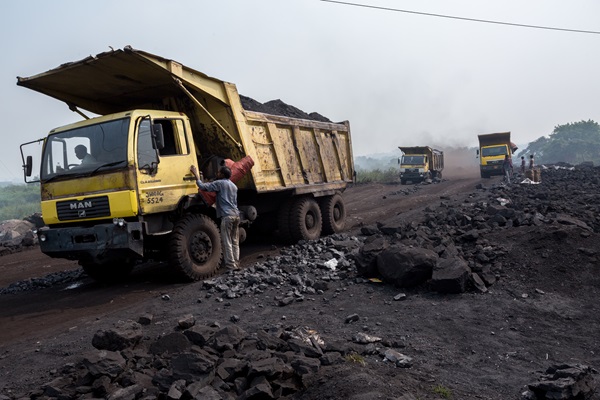
Brent crude surged through $100 a barrel for the first time since May Thursday as the war spread to a second major shipping chokepoint, with the Houthis striking two Saudi oil tankers in the Red Sea and Trump promising "major military punishment" for Iran and its allies. The US launched a thirteenth consecutive night of strikes on Iran while Tehran fired on US bases across the Gulf, with Qeshm Island hit on both nights. Four sources told Reuters that Iran flew IRGC commanders, senior military advisers, missile and drone equipment, and gold aboard a flight to Yemen on July 13, direct evidence of Tehran actively bolstering Houthi military capabilities to threaten Red Sea shipping as a second front in the war. With Hormuz near-totally blocked and Bab al-Mandeb now under active attack, the dual chokepoint scenario markets had feared is materialising.
Against that backdrop, the Trump administration imposed new tariffs of 10% and 12.5% on goods from 60 trading partners, covering 99.4% of all US imports, under Section 301 of the 1974 Trade Act, replacing a temporary 10% global tariff that expired Friday. The EU, Japan, South Korea, Taiwan, India, and China are all captured by the new duties, which carry lower legal risk than the Supreme Court-struck reciprocal tariffs imposed last year. The simultaneous shock of oil above $100, dual shipping chokepoints, and near-universal import tariffs arriving at once represents a severe stagflationary impulse for the global economy at precisely the moment central banks are already navigating elevated inflation and slowing growth.
Data Spotlight
UK consumer confidence rose to -17 in July from -23 in June, a six-month high, lifted by optimism surrounding Andy Burnham's appointment as prime minister, World Cup sentiment and hopes of easing West Asia tensions. GfK warned gains may be hard to sustain, noting the survey predated the renewed West Asia escalation.
US initial jobless claims plunged 22,000 to 187,000 in the week to July 18th, the lowest in nearly 60 years and well below expectations of 212,000, reinforcing FOMC assessments of a fully employed economy.
The Chicago Fed National Activity Index improved to -0.02 in June from -0.19 in May, with gains in sales, orders and personal consumption offsetting weakness in production and employment.
The ECB held rates steady in July following June's 25 basis point hike, adopting a wait-and-see approach as softer inflation reduced urgency for further tightening. President Lagarde warned that prolonged elevated energy prices risk driving broader inflation through second-round effects.
Takeaway: A near-60-year low in US jobless claims and improving UK confidence signal surprising resilience, even as the ECB pauses to assess the lagged impact of its first rate hike in three years. Renewed West Asia tensions remain the key wildcard for policymakers globally.
WHAT HAPPENED OVERNIGHT
US stocks tumble as AI spending fears, surging oil, and weak tech earnings hit sentiment
- The Dow fell 0.97%, S&P 500 lost 1.21%, and Nasdaq sank 2.15% as Alphabet and Tesla disappointed and Brent crude settled above $100 for the first time since May.
- Alphabet sank 7% after raising spending plans while burning cash, dragging communication services down 5.2% to the weakest S&P 500 sector on the day.
- Tesla tumbled 14.5% after reporting negative free cash flow in April-June for the first time in over two years, pulling consumer discretionary down 5.12%.
- The VIX hit 20.3 intraday, its highest in nearly a month, before settling up 2.06 points at 18.7.
- Texas Instruments fell 3% despite forecasting above-estimate revenue, while the Philadelphia Semiconductor Index slipped 0.5% ahead of Intel's results.
US Treasury yields surge to highest since January 2025 as oil spike fans Fed tightening fears
- The 10-year yield climbed to 4.71% for a fourth straight session, driven by surging oil prices and intensifying West Asia hostilities with no near-term resolution in sight.
- Oil prices have surged nearly 31% above pre-conflict levels seen earlier this month, renewing fears that energy costs could feed into broader inflation.
- Markets now price a >33% chance of a Fed hike next week and a >78% probability of a September move, up sharply from 61% just a day earlier.
Dollar rises to three-week high as oil surge and West Asia tensions drive Fed hike bets
- The dollar index climbed to 101.3, its highest in three weeks, as oil prices rose 31% above earlier this month's pre-conflict levels, renewed fears of broader inflation pass-through.
- September Fed hike odds surged a day earlier, with markets now pricing a hike as soon as next week.
- The ECB held rates unchanged as expected, with the dollar advancing against the euro,
Oil surges above $100 for the first time since May as dual-strait supply disruption deepens
- Brent settled at $100.69/bbl, up 7%, its highest close since May 22, while WTI settled at $92.19, up 6.2%, its highest since June 4, with Brent now nearly 40% above pre-war levels.
- Yemen's Houthis attacked two Saudi oil tankers in the Red Sea, with one vessel confirmed ablaze, opening a new front targeting Saudi crude through Bab el-Mandeb.
- Iran's Revolutionary Guards declared the Strait of Hormuz "completely closed" under their control, warning no tanker would enter or leave without Iranian coordination.
- Loading activity within the Gulf collapsed to 2.5 million bpd over the past seven days from 6 million bpd over the prior 30 days, with Iranian oil loadings falling to near zero from 1.5-2 million bpd earlier this month.
- Analysts estimate the Strait of Hormuz and Bab el-Mandeb together carry roughly a quarter of global oil supply, with simultaneous disruption to both raising the stakes significantly.
- Goldman Sachs said Brent could exceed $120/bbl in October-December and average $100 next year if Hormuz remains disrupted through 2027, with further upside if Bab el-Mandeb and Suez Canal also face persistent disruption.
- Trump vowed "major military punishment" for Iran and its Houthi allies following the Saudi tanker attacks.
- Seven core OPEC+ members are likely to agree a further 188,000 bpd output target increase for September at their August 2 meeting, though the war is hampering members' ability to pump more.
Day’s Ledger*
Economic Data
- India July flash Manufacturing & Services PMI
- UK June Core Retail Sales
- Germany Aug GfK German Consumer Climate
- Eurozone July PMI data
- India FX Reserves, USD
- US July flash PMI
- US June New Home Sales
Corporate Actions
- Earnings: ACC Limited, Bank of Baroda, Bank of India, DCB Bank, Hindustan Zinc, Jindal Steel, New India Assurance Company, NTPC, REC Limited, SBI Cards and Payment Services, SBI Life Insurance Co, Shriram Finance, Sterlite Technologies, Tata Consumer Products
Policy
- Russia July Interest Rate Decision
- ECB's Lane Speaks
Tickers to Watch
- INTERGLOBE AVIATION April-June consolidated net loss at 2.38 billion rupees, versus net profit of 21.76 billion rupees a year earlier, as elevated ATF prices, rupee depreciation and West Asia disruptions outweighed strong revenue growth.
- INFOSYS expects FY27 revenue growth of 1.5-3%, trimmed from earlier guidance of 1.5-3.5% in constant currency terms; most analysts had expected the upper end to be cut by 50 bps.
- MEESHO: April-June consolidated net loss at 1.328 billion rupees, narrowing from a loss of 2.894 billion rupees a year earlier.
- COFORGE: Launches AI operating system Nuuron, integrating the company's existing AI platforms into a single enterprise operating layer.
- SURYODAY SMALL FINANCE BANK: April-June net profit up 114% YoY to 750 million rupees from 350 million rupees.
- ORIENT CEMENT: April-June consolidated net profit falls 62.4% YoY to 770 million rupees from 2.05 billion rupees.
- RAILTEL CORPORATION OF INDIA: Secures order worth 327.4 million rupees from North Central Railway for railway signalling work.
- MOTILAL OSWAL FINANCIAL SERVICES: April-June operating profit up 14.04% YoY to 6.09 billion rupees from 5.34 billion rupees.
- CYIENT: April-June consolidated net profit up 90% QoQ to 1.04 billion rupees from 550 million rupees.
- SONA BLW PRECISION FORGINGS: April-June consolidated net profit up 46.7% YoY to 1.785 billion rupees from 1.22 billion rupees.
Must Read
- India’s MSMEs Need Ecosystems, Not Just Incentives
- India's Double Food-Safety Challenge as EU FTA Nears
- Why the Outgoing 15-Year Benchmark Gilt Is the Market’s Hottest Bond
- RBI REER improves to 91.26 in June, against multi-year lows in May
- Adani Power eyes Madhya Pradesh for first nuclear project, awaits policy clarity
- India's ICICI Bank sets initial guidance for first dollar bond in nearly 9 years, bankers say
(*Compiled from various media sources)
See you tomorrow with another edition of The Morning Edge.
Have a great trading day
Why Public Debt Is Important for Monetary Policy Transmission
Why didn't RBI's rate cuts translate into lower bond yields?
India's public debt is on a sustainable path, yet the latest easing cycle revealed that monetary policy transmission is becoming increasingly vulnerable to global shocks.
In the article, Dr. Deba Prasad Rath and Rewanth Raichooti explain how crude oil prices, US interest rates, capital flows and the structure of India's government bond market can weaken the link between RBI policy rates and long-term borrowing costs—and why debt management is now as important as debt sustainability.
More From BasisPoint