.png)

Asian Shares Gain on Tariff Ruling Relief, Uncertainty Persists
Here’s your quick read to start the day: a chatty, no-fuss look at overnight moves, the big story, what’s on the docket, and the tickers you need to watch.
Richard is an independent financial journalist who tracks financial markets and macroeconomic developments
February 23, 2026 at 1:28 AM IST
GLOBAL MOOD: Cautiously Risk On
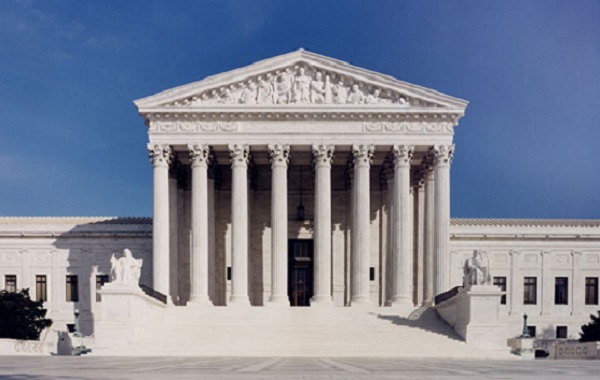
Asia-Pacific markets advanced Monday, adopting a cautiously risk-on tone after the US Supreme Court struck down a broad swath of President Donald Trump’s emergency tariffs. The ruling offered relief to export-driven Asian economies, sparking gains in tariff-sensitive consumer and retail stocks.
However, optimism was tempered after Trump swiftly imposed a replacement 15% global tariff, keeping trade uncertainty firmly in play.
US equities rallied on the court decision, while Treasury yields hovered near 4% as sticky core inflation limited expectations for aggressive Federal Reserve easing. Softer fourth-quarter growth and cooling business activity added to concerns over momentum, even as price pressures remained elevated.
With China and Japan closed for holidays, trading was thinner, and markets remain caught between legal tariff relief and persistent policy unpredictability.
TODAY’S WATCHLIST
- US December Factory Orders
- US Fed Waller Speaks
THE BIG STORY
On the Iran front, fresh nuclear talks are planned for early March, but significant gaps remain. A senior Iranian official told Reuters that the two sides hold differing views on the scope and mechanism of sanctions relief, with Tehran demanding a clear and mutually beneficial roadmap for lifting restrictions. The talks come amid a large US military buildup in the Middle East and Iran's standing threat to strike US bases if attacked keeping the risk of military confrontation very much alive even as diplomacy continues.
Data Spotlight
The US economy expanded at an annualised 1.4% in October-December, its weakest since Q1 2025 and well below the 3% forecast as a sharp 5.1% contraction in government spending, driven by the shutdown, subtracted 0.9% points from growth. Consumer spending slowed to 2.4% from 3.5%, exports fell 0.9% after a strong Q3, and composite PMI slipped to 52.3 in February, its slowest pace since April 2025, with manufacturing and services both easing and export demand declining sharply.
On the inflation front, headline PCE accelerated to 2.9% annually while core PCE rose 0.4% month-on-month in December, both above forecasts with goods and services prices picking up simultaneously, leaving the Fed with little room to pivot toward easing.
Takeaway:
WHAT HAPPENED OVERNIGHT
- US stocks rallies as Supreme Court strikes down Trump's global tariffs
- US stocks closed higher after the Supreme Court ruled 6-3 to strike down Trump's global tariffs, enacted under emergency powers legislation.
- Alphabet surged 3.7%, Amazon gained 2.6%, and Apple rose 1.5%, leading the broad-based relief rally.
- Tariff-sensitive names bounced. Hasbro, Wayfair, Williams-Sonoma, and RH all gained between 0.5% and 2.3%.
- Trump called the ruling a "disgrace" and moved quickly to impose a 10% global tariff for 150 days under Section 122 of the Trade Act of 1974 as a replacement measure.
- The swift presidential response tempered some of the initial enthusiasm, leaving markets to weigh the net impact of the softer but still-present tariff regime.
- US stocks closed higher after the Supreme Court ruled 6-3 to strike down Trump's global tariffs, enacted under emergency powers legislation.
- US Treasury yields held at 4.09% as tariff relief, and persistent inflation balanced out
- The 10-year Treasury yield edged up to 4.09%, caught in a tug-of-war between the Supreme Court tariff ruling and Trump's swift policy countermove.
- Yields initially dipped on the court ruling, but Trump's immediate 10% global tariff executive order under Section 122 reversed the move.
- Q4 GDP came in at a soft 1.4%, reflecting the economic drag of the government shutdown but failed to meaningfully reduce pressure yields lower.
- Core PCE inflation remained sticky at 3%, reinforcing the higher-for-longer narrative and keeping rate-cut expectations in check.
- The 10-year Treasury yield edged up to 4.09%, caught in a tug-of-war between the Supreme Court tariff ruling and Trump's swift policy countermove.
- US Dollar Ends Four-Day Rally After Supreme Court Tariff Ruling Triggers Volatility
- The US dollar index slipped 0.09% to 97.80, with the euro edging up 0.06% to $1.1779, ending a four-session run of gains.
- The Supreme Court's tariff ruling initially knocked the dollar lower before Trump's swift 10% replacement tariff partially restored its footing.
- The greenback had opened higher on sticky core PCE inflation data, before the court ruling flipped sentiment mid-session.
- Despite Friday's dip, the dollar is up nearly 1% on the week — on track for its biggest weekly gain since November.
- The US dollar index slipped 0.09% to 97.80, with the euro edging up 0.06% to $1.1779, ending a four-session run of gains.
- Crude oil prices holds steady near multi-month highs as Iran military fears linger
- Brent crude prices settled at $71.76/barrel, up just 0.14%, while WTI edged down to $66.39/barrel, down 0.06%.
- Modest late-session gains driven by short-covering as investors remained wary of potential US military action against Iran.
- President Trump continues to press Tehran to halt its nuclear weapons development, keeping geopolitical risk premium firmly embedded in prices.
- Brent crude prices settled at $71.76/barrel, up just 0.14%, while WTI edged down to $66.39/barrel, down 0.06%.
Day’s Ledger
Economic Data
German February Ifo Business Climate Index
- US Chicago Fed January National Activity
- US December Factory Orders
Corporate Actions
- Earnings: BF Utilities, PVP Ventures
- Osia Hyper Retail to consider fund raising
- TIL Ltd to consider fund raising
Policy Events
- German Buba Balz Speaks
- US Fed Waller Speaks
Tickers to Watch
- IDFC FIRST Bank flags ₹5.90 billion suspected fraud at Chandigarh branch
- Lodha Developers signs ₹3.65 billion joint development deal in Mumbai
- Hospitals becoming insurers may reduce friction: Narayana Health's Shetty
- SBI targets increasing its green advances portfolio to 10% by 2030
- AI to reshape entry-level roles, boost productivity: HCLTech's Roshni Nadar
- Skoda India considering EV, CNG options as Kylaq broadens buyer base
- Two-wheeler industry to grow 8-9% CAGR in long term: TVS Motor CEO
- Expect Pen-G production capacity to touch 10k MT in 12 months: Aurobindo
- TCS CEO & MD K Krithivasan sees no major shrinkage of jobs due to AI
Must Read
- PSBs outperform private peers yet again as quarterly profits hit new high
- Economists split on unrevised WPI and impact on new GDP base-year series
- Markets to stay volatile next week on Trump tariff decision: Analysts
- UPI's global volumes cross 1 million in FY26, nearly doubling from last year
- EU-India FTA opens doors to trade, AI, says Austria's State Secretary
- India can emerge as key APAC data hub, must leverage renewables: Deloitte
- US tariff uncertainty: Auto, medtech exporters on wait-and-watch mode
- India hits pause on US trade talks amid uncertainty over new tariff regime
See you tomorrow with another edition of The Morning Edge.
Have a great trading day
Why India Must Stay the Course on US Trade Deal
Has the US Supreme Court really changed the trade game — or just reshuffled the risks?
TK Arun writes, with emergency tariffs struck down, some are celebrating. But alternative US trade laws remain. New tariffs are already back. Legal uncertainty lingers. Investment hesitates.
More From BasisPoint