.png)

Asian Markets Slide as Tech Selloff Deepens; Investors Await US Inflation Data
Here’s your quick read to start the day: a chatty, no-fuss look at overnight moves, the big story, what’s on the docket, and the tickers you need to watch.

Nandinee Keluskar is an independent financial journalist.
November 25, 2026 at 2:16 AM IST
Global Mood: Cautiously risk-off
Asian markets fell sharply on Wednesday, led by South Korea’s Kospi, which plunged 4.49%. Japan’s Nikkei 225 declined 1.41%, while Australia’s S&P/ASX 200 slipped 0.41%. Sentiment remained fragile amid renewed pressure on AI-linked stocks, with Nvidia falling and Anthropic trading below its IPO price. Ambarella plunged 37% in extended trading after its fourth-quarter revenue guidance fell well short of analyst expectations. Investors remain cautious over the outlook for AI spending amid a deteriorating macroeconomic backdrop and volatile technology shares.
US stock futures edged lower on Tuesday night, with Dow futures down 0.1%, S&P 500 futures slipping 0.2% and Nasdaq-100 futures declining 0.3%, as investors awaited fresh inflation data. Wall Street ended mixed in the previous session, with the S&P 500 falling 0.5% and the Nasdaq Composite losing 1.5% as technology stocks retreated, while the Dow rose 0.9%, gaining more than 400 points. The GIFT Nifty was trading at 25,750, up 254 points or 1%, pointing to a strong opening for Indian equities.
THE BIG STORY
Russian President Vladimir Putin accused Ukraine of continuing attacks on oil refineries despite US President Donald Trump's requests to halt strikes and vowed retaliation. Ukrainian drone attacks have cut Russian refinery processing by 45% since late October, prompting fuel-sale restrictions in several regions, although Putin said gasoline prices had stabilised.
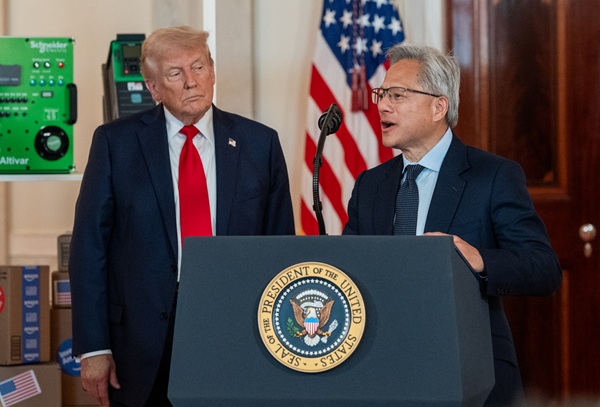
Nvidia CEO Jensen Huang's return has lifted hopes of renewed US-China technology engagement, but tighter US chip export controls and China's push for semiconductor self-reliance limit his scope. Huang faces a US Senate hearing on export restrictions next month, amid growing scrutiny of Nvidia's China business.
Yemen's Houthis struck Riyadh's tallest tower for the second time in less than a week, injuring at least 11 people, Saudi Civil Defence said. The drone attack damaged the building housing the Public Investment Fund's headquarters, as the group continues targeting Saudi airports, oil infrastructure and commercial facilities. The attacks have disrupted Saudi Arabia's economy, prompting flight cancellations and the postponement of major international events, including the AFC Asian Cup.
Data Spotlight
US crude inventories rose by 126,000 barrels in the week ended November 20, following a 5.3-million-barrel build in the previous week. US production reached a record 14.032 million barrels per day, while gasoline stocks edged lower and distillate inventories increased by 1.647 million barrels. Cushing stocks fell by 666,000 barrels, and the Strategic Petroleum Reserve declined by 2.9 million barrels.
The Richmond Fed Manufacturing Index rebounded to 3 in November from -2 in October, beating expectations of 2 and returning to expansion. New orders, employment and shipments improved, while prices paid accelerated to 7.59%. Business expectations strengthened, with firms anticipating higher orders and employment but slower price growth over the coming year.
US home price growth remained at a 15-month high of 2.6% year-on-year in September, unchanged from August but below expectations of 2.7%. Prices rose sharply in Chicago and New York, while Seattle and Dallas recorded declines. Home price growth continued to trail consumer inflation, pointing to a decline in real housing returns.
Takeaway: Record US crude production and a modest inventory build suggest continued supply strength in the oil market, although falling Cushing stocks and SPR drawdowns offer some counterbalance. Manufacturing activity showed signs of recovery, but accelerating input costs remain a concern. Meanwhile, home prices are holding up in nominal terms, yet elevated inflation and mortgage rates continue to erode real returns and weigh on housing affordability.
WHAT HAPPENED OVERNIGHT
US Stocks End Mixed as Nvidia Rally Fades and Tariff Uncertainty Weighs on AI Shares
- US stocks ended mixed on Tuesday as Nvidia and other artificial intelligence-related shares gave back gains from the previous session, while investors remained cautious ahead of potential new tariffs and key inflation data.
- The Dow gained 0.85% to 50,018.70, while the S&P 500 fell 0.50% to 7,201.09 and the Nasdaq Composite dropped 1.48% to 23,733.54.
- Nvidia fell 5.9% after surging 31.5% on Monday following the reinstatement of Jensen Huang as chief executive.
- The technology sector declined 2.8%, while the semiconductor index dropped 7.9%. Anthropic shares also fell 6.5% to $81.90, below their $83 IPO price.
- Investors remained wary of fresh tariffs, with the Trump administration expected to announce findings from a probe into excess industrial capacity among major trading partners.
- Markets also awaited Wednesday's Personal Consumption Expenditures price index, a key inflation gauge watched by the Federal Reserve.
- Meanwhile, US consumer confidence rose to its highest level in nearly two years in November, supported by optimism over the labour market and economic outlook.
- Retailers also gained after Abercrombie & Fitch and Dollar Tree raised their annual profit forecasts.
US Dollar Eases to 104 as AI Rally Fades and Investors Await Inflation Data
- The US dollar index weakened to around 104 on Tuesday, giving back nearly all of the previous session's 0.5% advance, which had lifted it to 104.3, its highest level since April 2025.
- The dollar eased as optimism following Nvidia CEO Jensen Huang's return faded, with concerns over the sustainability of the AI-driven rally resurfacing.
- Investors also reassessed the inflation outlook and the likely path of Federal Reserve policy.
- New York Fed President John Williams said on Monday that monetary policy would need to adjust to bring inflation back to the central bank's 2% target in a timely and sustained manner, adding that further work remained.
- Markets are pricing in nearly a 97% probability of a 25-basis-point Fed rate hike next month, while the likelihood of a similar move in January stands at around 59%.
US 10-Year Treasury Yield Falls Below 4.90% to Two-Week Low as Investors Await PCE Data
- The yield on the 10-year US Treasury note fell below 4.90% on Tuesday, reaching its lowest level in around two weeks, as investors assessed inflation signals and the outlook for Federal Reserve policy.
- Optimism that had fuelled the previous session's equity rally faded as concerns over the sustainability of the AI trade resurfaced following Jensen Huang's return as CEO of Nvidia.
Oil Prices Rise More Than 2% as Fresh Strait of Hormuz Attacks Revive Supply Concerns
- Oil prices settled more than 2% higher on Tuesday as fresh reports of attacks on vessels in and around the Strait of Hormuz revived concerns over supply disruptions, although expectations of a global surplus continued to limit gains.
- Brent crude futures rose $2.03, or 2.27%, to settle at $91.40 a barrel, while US West Texas Intermediate gained $1.88, or 2.35%, to $82.05. Both benchmarks recovered from session lows, with Brent touching its weakest level since August 27 and WTI its lowest since August 10.
- The United Kingdom Maritime Trade Operations said three vessels were struck by unidentified projectiles while sailing through the Strait of Hormuz on Monday.
- All ships continued their journeys, and their crews were accounted for. Iran's Revolutionary Guards also reported targeting a container ship near the strait.
- However, expectations of ample global supply continued to weigh on the market. Deutsche Bank estimated that global observed liquid inventories rose in October, implying a surplus of 1.7 million barrels per day.
- Meanwhile, China and India are on track for record Russian oil imports this year, helping offset supply disruptions linked to the Iran conflict.
- The recovery in prices remained sensitive to whether further attacks would materially interrupt deliveries.
Day’s Ledger*
Economic Data
- US Q3 GDP
- US October PCE Price index
- US October New Home Sales
- US Crude Oil Inventories
Policy
- BoE Gov Bailey Speaks
- BoE MPC Member Mann
- BoE MPC Member Dhingra Speaks
- German Buba Mauderer Speaks
Corporate Actions
- Earnings: Siemens Energy India and Simbhaoli Sugars
- Satin Creditcare Network to consider fund raising
Tickers to Watch
- HYUNDAI MOTOR INDIA raises prices by up to 8,000 rupees across select models and trims from December 1, 2026, citing rising input costs.
- JUPITER WAGONS forms JV with South Korea's Woojin Industrial Systems to make metro coaches and propulsion systems in India. Jupiter holds 80%, Woojin 20%. Products include coaches, propulsion, train control, doors, bogies and aluminium car bodies. Propulsion systems will also serve Vande Bharat, EMUs and high-speed trains.
- ADANI ENTERPRISES Subsidiary Adani Airport Holdings signs agreement with 360 ONE Asset to raise 27.9 billion rupees ($300 million). Total equity fundraise rises to about $1.35 billion. Pre-money valuation is about $18 billion.
- TATA STEEL Plans to keep APL Apollo listed. Aims for net debt-to-EBITDA of about 2.5 times before turning debt-free. Combined tubes and colour-coated steel capacity to reach 7.5 million tonnes, expandable to 15.5 million tonnes. Says it will protect minority shareholders.
- ABB INDIA agrees to acquire Germany's Ziehl-Abegg at an enterprise value of $2.65 billion and equity value of $2.22 billion. Expands presence in HVAC, industrial cooling and thermal management.
- HINDALCO INDUSTRIES Reappoints Satish Pai as MD for two years, January 1, 2027 to December 31, 2028. Appoints Hemant Sikka as Deputy MD from January 4, 2027.
Must Read
- India Wants AI Champions,Where is Its AI Industry?
- Is Another MPC Inflation Failure Letter Beginning to Write Itself?
- In Bipolar India, Is There Room for a Third Front in 2029?
- Jensen Huang’s Return is a Bad Precedent for the Corporate World, US Politics
- The Uneven Business Behind Corporate Travel’s Growth
- New data series to support stable monetary policy: RBI dy governor
- Protein inflation spikes due to rising feed and fodder costs, shows data
- India Inc outlines measures to attract foreign capital
- India, China set for record Russian oil imports in 2026 amid Iran war
- Commerce dept urges DRI to release confiscated bulk Scotch from UK
- India aluminium body urges stable policy, higher import duties ahead of annual budget
- Hyundai Motor India, Tata Motors Passenger Vehicles to raise prices from December 1
- India considers rice export duties as domestic prices rise, sources say
- Russian Urals oil discounts widen at Indian ports, sources say
(*Compiled from various media sources)
See you tomorrow with another edition of The Morning Edge.
Have a great trading day
More From BasisPoint