.png)

Asian Markets Mixed as Investors Assess Tech Recovery and AI Risks
Here’s your quick read to start the day: a chatty, no-fuss look at overnight moves, the big story, what’s on the docket, and the tickers you need to watch.


Nandinee Keluskar is an independent financial journalist.
November 9, 2026 at 2:05 AM IST
Global Mood: Cautiously risk-on
Drivers: US-Iran diplomatic negotiations, US AI regulatory framework
Asian markets were mixed on Monday, with Japanese equities leading gains as technology stocks recovered from last week’s sell-off. The Nikkei 225 rose 2.5% and the Topix gained 2.97%, while South Korea’s Kospi advanced 0.66%. The Kosdaq fell 0.81%, and Australia’s S&P/ASX 200 declined 0.51%. US equity futures edged higher, with Nasdaq-100 futures up 0.3% and S&P 500 futures gaining 0.1%.
Wall Street technology stocks rebounded on Friday, lifting the Nasdaq Composite 1.09% and the S&P 500 0.31%, while the Dow fell 0.46%. Investors remained cautious over potential regulatory constraints on AI infrastructure and awaited Chinese inflation data, US inflation figures and earnings from major AI companies. The GIFT Nifty was trading at 25,023.5, up 42.5 points or 0.17%, pointing to a mildly positive opening for Indian equities.
THE BIG STORY
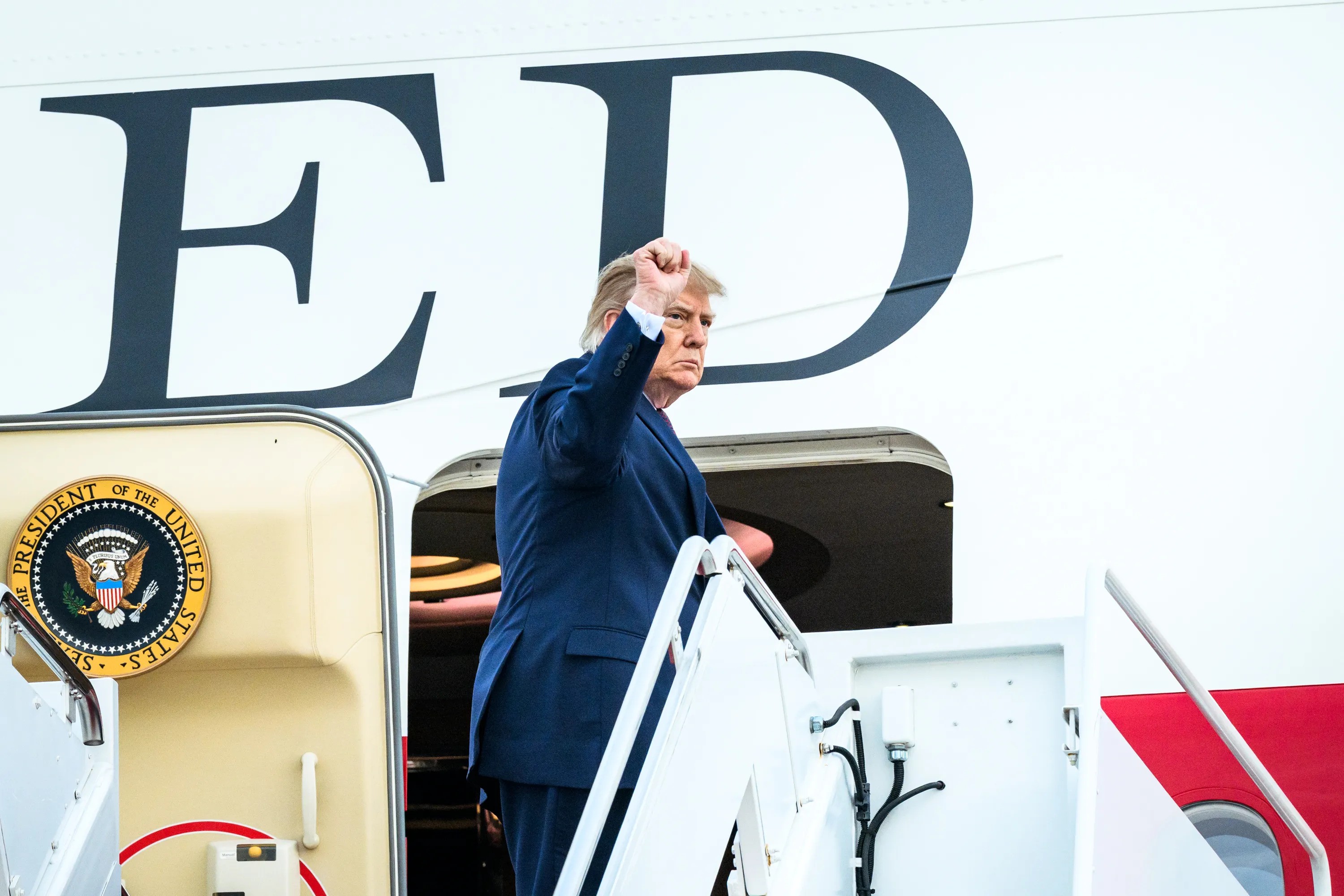
US President Donald Trump said fresh attacks on Iran were highly unlikely if negotiations progress, but stressed that any agreement must meet Washington’s demands. Secretary of State Marco Rubio said a diplomatic breakthrough was not imminent, citing differences over Iran’s demands, while Qatar said mediation efforts were continuing.
Iran reported that two oil tankers hit mines and a third caught fire in the Strait of Hormuz, while the US said it had disabled a commercial vessel attempting to breach its blockade. Iraq has reached an understanding with Washington to allow oil exports through a shipping lane near Oman, Foreign Minister Fuad Hussein said. Iraq estimated its losses from the war and export disruptions at $60 billion.
The continued attacks on vessels are restricting energy and commodity exports through the strategic waterway.
Yemen's Iran-aligned Houthis claimed responsibility for an attack that damaged Saudi Aramco's corporate office in Riyadh, with Saudi authorities reporting no casualties. Saudi air defences intercepted missiles over Riyadh and the Eastern Province, while the Saudi-led coalition said it had destroyed Houthi missile launchers. The escalation follows reported Saudi air strikes near Sanaa that killed at least 40 people, according to Yemen's Houthi-run health ministry.
US President Donald Trump said the risks posed by artificial intelligence could be managed and expressed openness to working with Democrats on safeguards.Trump said he did not mind regulatory guardrails but warned that restrictions should not leave the US at a disadvantage against China.
His comments indicate some openness to safeguards, marking a shift from his previous preference for allowing technology companies to regulate themselves. The extent of any proposed restrictions remains unclear.
Data Spotlight
US consumer sentiment improved to 51.0 in early November from 48.0 in October, beating expectations of 48.0, according to the University of Michigan. Gains were driven by improved expectations for personal finances and business conditions, particularly among independent voters.
However, sentiment remained 10% below its February level, with consumers continuing to flag cost-of-living pressures and concerns about a potential AI bubble. Year-ahead inflation expectations eased to 4.3% from 4.7%, while long-term expectations declined to 3.4% from 3.5%.
The US economy added 165,000 jobs in October, well above expectations of 65,000 and the upwardly revised 60,000 increase in September. Employment gains were led by professional and business services (70,000), healthcare (42,000) and transportation and warehousing (25,000). Manufacturing added 19,000 jobs, taking employment gains in the sector to 101,000 since December 2025. August and September payroll figures were revised higher by a combined 84,000.
US consumer credit increased by 27.84 billion dollars in September 2025, sharply above the upwardly revised 8.28-billion-dollar rise in August and forecasts of 12 billion dollars. Revolving credit, including credit card debt, increased to 1.37 trillion dollars from 1.35 trillion dollars, while non-revolving credit, including auto and student loans, rose to 3.86 trillion dollars from 3.84 trillion dollars. Overall consumer credit grew 6.4% year-on-year.
Takeaway: Stronger-than-expected payroll growth and improving consumer sentiment point to continued resilience in the US economy, potentially reducing the urgency for further Federal Reserve rate cuts. The easing in short- and long-term inflation expectations offers some relief, although cost-of-living concerns remain elevated. Meanwhile, the sharp increase in consumer credit suggests households continue to rely on borrowing to sustain spending, raising questions about debt affordability if interest rates remain high. Overall, the data strengthen the case for a cautious Fed stance, with labour-market resilience and persistent consumer demand keeping inflation risks in focus.
WHAT HAPPENED OVERNIGHT
US Stocks Rebound as Chip Stocks Recover; Strong US Jobs Data Pushes Treasury Yields Higher
- The S&P 500 rose 0.31% and the Nasdaq gained 1.1% on Friday, while the Dow slipped 0.46%. All three indexes recorded weekly losses following the previous session's sharp AI-led sell-off.
- Technology stocks led the recovery, with the Philadelphia Semiconductor Index rising 4.2%. Nvidia gained nearly 3%, while AMD, Intel and Micron advanced between 5% and 11%.
- Concerns over tighter AI regulation following Democratic election victories continued to cloud sentiment.
- Uncertainty over potential restrictions on data centre expansion, alongside concerns about high infrastructure costs and future returns, has weighed on the sector.
- Global markets remained under pressure, with Europe's STOXX 600 falling 1%, while Japan's Nikkei and South Korea's KOSPI slumped around 6% each. The Nikkei recorded its steepest daily decline since April 2025.
- US non-farm payrolls increased by a stronger-than-expected 165,000 in October, while annual wage growth held at 3.1%, rather than slowing below 3%.
US Dollar Rises 0.6% to 102.2 as Strong US Jobs Data Boosts Rate-Hike Bets
- The US dollar index rose 0.6% to 102.2 on Friday, extending gains after October employment data significantly exceeded expectations.
- The stronger data reinforced expectations of a resilient US economy and strengthened bets that the Federal Reserve could raise interest rates again in December to contain inflation.
- Investors await one more employment report and a full set of inflation data before the Fed's next policy meeting, which could influence the outlook for monetary policy.
- The dollar also gained support from safe-haven demand as a global equity sell-off, driven by concerns over AI valuations and tighter regulation, prompted investors to reduce risk exposure.
US Treasury Yields Rise to 4.86% as Strong Jobs Data Fuels Fed Rate-Hike Bets
- US 10-year Treasury yield climbed as much as 6 basis points to 4.90% on Friday before settling around 4.86%, as stronger-than-expected employment data reinforced expectations of a Fed rate hike next month.
- The data suggested the labour market could withstand higher borrowing costs, giving the Fed greater scope to maintain a restrictive policy stance to contain inflation.
- A recovery in US equities after the previous session's sharp sell-off eased safe-haven demand, contributing to the reversal in Treasury prices.
- Investors also assessed the economic implications of the Democrats' midterm election sweep, including the possibility of lower tax cuts and government spending, alongside tighter AI regulation that could constrain investment in the sector.
Oil Holds Near $98 as Renewed Iran War Fears Offset Oversupply Concerns
- Brent crude edged up 3 cents, or 0.03%, to settle at $98.32 per barrel on Friday, while US WTI rose 31 cents, or 0.34%, to $90.83, as concerns over renewed US strikes on Iran supported prices.
- US President Donald Trump said he would soon decide whether to pursue a peace agreement with Iran or destroy what remains of the country, reviving fears of further escalation.
- Despite Friday's recovery, Brent was on track for a 17% weekly decline, its steepest since the start of the COVID-19 pandemic, while WTI was set to fall 13%. Hopes of de-escalation following the US midterm elections had triggered a sharp unwinding of the war premium.
- Continued tanker attacks in the Gulf and Strait of Hormuz provided a floor for prices. UKMTO data indicated attacks on oil-carrying vessels remained near record levels, while a seafarer was killed in an explosion aboard a tanker in the Gulf.
- Signs of an emerging supply surplus and demand destruction weighed on the market, with spot premiums for Middle Eastern crude returning to pre-conflict levels. However, longer shipping routes and ship-to-ship transfers near the Strait of Hormuz continue to complicate supply flows.
- Stronger-than-expected US jobs data also raised concerns that the Federal Reserve could increase interest rates next month, potentially weighing on oil demand.
Day’s Ledger*
Economic Data
- China October CPI
- German September Trade Balance
Policy
- BoE Gov Bailey Speaks
- US FOMC Member Barkin Speaks
- US Fed Goolsbee Speaks
- US FOMC Member Bowman Speaks
Corporate Actions
- Earnings: Olectra Greentech, R M Drip and Sprinklers Systems and Whirlpool of India
Tickers to Watch
- BHARAT HEAVY ELECTRICALS receives order worth 6-9 billion rupees from Power Grid. Covers two synchronous condenser units at the Barmer-II HVDC Terminal Station, Rajasthan. Scope includes design, manufacturing, supply, erection and commissioning.
- TATA STEEL July-September 2026 consolidated net profit up 16.2% YoY to 37 billion rupees. Beats the 31.2 billion rupee estimate. Revenue up 11.5% to 654.36 billion rupees from 586.89 billion rupees. EBITDA up 18.4%. Margin at 16.1%, slightly below the 16.3% estimate. Up from 15.2% in April-June 2026.
- SIEMENS July-September 2026 net profit up 3.9% YoY to 5.04 billion rupees from 4.85 billion rupees. Revenue up 17% to 57.34 billion rupees. EBITDA up 2.8% to 6.26 billion rupees. Margin falls to 10.9% from 12.4%.
- VOLTAS July-September 2026 net profit up 53.4% YoY to 526 million rupees from 343 million rupees. Revenue up 15.3% to 27.07 billion rupees. Beats the 25.56 billion rupee estimate.
- MARICO Signs agreements to acquire 51% in Bonorizon Consumer Ventures for up to 350 million rupees. Deal is via primary subscription.
- MAHINDRA & MAHINDRA approves up to 14.5 billion rupees in SML Mahindra's rights issue. This includes about 8.55 billion rupees for its full entitlement. A further 5.95 billion rupees is for extra or unsubscribed shares.
- ZYDUS LIFESCIENCES Subsidiary Zydus Therapeutics reports Phase 2b results for saroglitazar. Drug shows higher steatohepatitis resolution than placebo in MASH adults, without worsening liver fibrosis.
- WIPRO Appoints Angan Guha as President and CEO of Americas 2 Strategic Market Unit, effective December 8, 2026. He will report to CEO and MD Srini Pallia.
Must Read
- Ten years after demonetisation, puzzles persist between cash and clicks
- Women hold 2/3rd of Mudra accounts, get only 43% of fund disbursed
- Inward FDI to ODI ratio narrows to 4.2 times in FY26 from 5.5 times: RBI
- Crude price cool-off likely to soften cost squeeze on oil companies
- A month after lifting of ban, wheat exports rise fourfold, shows data
- Maharashtra's ₹8.6 trn litmus test: From investment promises to projects
- India's gold demand picks up as Diwali coincides with price dip
- India doubles rice sale target as price concerns loom
- India's ONGC hopes to get rights to operate 2 Venezuelan oil projects in six months
- India's Coforge joins SpaceX partner network to deploy Grok AI tools for enterprises
- A Business Deserves Patience but Does Its Valuation
- America's Verdict and West Asia's Uncertain Reset
- When the Leader Can't Be the Loser
- The Risk in India’s Credit Boom Lies in What It Funds
- Three Lines of Defence: Does the Model Still Defend or Even Hold?
(*Compiled from various media sources)
See you tomorrow with another edition of The Morning Edge.
Have a great trading day
More From BasisPoint