.png)

Asian Markets Edge Higher Ahead of Fed Decision Despite War Risks
Here’s your quick read to start the day: a chatty, no-fuss look at overnight moves, the big story, what’s on the docket, and the tickers you need to watch.
Richard is an independent financial journalist who tracks financial markets and macroeconomic developments
March 18, 2026 at 2:06 AM IST
GLOBAL MOOD: Extreme Risk-Off
Asian markets opened higher on Wednesday, signalling a cautious risk-on tone as investors looked past escalating Middle East tensions to focus on Japan’s trade data and the US Federal Reserve’s policy decision.
Gains were supported by modest strength on Wall Street and stable bond markets, with Treasury yields easing slightly.
However, sentiment remains fragile as fresh attacks on UAE energy infrastructure and continued disruption around the Strait of Hormuz keep oil prices elevated near $103 a barrel, sustaining inflation concerns and limiting the upside for risk assets.
TODAY’S WATCHLIST
THE BIG STORY
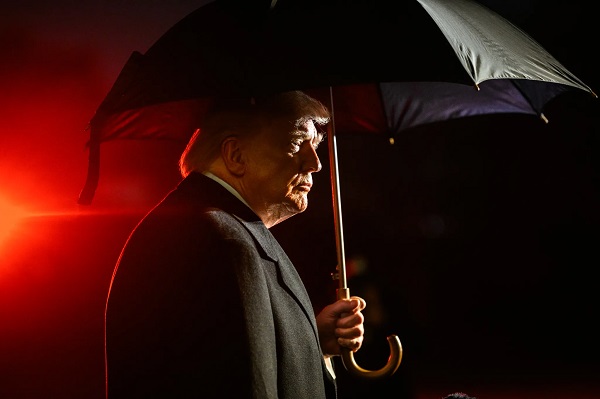
On the diplomatic front, Trump confirmed that most NATO allies have told Washington they do not want to get involved in the Iran operation, calling the stance a "very foolish mistake." Trump stopped short of threatening punishment for non-participating allies, but made clear the US would "remember" their positions. The remarks came during Irish Prime Minister Micheal Martin's St. Patrick's Day Oval Office visit, an awkward diplomatic backdrop for a president presiding over an increasingly isolated military campaign now entering its fourth week with no ceasefire framework, no multilateral support, and an adversary that has just had its most pragmatic senior official eliminated.
Data Spotlight
US crude inventories rose 6.6 million barrels in the week ended March 13th, the largest build in three weeks and a sharp reversal from the prior week's 1.7-million-barrel draw against expectations of a 0.6-million-barrel decline, pointing to softening demand even as geopolitical supply fears keep prices elevated. Pending home sales rebounded 1.8% in February, beating the 0.5% decline forecast and reversing two consecutive months of falls, led by the Midwest's 4.6% gain on affordability. However, NAR's Lawrence Yun cautioned that rising oil prices could push mortgage rates higher and reverse the nascent recovery. The New York Fed's business activity index improved marginally to -22.6 from a five-year low of -25.7, but the business climate index deteriorated further to -46.2 and employment remained negative at -8.5, painting a picture of an economy where the rate of deterioration is slowing but conditions remain deeply stressed.
Takeaway:
WHAT HAPPENED OVERNIGHT
- US stocks extends rebound as stagflation fears ease and asset managers surge
- The S&P 500 gained 0.3%, Nasdaq 100 rose 0.5%, and the Dow edged up 0.1% its a second straight session of gains from four-month lows.
- Equity investors remained optimistic on earnings projections despite ongoing Gulf energy disruptions, betting the supply shock will not translate into full stagflation.
- Asset managers surged 3-5% with KKR, Blackstone, BlackRock, and Blue Owl all rallied sharply as traders reassessed private credit default risks in the software sector.
- Nvidia eased 0.7% despite forecasting $1 trillion in AI chip revenues by 2027, a sign markets had already priced in an ambitious outlook.
- Qualcomm gained 3% after announcing a higher dividend and a $20 billion share buyback.
- The two-day rebound feels tentative, Iranian UAE strikes and Brent back above $103 serve as a reminder that the geopolitical backdrop remains deeply unstable.
- The S&P 500 gained 0.3%, Nasdaq 100 rose 0.5%, and the Dow edged up 0.1% its a second straight session of gains from four-month lows.
- US Treasury yield dips below 4.21% as Fed meeting begins amid escalating West Asia conflict
- The 10-year Treasury yield edged down nearly 2 bps to below 4.21% as traders adopted a cautious stance ahead of the Fed's two-day policy meeting.
- Iran stepped up attacks on Gulf energy infrastructure while Israel reported killing Iran's security chief escalation signals that kept markets on edge.
- The Fed is widely expected to hold rates unchanged on Wednesday, but updated projections will be scrutinised closely for the inflation-growth trade-off assessment.
- Rising oil prices pose a dual threat, pushing inflation higher while simultaneously sapping economic growth and weakening the labour market.
- Signs of labour market softening add complexity; the Fed must communicate around deteriorating jobs data and surging energy costs simultaneously.
- The modest yield dip reflects a market seeking safety ahead of potentially pivotal Fed communication rather than any genuine easing of the underlying inflationary pressures.
- The 10-year Treasury yield edged down nearly 2 bps to below 4.21% as traders adopted a cautious stance ahead of the Fed's two-day policy meeting.
- US Dollar steadies below 100 as oil rebound and Fed decision keep markets on edge
- The US dollar index steadied just below 100, consolidating after Monday's pullback as oil's renewed climb revived inflation concerns.
- Monday's retreat was driven by Hormuz tanker transit relief and easing oil prices Tuesday's Iranian UAE strikes partially reversed that dynamic.
- Treasury Secretary Bessent reiterated the US is allowing Iranian crude to transit Hormuz, while Trump continues pressing other nations to safeguard the waterway.
- The dollar remains in a narrow trading range, geopolitical safe-haven demand and inflation fears providing a floor, while ceasefire hopes and oil volatility cap the upside.
- All attention turns to the Fed's rate decision on Wednesday, widely expected to hold, but Powell's language on the energy inflation shock will be closely watched.
- The dollar's inability to break decisively above or below 100 reflects a market in genuine two-way uncertainty about the conflict's economic endgame.
- The US dollar index steadied just below 100, consolidating after Monday's pullback as oil's renewed climb revived inflation concerns.
- Crude oil surges back above $100 as Iran strikes UAE and supply outlook darkens
- Brent crude jumped 3.2% to $103.42/barrel, reclaiming the $100 threshold as the conflict intensified.
- WTI gained 2.9% to $96.21/barrel, erasing much of Monday's relief rally in a single session.
- Renewed Iranian attacks on the UAE directly threatened Gulf energy infrastructure and reignited supply disruption fears.
- Monday's partial Hormuz reopening optimism was rapidly unwound as Iran demonstrated it retains both the will and capability to escalate.
- With the war now in its third week and no resolution framework in sight, markets are increasingly pricing in a structurally elevated oil price environment.
- Brent oscillating around $100 reflects a market torn between ceasefire hopes and escalation reality — with every diplomatic signal quickly countered by a military one.
- Brent crude jumped 3.2% to $103.42/barrel, reclaiming the $100 threshold as the conflict intensified.
Day’s Ledger*
Economic Data
- US API Crude Oil Stock Change
- US PPI
- Japan Trade Data
- Eurozone Inflation Data
Corporate Actions
- Bajaj Healthcare board to consider allotment of shares
- CSL Finance board to consider fund raising
- Dishman Carbogen board to consider fund raising
Policy
- ECB Machado Speech
- ECB Buch Speech
- US FOMC Interest Rate Decision
Tickers to Watch
- Tata Steel to merge NINL; approves up to $2 bn infusion in Singapore arm
- ₹1.65 trillion investment seen in India's transmission infra: Godrej
- NCLT clears Adani's ₹15K cr JAL resolution plan, rejects Vedanta challenge
- Maruti Suzuki gets ₹5,786 crore income tax order, says will appeal it
- Ather Energy doubles service network to 500 centres across India
- Lupin, Zydus partner to co-market semaglutide injection in India
- Adani Enterprises gets NCLT nod for Jaiprakash Associates resolution plan
- SBI MF buys additional 4% stake in Urban Company; Wellington Management, DF International exit
- Dr Reddy’s gets GST demand orders worth ₹2.2 crore for FY20–22
Must Read
- China overtakes Netherlands as third-largest export destination in Feb
- Correction in banking, financial funds: Exit if unable to handle volatility
- India not facing energy crisis, domestic LPG capacity ramped up: FM
- Crude above $100: What it means for India's economy and energy
- CEA warns $130 crude could cut India’s GDP growth by 1%
- India needs clear foreign policy roadmap, says parliamentary committee
See you tomorrow with another edition of The Morning Edge.
Have a great trading day
𝐖𝐡𝐚𝐭 𝐢𝐟 𝐩𝐨𝐬𝐭-𝐰𝐚𝐫 𝐫𝐞𝐜𝐨𝐧𝐬𝐭𝐫𝐮𝐜𝐭𝐢𝐨𝐧 𝐢𝐬 𝐛𝐮𝐢𝐥𝐭 𝐨𝐧 𝐚 𝐟𝐢𝐧𝐚𝐧𝐜𝐢𝐚𝐥 𝐦𝐲𝐭𝐡?
The world pledges billions, but the money rarely arrives. Syria needs $216 billion to rebuild against a $22 billion economy. Gaza, Sudan, Lebanon face similar gaps. Even when funds do come, they often rebuild bridges and buildings, not institutions or people. The result: infrastructure without recovery, cities without return.
Sharmila Chavaly writes, so what actually works when the cheques don’t come? Smaller, self-sustaining models — revenue-generating assets, community-owned systems, blended finance, and enforceable structures that attract real capital. Reconstruction is not about scale alone, but about viability. If the system won’t fund recovery, can we redesign it to build differently?
(*Compiled from various media sources)
More From BasisPoint