.png)

Asian Equities Decline as Energy Shock Weighs on Sentiment
Here’s your quick read to start the day: a chatty, no-fuss look at overnight moves, the big story, what’s on the docket, and the tickers you need to watch.
Richard is an independent financial journalist who tracks financial markets and macroeconomic developments
March 20, 2026 at 1:59 AM IST
GLOBAL MOOD: Risk-Off
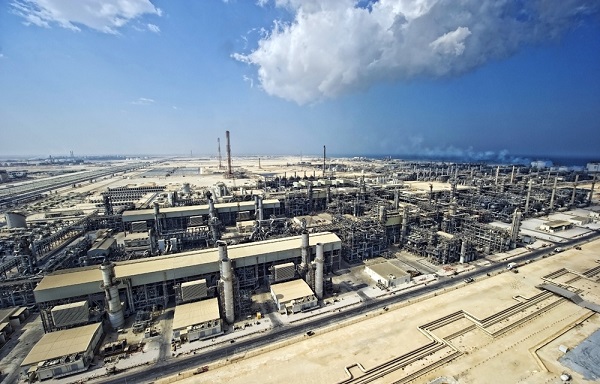
Asian markets mostly declined on Friday, reflecting a strong risk-off mood as the Iran war triggered fresh volatility across global assets. Investor sentiment weakened after Tehran struck Qatar’s largest gas facility, raising fears of prolonged disruption to global energy supplies.
Oil prices remained elevated, with Brent holding above $108 a barrel after briefly crossing $119, keeping inflation and growth concerns in focus. The selloff also spread across bonds, equities and metals overnight on Wall Street, highlighting broad risk aversion as markets struggle to absorb the deepening geopolitical and energy shock.
TODAY’S WATCHLIST
THE BIG STORY
The energy shock is forcing a sweeping global monetary policy reset. Nearly all major developed market central banks held rates this week but signalled readiness to hike if energy-driven inflation broadens. The Bank of England held at 3.75% but delivered a hawkish statement, with traders now pricing a 25 bps hike by April as a coin toss and two to three hikes by year-end. The ECB also held but is watching inflation risks closely, with markets pricing more than two hikes this year as policymakers determined not to repeat their slow response to the 2021-2022 inflation surge. The Reserve Bank of Australia, already in hiking mode, raised rates again this week. Globally, rate cut bets have been slashed and replaced with hike pricing a seismic shift in the monetary policy landscape driven entirely by a conflict now entering its fourth week with no resolution in sight.
Data Spotlight
US initial jobless claims fell 8,000 to 205,000 in the second week of March, firmly below expectations and consolidating the picture of a low-firing labour market that contrasts with February's weak payrolls print. Continuing claims edged up only slightly to 1,857,000, maintaining their broader pullback since November. Federal employee claims rose 26 to 643, keeping government shutdown labour market concerns on the radar.
New home sales told a starkly different story, plunging 17.6% to a seasonally adjusted annual rate of 587,000 units in January, the sharpest decline since 2013 and the lowest rate since 2022 despite mortgage rates testing three-year lows. Winter storms drove severe regional weakness, particularly in the Northeast (-44%) and Midwest (-33.9%).
Wholesale inventories fell 0.5% in January, the largest monthly drop since December 2024, as non-durable goods stocks declined 1.5% while durable goods held flat.
Takeaway:
Jobless claims remain the only clear positive. New home sales have sharply declined, signalling persistent affordability and confidence issues despite lower mortgage rates. Falling wholesale inventories suggest cautious demand expectations, contrasting with the Fed’s higher inflation outlook and unresolved West Asia conflict risks.
WHAT HAPPENED OVERNIGHT
- US stocks slips as Micron disappoints and inflation fears cap rate-cut hopes
- The S&P 500 fell 0.27%, Nasdaq dropped 0.28%, and the Dow declined 0.44% as Powell's inflation warnings weighed on sentiment.
- Investors remained focused on the Fed's uncertain outlook amid soaring energy prices and the ongoing West Asia conflict.
- Micron fell 3.8% after its quarterly forecast failed to impress despite shares having surged over 50% this year on AI demand optimism.
- Nvidia lost 1% as broader chip sector sentiment softened following Micron's disappointing guidance.
- Tesla slid 3.2% after NHTSA escalated its probe into 3.2 million vehicles equipped with Full Self-Driving technology over poor visibility detection concerns.
- The session reflects a market where rate-cut hopes are fading fast — with the Fed on hold, oil above $100, and corporate guidance struggling to keep pace with elevated valuations.
- The S&P 500 fell 0.27%, Nasdaq dropped 0.28%, and the Dow declined 0.44% as Powell's inflation warnings weighed on sentiment.
- US Treasury 10-year yield climbs to 4.28%, near August highs, as hawkish Fed and hot PPI combine
- The 10-year yield rose to around 4.28%, approaching its highest level since August as the Fed's inflation upgrade resonated through bond markets.
- February PPI came in hotter than expected, adding fresh upward pressure on yields alongside surging oil prices.
- Fresh attacks on West Asia energy infrastructure pushed oil higher, keeping the inflation risk premium firmly embedded in Treasury pricing.
- Trump temporarily waived the Jones Act to reduce domestic oil and gas transport costs, a pragmatic near-term measure to ease energy price pressure without a formal policy shift.
- Markets now await weekly jobless claims for signals on whether labour market softening is accelerating, which could complicate the Fed's hawkish stance.
- The 10-year yield rose to around 4.28%, approaching its highest level since August as the Fed's inflation upgrade resonated through bond markets.
-
- The US dollar index held above 100, supported by the Fed's increasingly hawkish tone following Wednesday's rate decision.
- The Fed left rates unchanged while flagging elevated inflation risks from the West Asia conflict and signalling it will not cut until inflation shows clear signs of easing.
- The central bank still projects one cut in 2026 and another in 2027, consistent with its December outlook despite the energy shock.
- February PPI came in hotter than expected, adding further support to the dollar's higher-for-longer appeal.
- Investors now await weekly jobless claims for fresh signals on whether the labour market deterioration evident in February's payrolls print is continuing.
- The US dollar index held above 100, supported by the Fed's increasingly hawkish tone following Wednesday's rate decision.
- Crude oil pulls back sharply from $120 highs as Trump rules out ground troops
- Brent crude fell to around $107/barrel after surging to nearly $120 in the prior session, a dramatic $13 intraday reversal.
- WTI retreated to around $94/barrel after touching $101, its first breach of that level since the conflict began.
- Trump ruled out ground troops in the region, directly removing the most feared escalation scenario from market pricing.
- Netanyahu pledged no further attacks on Iranian energy facilities and said the war could end "sooner than expected", the most concrete ceasefire signal yet from Israel.
- Treasury Secretary Bessent floated the removal of Iranian oil sanctions and suggested Iran's regime could face internal collapse a supply-positive signal for markets.
- Netanyahu noted Iran's significantly reduced capacity to enrich uranium or produce ballistic missiles suggesting the military campaign has achieved key strategic objectives.
- Brent crude fell to around $107/barrel after surging to nearly $120 in the prior session, a dramatic $13 intraday reversal.
Day’s Ledger*
Economic Data
- Euro Current Account
- Eurozone Trade Data
- India Bank Loan Growth
- India Deposit Growth
- India FX Reserves
Corporate Actions
- Finkurve Financial board to consider fund raising
- Thomas Cook board to consider corporate restructuring
Policy
- Russia Interest Rate Decision
Tickers to Watch
- HDFC Bank board likely to approve CEO Sashidhar Jagdishan reappointment
- Nestle India to add Munch production line at Sanand plant with ₹2.25 billion
- NTPC, UK's Octopus Energy sign pact to explore power sector opportunities
- Wipro launches GIFT City Hub to provide services to global BFSI clients
- Aditya Khaitan steps down from Kilburn Engineering board amid changes
- Mahindra Lifespace aims ₹30 billion revenue from new Mumbai housing project
Must Read
- US will launch 'largest strike package yet' against Iran today: Hegseth
- US may lift sanctions on 140 million barrels of Iranian oil on the seas: Bessent
- Rare but not unusual for RBI to come out in support of a troubled bank
- Govt unveils ₹4.97 billion RELIEF scheme to aid exporters hit by West Asia crisis
- US, global central banks hold rates, warn of war-led inflation risks
- US Leading Indicators Forecast Further Slowdown
See you tomorrow with another edition of The Morning Edge.
Have a great trading day
𝐇𝐃𝐅𝐂 𝐁𝐚𝐧𝐤’𝐬 𝐜𝐡𝐚𝐢𝐫𝐦𝐚𝐧 𝐞𝐱𝐢𝐭 𝐡𝐚𝐬 𝐫𝐚𝐢𝐬𝐞𝐝 𝐠𝐨𝐯𝐞𝐫𝐧𝐚𝐧𝐜𝐞 𝐪𝐮𝐞𝐬𝐭𝐢𝐨𝐧𝐬, 𝐛𝐮𝐭 𝐭𝐡𝐞 𝐬𝐢𝐠𝐧𝐚𝐥 𝐚𝐩𝐩𝐞𝐚𝐫𝐬 𝐜𝐨𝐧𝐭𝐚𝐢𝐧𝐞𝐝.
Bijoy Idicheriah writes, the RBI’s explicit reassurance and the bank’s swift response point more to boardroom friction than any operational or systemic breakdown.
What matters now is clarity on leadership and continuity in execution. If those hold, this remains a contained disruption, not a structural concern.
(*Compiled from various media sources)
More From BasisPoint