.png)

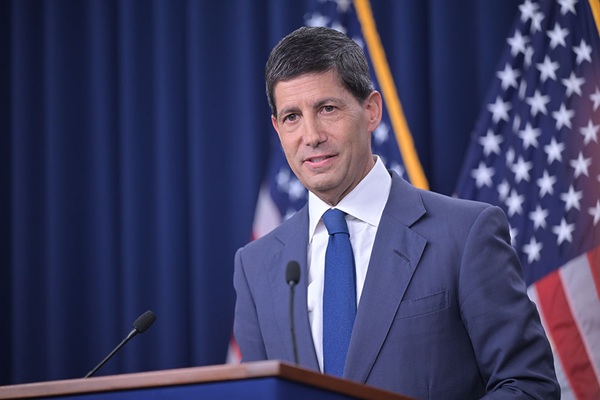

Michael Patra is an economist, a career central banker, and a former RBI Deputy Governor who led monetary policy and helped shape India’s inflation targeting framework.
August 10, 2026 at 2:53 AM IST
Winds of change appear to be rustling across the monetary policy landscape. Regime shifts in monetary policy have osmosis effects that cause them to permeate across the world, irrespective of where they commence.
In his June 17 press conference, the new Chair of the Fed, Kevin Warsh, announced the appointment of a task force in each of five areas central to the conduct of monetary policy, including one on the Fed’s balance sheet co-led by Dr Raghuram Rajan, former Governor of the Reserve Bank of India.
Another task force, co-led by Gregory Mankiw, Thomas Sargent and William White, all renowned economists, with Sargent having won the 2011 Nobel prize in economic science (with Christopher Sims), is on the Fed’s inflation framework.
In Warsh’s words, this task force will “examine the drivers of inflation, first principles, and weigh the full range of ideas for delivering price stability in a changing economy.” Its remit will overlap with another task force to evaluate new information sources and methodological changes relating to the measurement of inflation.
On the 2% inflation objective of the Fed, Warsh’s significant remark defines the work of the task force: “I tend to focus on the left side of the decimal point..the two is the left of the decimal point. For now, zero is to the right. I see no reason until we have reestablished our commitment and ability to deliver on the 2% inflation objective to revisit that. So that’ll be outside the scope of what we’re taking on.”
A clear and unambiguous shutting of the door on the abundant creation of money and zero lower bound interest rates policies pursued by his predecessors, Jerome Powell. Janet Yellen and Ben Bernanke. And congruent with his appointment of Raghuram Rajan, a strident critic of balance sheet policies that enabled the zero lower bound strategy.
The Warsh View
In contrast to the Friedmanesque strict targeting of a specific monetary aggregate, however, Warsh has expressed views consistent with a softer form of monetarism: that money supply and monetary aggregates matter in the sense that they provide helpful information for forecasting inflation and growth and can thereby be useful in setting interest rates.
In his 2022 essay tellingly titled “Money Matters”, he wrote that “believing that money plays an important role in the conduct of monetary policy didn’t used to be blasphemy. The quantum and velocity of money have some important bearing on the price level … the Fed would be well served to pay more heed to money and the moment.”
In an IMF lecture hosted by the G30 on April 25, 2025, Warsh attributed the Fed’s inflation errors after the pandemic to a series of intellectual errors, notably including the idea that “monetary policy had nothing to do with money.”
On several occasions he has invoked money supply to explain his desire to shrink the Fed’s balance sheet. He has also expressed scepticism of the Fed’s existing framework of data dependence, Phillips curves, neutral rates and forward guidance.
Monetarism at the Fed
During the Greenspan chairmanship, money supply went from being a target of monetary policy to a useful data series for determining what level of the federal funds rate to target.
By the time of the Bernanke chairmanship, the Fed discontinued reporting its then-broadest measure of money supply, M3. According to Bernanke, it did not provide any incrementally useful information and “had not played a role in the monetary policy process for many years.”
The Bernanke regime also changed the mechanics of monetary policy implementation in a way that excluded monetary aggregates altogether with the advent of large-scale asset purchases during the global financial crisis. This system became institutionalised during the chairpersonship of Janet Yellen. The Fed’s policies and principles were formalised around the tenet that it would control the fed funds rate not through variations in the supply of reserves, but through variations in interest on reserve balances. During the chairmanship of Jerome Powell, the FOMC stated that active management of reserve supply was no longer required.
The Twist in the Tale
He emphasises market imperfections, sticky prices, and the role of government intervention. In fact, he is famous for the "Mankiw Rule," which guides central banks to set interest rates using inflation and unemployment gaps rather than relying on strict money supply growth targets. Sargent belongs to the school of New Classical macroeconomics.
As a Nobel laureate, he pioneered rational expectations theory. Sargent's work departs from traditional Milton Friedman-style monetarism by rejecting fixed money-growth rules in favour of rigorous micro-founded equilibrium modelling. White leans towards the Austrian school of economics, focusing on credit booms, asset bubbles, and the unintended consequences of ultra-low interest rates, rather than just tracking the money supply growth.
Where they all agree with monetarism is that prolonged inflation is fundamentally a monetary phenomenon. They also agree that central banks drive price stability and are hence accountable for it.
The Maverick
In his resignation letter, he argued that “the Fed needs to do a better job accounting for nonmonetary forces and their implications for monetary policy. Among these powerful forces are the consequences of lower population growth as a result of reduced immigration, which history teaches is disinflationary and leads to lower interest rates; and the effects of deregulation on the supply side, which is also powerfully disinflationary.”
In July 2026, Stephen Miran, along with his co-authors Nouriel Roubini and Peter Ireland, has turned in evidence to show that “had the Fed paid attention to growth in money supply, it might have avoided the generational policy errors after the pandemic.”
They hope that this will bring meaningful changes to monetary policy through which monetary aggregates may again play a prominent role in informing the appropriate level of interest rates.
In their view, a dramatic burst in money growth in 2020-21 presaged the surge in inflation that followed. They argue that observations on the behaviour of the monetary aggregates and estimates of the monetary policy stance based on monetary aggregates deserve a place in FOMC deliberations.
If Miran and his co-authors are reading Warsh right, a practical form of monetarism emphasising the link between money supply growth and inflation, monitoring data on monetary aggregates and re-evaluating central bank balance sheets, and integrating monetary analysis to forecast inflation trends may be returning to the Fed.
More From BasisPoint